What Can You Embroider With a Sewing Machine?
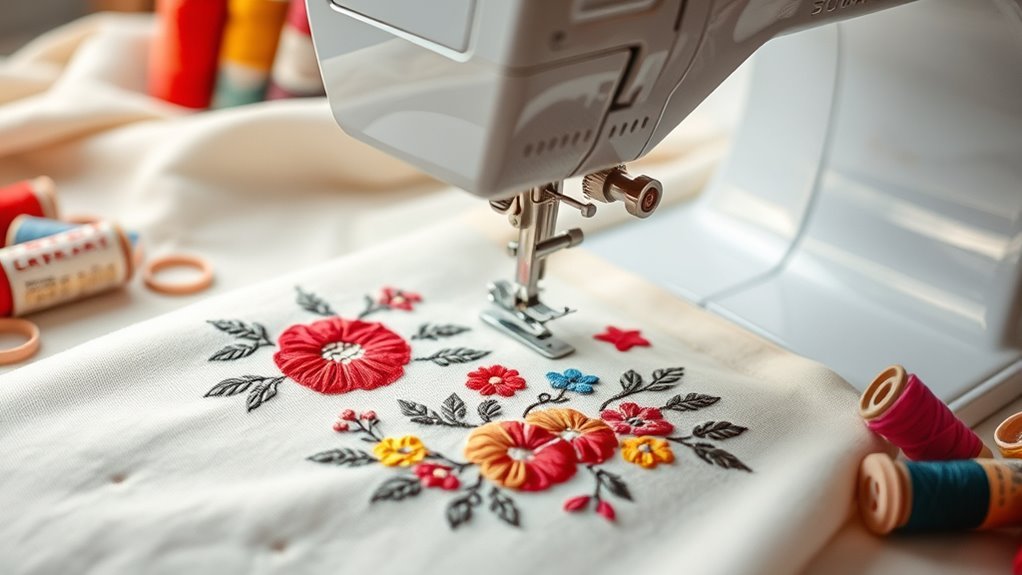
You can embroider a variety of designs with your sewing machine, from simple monograms to geometric shapes and floral motifs.
Decorative borders are another great option to add style to your projects.
Fabrics like cotton, linen, denim, and canvas work really well for embroidery. Just make sure to use stabilizers and hoops to keep your fabric smooth and taut while you stitch.
Want to get creative? You can also make personalized letters and intricate appliqués to jazz up clothing, accessories, or home décor.
There’s so much to explore with your sewing machine when it comes to embroidery.
Ready to dive into new stitching techniques and creative ideas? There’s plenty ahead to discover!
Key Takeaways
- You can embroider monograms, letters, and personalized text on garments and accessories using a sewing machine.
- Simple geometric shapes, floral motifs, and holiday-themed designs are great for machine embroidery projects.
- Embroidered borders and decorative motifs add a nice touch to home textiles like curtains, pillowcases, quilts, and table linens.
- Appliqué designs and multi-textured embroidery work well on bags, quilts, and clothing, giving them a unique look.
- Using stabilizers and hoops along with the right fabrics helps keep your stitching stable and precise for all kinds of embroidery patterns.
Types of Designs Suitable for Machine Embroidery
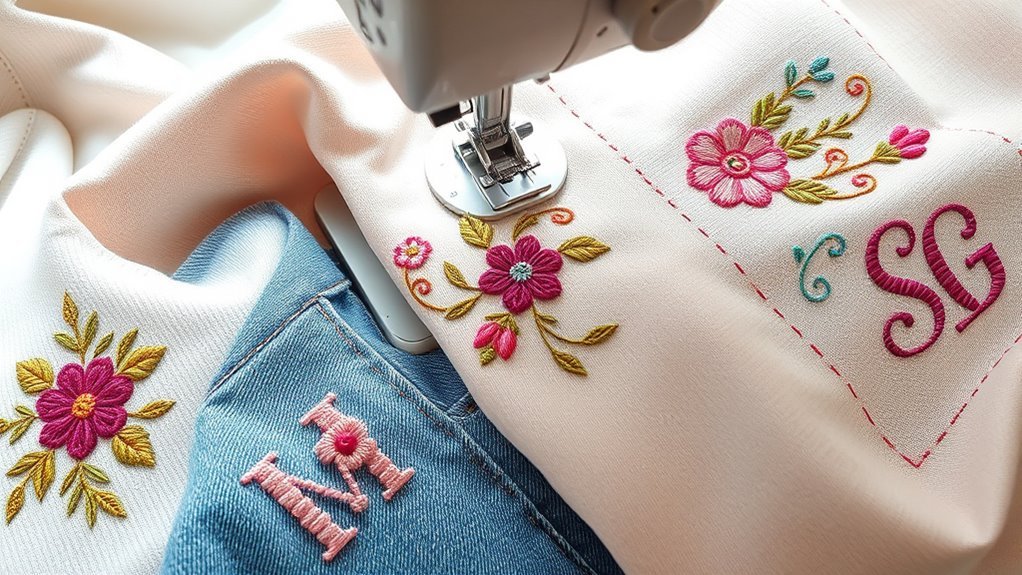
When you start embroidering with a sewing machine, you’ll find that simple geometric shapes, letters, and monograms are the easiest designs to create using basic settings. These are perfect for beginners wanting to personalize items like towels or bags.
As you gain confidence, you can explore popular embroidery motifs like floral and nature-inspired patterns, such as leaves and flowers. They add a charming touch to your projects. Holiday and seasonal designs, like Christmas trees or pumpkins, are great for festive decoration.
You can also customize apparel and home décor with logos or personalized text. If you have an advanced machine, intricate multi-color designs and detailed pictorial scenes become achievable. This opens up endless creative possibilities for your embroidery projects.
Fabrics That Work Well for Sewing Machine Embroidery
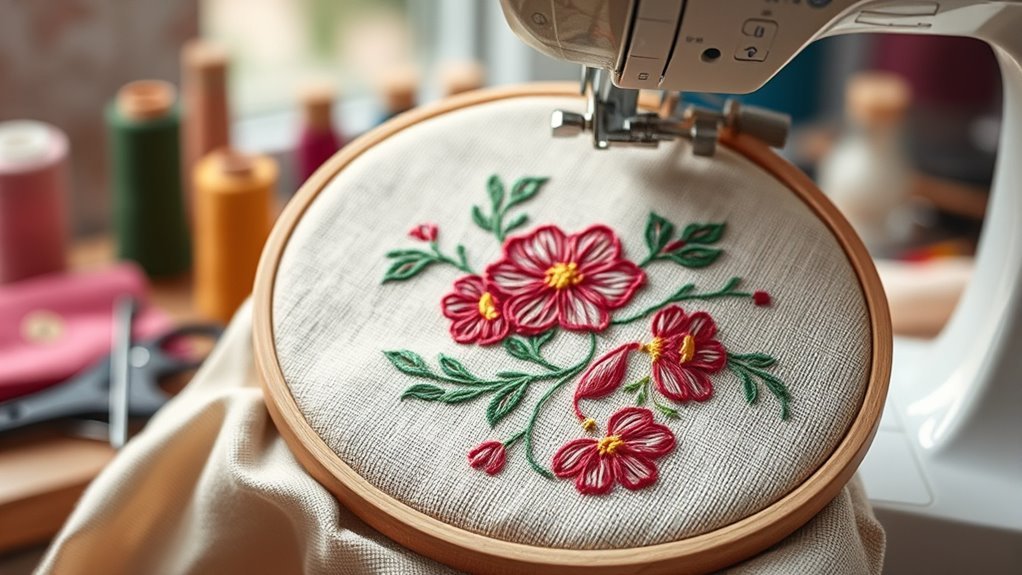
Which fabrics suit machine embroidery best? Lightweight fabrics like cotton, linen, and silk work great with your sewing machine because they’re stable and easy to stitch on.
Lightweight fabrics like cotton, linen, and silk are ideal for machine embroidery due to their stability and ease of stitching.
If you want something sturdier, medium-weight fabrics such as denim, canvas, and felt provide a solid base for detailed or textured designs.
Fabrics with tight weaves, including polyester and twill, prevent puckering and keep your embroidery crisp and clean.
Stretch fabrics like jersey and spandex can be tricky—they need stabilizers and careful tension adjustments to avoid distortion.
Specialty fabrics like burlap, felt, and velvet also work well, but you’ll want to pick the right stabilizer and needle for your sewing machine to get the best results every time.
Basic Embroidery Stitches You Can Achieve
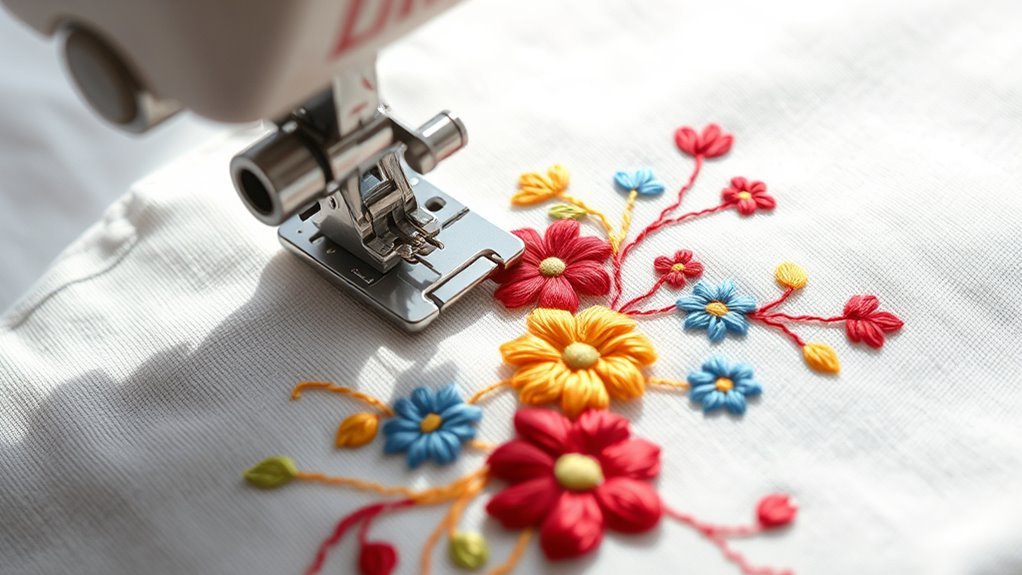
Choosing the right fabric sets the stage for your embroidery, but understanding the stitches your sewing machine can handle brings your designs to life. With most machines, you can easily create basic embroidery designs using foundational stitches.
Adjusting stitch length and tension helps control thickness and density, giving your work a polished look. If your machine has lower feed dogs or free-motion settings, you can explore more intricate patterns.
Here are some basic stitches you can achieve:
- Running stitch for simple outlines
- Backstitch to strengthen lines
- Satin stitch for filled shapes
- Zigzag stitch to add texture
- Free-motion stitching for creative freedom
Even entry-level machines support these stitches, perfect for personalized projects and simple decorative embroidery designs. So, don’t hesitate to give it a try!
Creating Letters and Monograms With a Sewing Machine
You can create beautiful letters and monograms by guiding your fabric carefully with a free-motion foot or using decorative stitches on your machine. Start by tracing your design onto stabilizer or fabric to keep your letters precise.
Adjusting feed dogs and tension will help your stitches look clean and professional every time. It’s all about finding that sweet spot that works for your specific fabric and thread. Give it a try, and you’ll see your sewing projects come to life with personalized flair!
Stitching Letters Techniques
When creating letters and monograms with a sewing machine, using a darning or free-motion foot lets you stitch directly onto fabric with control. Whether you’re using regular sewing machines or a dedicated embroidery machine, mastering stitching letters techniques takes practice but is a great place to start designing your own personalized projects.
To make sure your letters look sharp and clear, keep these tips in mind:
- Use stabilizers or tearaway backing to prevent puckering
- Adjust thread tension and stitch length for clean lines
- Outline letters with straight or zigzag stitches for style
Also, draw or trace your design using fabric markers before sewing. This really helps guide your stitching and keeps everything neat.
Practice free-motion stitching to improve precision and ease the learning curve. With these steps, your sewing machine can transform fabric into detailed letter art. Give it a try—you’ll get better with every stitch!
Monogram Embroidery Tips
Although monogram embroidery can seem complex at first, using a sewing machine with the right techniques makes it manageable and rewarding. Start by drawing your monogram design onto fabric using a water-soluble or tearaway stabilizer to guide your stitching.
Attach a darning or free-motion foot, lower the feed dogs, and set the stitch length to zero for precise control. Choose a satin or straight stitch to outline your letters, adjusting tension and stitch width for a smooth, professional finish.
For multi-colored or intricate monograms, try embroidery software to digitize and transfer your design. Always practice on scrap fabric to master stitching speed and tension.
These tips will help you create clean, beautiful monogram embroidery with confidence. Give it a try—you’ll be surprised how quickly you get the hang of it!
Using Stabilizers and Hoops for Better Results
Because embroidery demands precision, using stabilizers and hoops is vital for achieving clean, professional results. Stabilizers support your fabric, preventing puckering and distortion during stitching.
Hoops keep your fabric taut and flat, helping your machine maintain consistent patterns. Choosing the right hoop size is essential since it limits the embroidery area.
Properly securing both stabilizers and fabric reduces movement and improves stitch quality. So, getting these steps right really makes a difference!
Keep these tips in mind:
- Select stabilizer type based on fabric weight and design complexity
- Use tear-away for light fabrics, cut-away for stretchy or heavy materials
Wash-away stabilizers work well for delicate projects. Also, choose a hoop size that fits your design without crowding.
Always secure fabric tightly to avoid shifting during embroidery. This approach ensures your machine embroidery looks sharp and professional every time.
Embroidering Decorative Borders and Patterns
How can you transform simple edges into eye-catching details? Use your sewing machine to embroider decorative borders with stitches like zigzag, scallops, or feathers. Adjust width and length settings for the perfect fit.
You can preprogram designs or draw patterns manually with fabric markers, then stitch along those lines. Free-motion sewing lets you create custom borders by lowering feed dogs and using a darning foot for intricate results.
Many machines offer built-in border stitches or let you upload your own designs. Remember, multi-color borders require careful hooping and color changes to keep designs aligned and consistent.
| Stitch Type | Technique | Tips |
|---|---|---|
| Zigzag | Adjustable width/length | Great for simple borders |
| Scallops | Built-in or custom | Adds a soft, decorative edge |
| Feather Stitch | Free-motion sewing | Perfect for intricate designs |
| Preprogrammed | Software or manual draw | Ensures precision |
| Multi-color | Color changes & hooping | Keeps patterns aligned |
Combining Embroidery With Other Sewing Projects
Once you’ve mastered decorative borders and patterns, you can take your sewing projects to the next level by combining embroidery with garments, quilts, and accessories. Using a sewing machine with embroidery functions, you can add monograms, motifs, and intricate designs that seamlessly blend into your fabric pieces.
Elevate your sewing by adding monograms, motifs, and intricate embroidery designs to garments and accessories.
Embroidery also lets you create custom appliqués to sew onto bags or home décor, giving your projects a unique touch. Consider enhancing home textiles with embroidered borders or motifs for a decorative yet functional look.
Here are some ways to combine embroidery with sewing projects:
- Personalize clothing with embroidered monograms and motifs
- Add appliqué designs to bags and quilts
- Embellish pillowcases, table runners, and curtains
- Create embroidered fabric banners and wall art
- Craft unique, personalized gift items with multi-textured embroidery
Frequently Asked Questions
Can You Embroider Stuff With a Sewing Machine?
Yes, you can embroider stuff with a sewing machine. By using a free-motion foot, you’ll manually guide fabric to create simple designs, initials, or decorative stitches.
This way, you can add personalized touches even without specialized embroidery features or software. It’s a great option if you want to get creative without extra gadgets!
What Is the Forbidden Stitch in Embroidery?
The forbidden stitch in embroidery is like a wild beast tearing through your fabric—overly tight zigzags or dense stitches that’ll pucker, break threads, and wreck your machine.
Avoid it, or say goodbye to smooth, flawless designs!
What Are Some Fun Things I Can Make With an Embroidery Machine?
You can make fun personalized gifts like monogrammed towels, custom patches, decorative pillowcases, and funky tote bags.
Try crafting themed designs, embroidery hoops, or even unique keychains to show off your creativity and style. It’s a great way to add a personal touch to everyday items.
What Are Some Profitable Things I Can Embroider to Make Money?
You can embroider custom baby onesies, personalized tote bags, monogrammed towels, stylish denim jackets, and unique home décor items. These sell well, letting you earn good profits by targeting trendy and niche markets efficiently.
People love personalized stuff these days—it feels special and unique. So, focusing on items that customers can customize often pays off. Plus, things like baby onesies and tote bags are always in demand and pretty easy to personalize.
Conclusion
Now that you know what you can embroider with your sewing machine, it’s exciting to start experimenting with designs, fabrics, and stitches. Did you know that over 60% of home sewing enthusiasts use machine embroidery to personalize their projects?
Using stabilizers and hoops helps you achieve professional results every time. Whether you’re adding monograms or decorative borders, combining embroidery with other sewing makes your creations truly unique and impressive.
Keep stitching and let your creativity shine! Machine embroidery with a sewing machine opens up endless possibilities for customization. From embellishing clothing to crafting personalized gifts, your sewing machine can transform ordinary items into special keepsakes. So, grab your fabrics and explore the fun world of embroidery today!