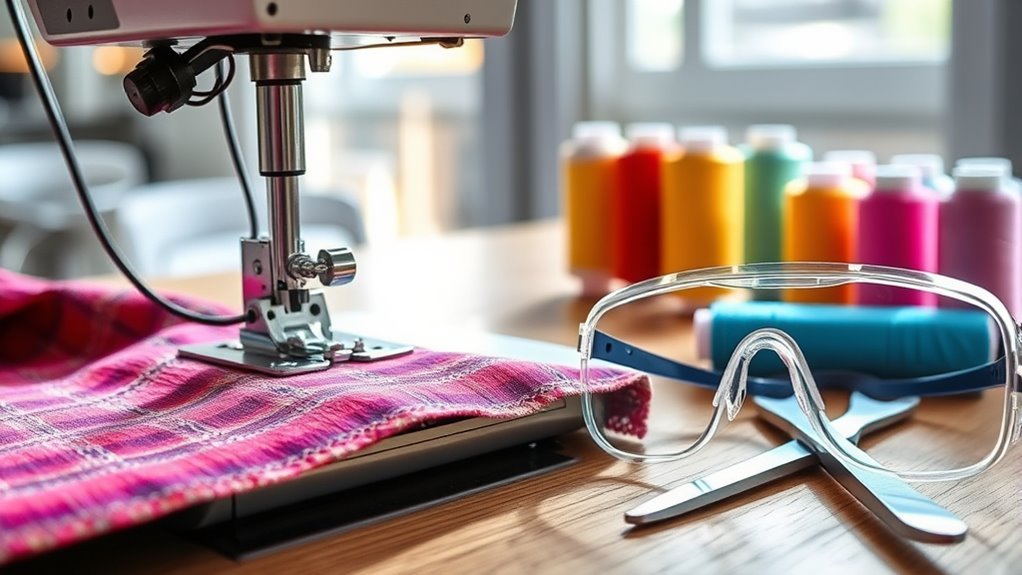
Do You Need Safety Goggles When Sewing?
You should wear safety goggles when sewing to protect your eyes from broken needle shards that can fly unexpectedly. Sewing safety is often overlooked, but those tiny needle fragments can cause serious eye injuries. Needles can snap due to fabric tension or machine issues, sending tiny fragments near or into your eyes.
It’s a good idea to wear impact-resistant glasses with side shields to keep your eyes safe. Regularly check your needles and keep your face at a safe distance while working.
If you want to understand how to better safeguard your eyes and avoid accidents, there’s more to explore. Stay safe and keep stitching!
Key Takeaways
- Safety goggles protect your eyes from needle breakage shards and flying debris during sewing. Wearing impact-resistant glasses really helps reduce the risk of serious eye injuries caused by broken needles.
- It’s a good idea to wear safety goggles especially when sewing heavy fabrics or when your machine tension is set too high. These situations increase the chance of needle breakage.
- Don’t forget to regularly inspect your needles and keep a safe distance between your face and the sewing machine. These habits work well alongside using protective eyewear.
- Also, using goggles is smart during machine malfunctions or when doing detailed work with sharp tools. It adds an extra layer of safety you definitely don’t want to skip.
Assessing the Risk of Eye Injuries in Sewing
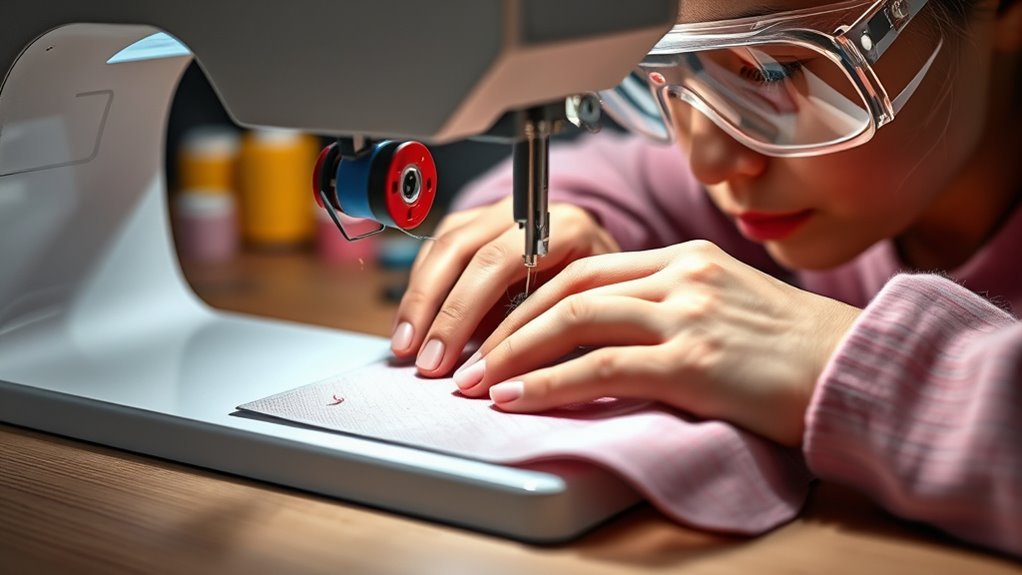
Although sewing might seem harmless, you need to be aware of the risk of eye injuries from needle breakage. When a sewing machine needle snaps, tiny shards can fly toward your face, posing a serious hazard.
There have been reports of needles lodging in the eye area, highlighting the danger. Using the wrong materials or applying too much tension only increases the chance of needle shattering.
That’s why wearing safety glasses is essential; they act as a reliable barrier, providing effective eye protection. Even if you consider yourself experienced, accidents happen fast.
Don’t risk your eyesight—equipping yourself with proper eye protection while operating a sewing machine is a simple step that can prevent painful and potentially severe injuries.
Common Causes of Needle Breakage and Flying Debris
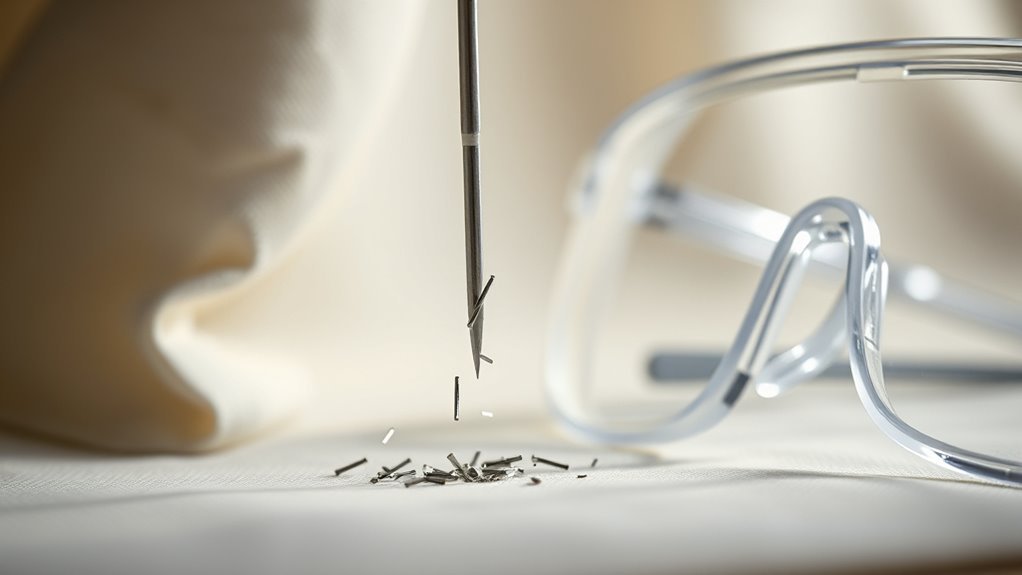
When you apply too much tension or sew through unsuitable materials, needles are more likely to break and send sharp fragments flying. Needle breakage can happen due to wear and tear or improper fabric choices, increasing flying debris risks.
These shards often snap above eye level but can still pose a threat to your eyes. Wearing protective glasses helps guard against unexpected debris and sharp needle tips.
| Cause | Effect |
|---|---|
| Excessive tension | Needle shattering, debris |
| Inappropriate fabric | Increased needle stress |
| Needle wear & tear | Higher breakage likelihood |
| Sharp fabric edges | Flying debris |
| Needle snaps above eye level | Reduced direct eye hits |
Being aware of these causes helps you take precautions to protect your eyes effectively. So, it’s always a good idea to keep an eye out for these risks when you’re sewing.
Personal Experiences Highlighting Eye Safety Concerns
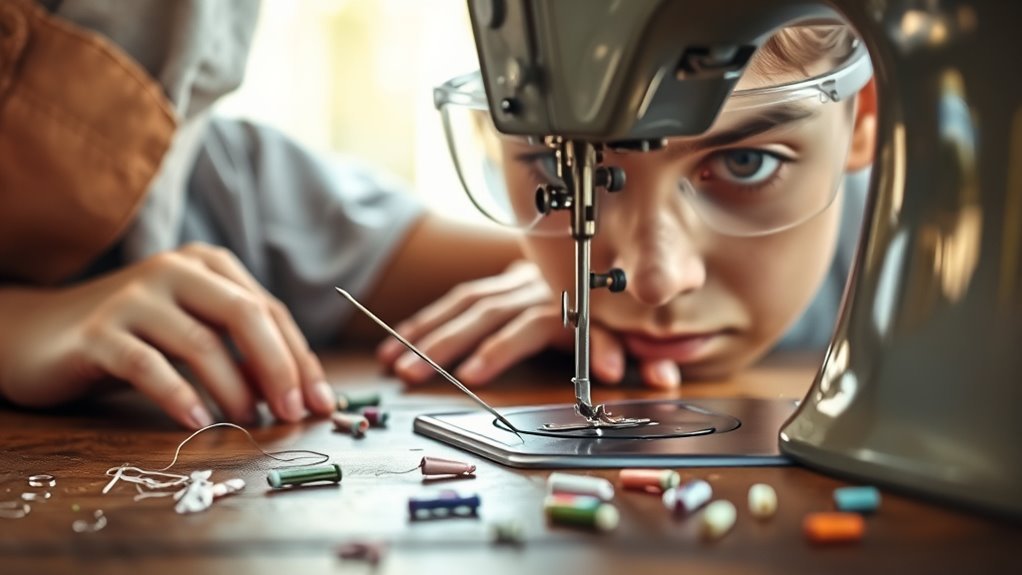
You’ve probably heard stories about needles breaking and shards flying dangerously close to the eyes. These personal accounts remind you how quickly a simple sewing mishap can turn serious.
Wearing safety goggles isn’t just cautious—it’s a smart way to protect yourself from unexpected injuries. It’s a small step that can make a big difference.
Needle Breakage Incidents
Since needles can break unexpectedly during sewing, many sewists have shared stories of shards flying dangerously close to their eyes. Needle breakage incidents happen without warning, making eye protection essential.
You might not realize how sharp and fast these fragments can be until you experience or hear about a close call. To keep yourself safe, consider these precautions:
- Always wear safety glasses or goggles while sewing.
- Inspect your needles regularly for signs of weakness.
- Avoid applying excessive pressure on the needle.
- Use proper sewing techniques to reduce needle stress.
- Keep your face at a safe distance from the needle path.
Eye Injury Stories
How close have you come to an eye injury while sewing? Many sewists share stories of needle breakage where shards flew dangerously close to their eyes.
Some have needles lodge near their cheeks or eyes, highlighting the real risk of eye trauma. Thankfully, wearing protective safety glasses has stopped serious eye injuries from happening.
These personal experiences really stress the importance of always using eye protection when sewing.
| Incident Type | Outcome | Protection Used |
|---|---|---|
| Needle shattered | Fragments flew to face | Safety glasses worn |
| Needle lodged near eye | Minor injury, no vision loss | Protective eyewear absent |
| Needle broke mid-stitch | Potential eye injury avoided | Safety glasses worn |
Don’t risk permanent damage—make safety glasses part of your sewing routine.
Types of Protective Eyewear Suitable for Sewing
When choosing protective eyewear for sewing, you’ll want options that offer full coverage and resist impact from flying debris like broken needles or fabric fibers. Impact-resistant safety glasses with side shields are ideal for keeping your eyes safe during every stitch.
Choose impact-resistant safety glasses with side shields for full coverage and protection from flying sewing debris.
Here are some types of protective eyewear suitable for sewing:
- Safety glasses with polycarbonate lenses for maximum durability
- Clear wrap-around safety goggles that block fabric fibers
- Laboratory or woodworking goggles offering full eye coverage
You can also find affordable safety eyewear from hardware stores. Snug-fitting glasses will ensure comfort and clear vision while you work.
Best Practices for Maintaining a Safe Sewing Environment
Keeping your sewing area organized and well-lit helps you stay safe and focused. Store needles, scissors, and tools properly to avoid accidents.
Tuck cords away to prevent tripping or pulling your sewing machine off the table. Regularly check your nails and secure long hair to keep them from getting caught.
Using protective gear like safety glasses near your sewing machine adds an extra safety layer.
| Practice | Reason | Tip |
|---|---|---|
| Organized workspace | Prevents injuries | Use storage boxes |
| Tidy cords | Avoids trips and damage | Use cable ties |
| Protective gear | Shields eyes from debris | Wear safety glasses when sewing |
Following these best practices really makes for a safer sewing environment. Give them a try!
Recommendations for When to Wear Safety Goggles
Although sewing often feels safe, you should wear safety goggles anytime you work with heavy fabrics, malfunctioning machines, or sharp tools. This helps protect your eyes from flying debris and needle breakage. Incorporating proper protective gear is vital for maintaining eye safety.
Here’s when you should wear safety glasses:
- When sewing heavy or multiple fabric layers to prevent needle shattering injuries
- While using new or malfunctioning sewing machines to avoid flying debris
- Near metal parts or high-tension areas prone to needle breakage
- When handling sharp tools like rotary cutters or scissors
- During close-up, detailed work to shield your eyes from tiny fragments
Frequently Asked Questions
What Happens if You Don’t Wear Safety Goggles?
If you don’t wear safety goggles, you risk serious eye injuries from flying needle shards or debris. You could suffer scratches, punctures, or infections that might require emergency treatment or surgery.
It’s really important to protect your eyes to avoid lasting damage. Don’t take the chance—wear your safety goggles every time!
What Are 10 Important Safety Rules for Sewing?
Sharp needles dance near your fingers—stay sharp! Keep your workspace tidy, wear safety glasses, unplug machines when adjusting.
Use thimbles to protect your fingers and inspect your tools regularly to make sure everything is in good condition. Avoid distractions to keep your focus on the task.
Store pins safely when not in use and handle fabrics carefully to prevent accidents. And hey, never rush your stitching—taking your time keeps you safe and your work neat!
What Are Some Safety Rules for Sewing?
You should keep your workspace organized and avoid distractions. It really helps to stay focused when you sew.
Also, tie back long hair and trim your nails. These little things can make a big difference.
Make sure to use proper tools like thimbles and safety glasses. They protect you while you work.
And always remember to turn off and unplug your sewing machine when making adjustments. Safety first!
Is It an OSHA Violation to Not Wear Safety Glasses?
Yes, it is an OSHA violation if you don’t wear safety glasses when exposed to hazards like flying needle shards.
Employers must provide and enforce eye protection to keep you safe and avoid penalties.
Conclusion
When you sew, your eyes are the windows to your craft, so don’t let a stray needle or flying thread cloud your vision. Wearing safety goggles is like giving your eyes a suit of armor against unexpected mishaps.
Even if risks seem small, protecting your sight guarantees your creativity keeps shining bright. So, gear up and sew smart—because safeguarding your eyes is the thread that holds your passion and safety together.
In the world of sewing, safety goggles are more than just an option—they’re essential. They protect your eyes from accidental pokes, flying debris, and sharp needles. By wearing them, you reduce the chance of injury and ensure you can keep enjoying your craft without interruption. So next time you pick up your needle and thread, remember that safety goggles aren’t just a precaution—they’re a smart choice that keeps your eyes safe and your creativity flowing strong.