How Much Slope Does a Sewer Line Need for Proper Flow
You need to slope your sewer line about 1/4 inch per foot for proper flow. This slope ensures wastewater moves smoothly through the pipes, preventing blockages and pipe damage. Getting the slope right is super important to keep everything flowing as it should.
If the slope is too little, solids can settle and cause clogs. On the flip side, if the slope is too steep, liquids rush ahead, leaving solids behind to build up.
Different pipe sizes and materials might require slight adjustments, but sticking close to 1/4 inch per foot is usually best.
Understanding these basics helps you avoid costly repairs and keeps your drainage system running efficiently. So, when planning or inspecting your sewer line, remember that proper slope is key to preventing problems down the line.
Key Takeaways
- The standard recommended slope for sewer lines is 1/4 inch per foot. This ensures smooth gravity flow and helps prevent blockages.
- A minimum slope of 1/8 inch per foot may be acceptable for smaller pipes, but you’ll need engineer approval for that. It’s not the ideal slope, though.
- Slopes between 1/4 and 1/2 inch per foot generally optimize flow velocity. This range also helps reduce solids buildup in pipes.
- Larger pipes, like those 4 to 6 inches in diameter, typically require at least a 1/4 inch per foot slope. This is key to maintaining proper drainage.
- It’s important to consistently measure and maintain the slope. That way, you can avoid flow issues caused by ground settling or pipe misalignment.
The Importance of Proper Sewer Line Slope
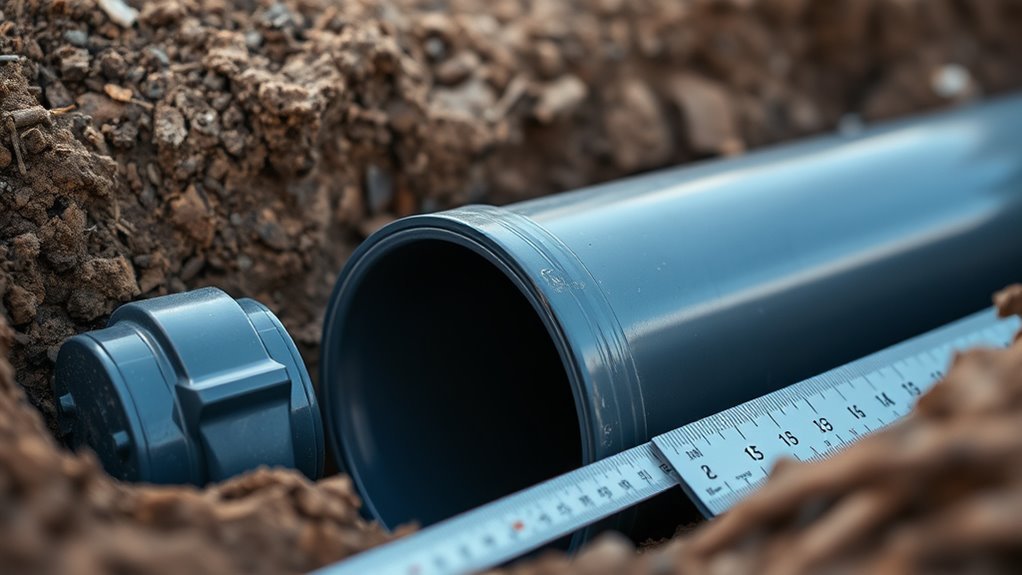
Although it might seem minor, maintaining the proper slope for your sewer line is essential for its function. Proper drainage depends on this precise angle to keep wastewater flowing smoothly.
If the slope’s too shallow, solids settle and cause blockages. On the other hand, a slope that’s too steep speeds up flow, making waste bypass the pipe walls and potentially clog downstream.
You need to keep the slope consistent during installation to avoid leaks, misflows, and system failures later. Proper slope ensures self-cleaning velocity, which helps reduce maintenance and prevents backups.
Standard Slope Requirements for Residential Sewer Lines
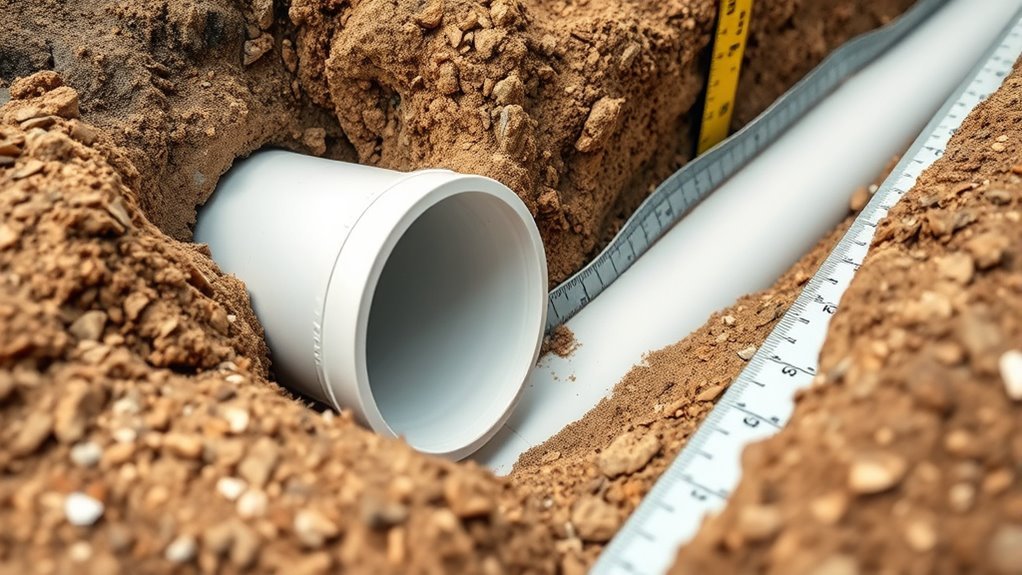
When installing residential sewer lines, you should aim for a slope of 1/4 inch per foot to guarantee wastewater flows properly by gravity. This standard slope ensures efficient drainage, preventing solids from settling and causing blockages.
In some cases, a minimum slope of 1/8 inch per foot might be acceptable, but only with engineer approval. Avoid steeper slopes, as they can lead to wastewater moving too quickly, leaving solids behind and disrupting proper drainage.
Always check local building codes and engineering standards to confirm the exact slope requirements for your area. By following these guidelines, you’ll maintain a reliable drainage system that keeps wastewater moving smoothly through your residential sewer line without risking clogs or backups.
Variations in Slope Based on Pipe Diameter and Material
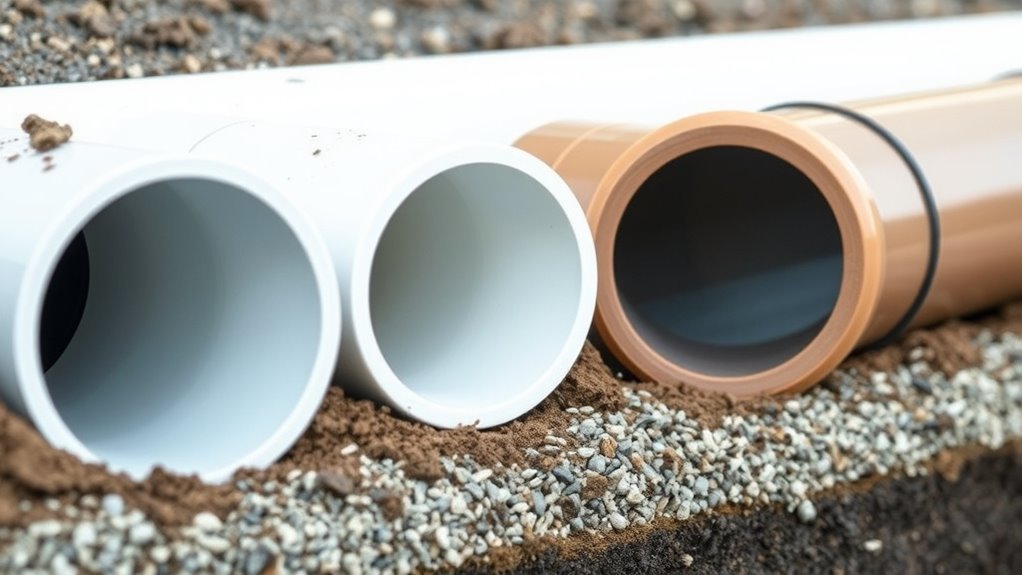
Because pipe diameter and material directly affect wastewater flow, you’ll need to adjust the slope accordingly to maintain efficiency. Larger pipes, like 4-inch or 6-inch lines, usually require the standard minimum slope of 1/4 inch per foot.
Smaller 3-inch pipes often need the same slope but can sometimes function at a minimum slope of 1/8 inch per foot if an engineer approves.
The pipe material also plays a role—smoother materials like PVC can handle slightly gentler slopes because of reduced friction. On the other hand, flexible or high-density pipes demand a consistent slope to prevent misalignment and backups.
Here’s what to keep in mind:
- Larger diameter pipes generally stick to a 1/4 inch per foot minimum slope.
- Smaller pipes might allow slopes as low as 1/8 inch per foot with approval.
- Pipe material affects friction, impacting the ideal minimum slope.
Local Code Guidelines and Professional Recommendations
Adjusting sewer line slopes based on pipe size and material is important, but you also need to follow local code guidelines and professional recommendations to guarantee your installation meets legal and functional standards.
Most local codes require a minimum slope of 1/4 inch per foot to ensure proper flow and reduce blockages. In some cases, for liquid-only pipes, slopes as low as 1/8 inch per foot might be allowed, but only with engineer approval.
Local codes typically require a minimum sewer slope of 1/4 inch per foot for proper flow.
Professionals generally recommend maintaining slopes between 1/4 and 1/2 inch per foot for ideal operation. Before installation, you should consult local building departments for specific slope requirements in your area.
Engineers and authorities will review and approve your sewer slope design to avoid costly problems and assure compliance with all regulations.
Common Problems Caused by Incorrect Sewer Line Slopes
If your sewer line slopes aren’t set correctly, you’ll likely face slow drainage and frequent blockages caused by waste not flowing at the proper velocity. Incorrect slopes lead to recurring blockages that disrupt your plumbing system.
Here are three common problems you might experience:
- Solids Settling: Too shallow slopes cause solids to settle, increasing clogs and backups.
- Rapid Liquid Flow: Excessive slopes make liquids move too fast, leaving solids behind, causing blockages.
- Standing Water and Damage: Improper slopes cause standing water, leading to foul odors, bacterial growth, pipe joint erosion, leaks, and long-term failure.
Maintaining the right slope is essential to prevent these issues and guarantee your sewer system works efficiently without recurring blockages.
How to Measure and Verify Sewer Line Slope
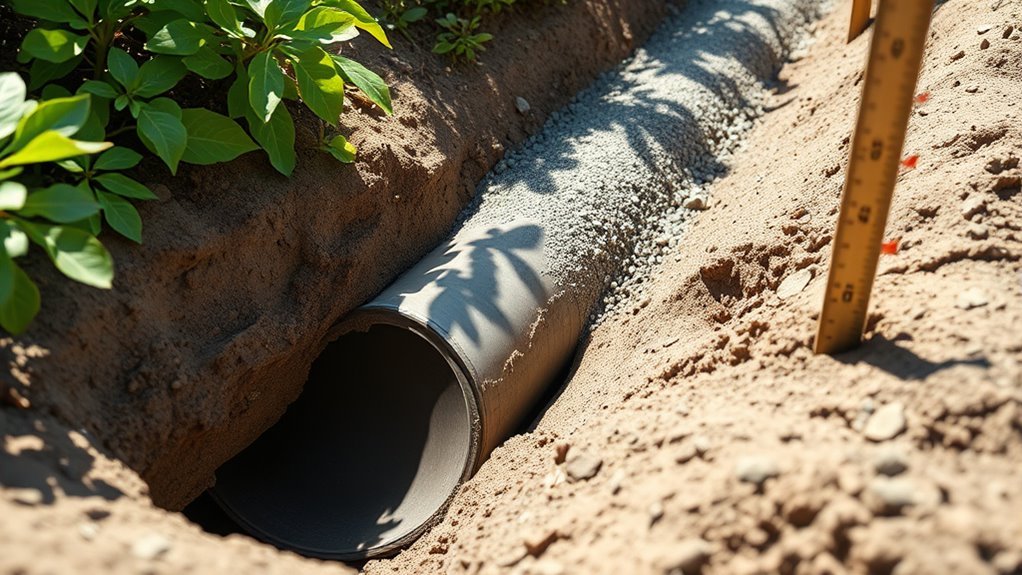
When installing or inspecting your sewer line, you’ll want to measure the slope accurately using a level or digital inclinometer. Aim for a consistent slope of about 1/4 inch per foot to ensure proper flow and prevent blockages.
Measure the vertical drop over a set horizontal distance—this confirms the slope matches the required ratio. Watch out for any low spots or deviations that could trap water, risking clogs.
After installation, regularly re-verify the slope, especially if settling or ground shifts occur, to maintain efficient drainage. By carefully measuring and confirming the inch per foot slope, you’ll help your sewer line function reliably and avoid costly repairs down the line.
Techniques for Adjusting Sewer Line Slope During Installation
You’ll want to use tools like laser levels or digital inclinometers to measure the slope accurately as you install the sewer line. Adjust the pipe length and fittings carefully to keep the slope consistent, checking regularly with a bubble level.
Flexible couplings also help you fine-tune the alignment and maintain the proper slope throughout the process. It’s all about taking your time and making sure everything lines up just right.
Slope Measurement Methods
Ensuring the correct slope during sewer line installation requires precise measurement techniques that help you maintain a consistent incline. Using reliable slope measurement methods guarantees your sewer line flows properly without blockages or backflow.
Here are three effective ways to measure slope during installation:
- Use a carpenter’s or laser level along the pipe, aiming for a steady 1/4 inch per foot slope. Check elevation changes at regular intervals to stay on track.
- Stretch a tight string line between the pipe’s start and end points. This helps you visually spot any uneven sections or dips.
- Attach a digital inclinometer or angle finder to the pipe. You’re aiming for about a 2-degree angle for the correct slope.
Slope Adjustment Tools
Although measuring the slope accurately is essential, adjusting it during sewer line installation demands the right tools and techniques. You’ll rely on slope adjustment tools like adjustable pipe supports or shims to fine-tune the pipe’s elevation, ensuring the proper 1/4 inch per foot slope.
Using a laser level or string line paired with a carpenter’s level helps you confirm measurements as you work. To verify the slope before final connection, connect the pipe to test fittings or temporary supports.
Don’t forget to check the slope at multiple points along the run for consistency and code compliance. Digital inclinometers or angle finders also provide precise slope readings, letting you adjust quickly and confidently with the right slope adjustment tools.
Long-Term Maintenance Tips to Preserve Sewer Line Slope
To keep your sewer line slope steady, regularly inspect for sagging or blockages that could signal problems. Preventative cleaning helps maintain smooth flow and reduces buildup that affects the slope.
Also, monitor ground settling around your sewer line to catch any shifts early before they cause damage. It’s a good idea to stay on top of these things to avoid bigger issues down the line.
Regular Slope Inspections
How often do you check the incline of your sewer lines? Regular incline inspections are essential to keep your system functioning properly.
You can use a level or laser device to ensure the incline stays around the recommended 1/4 inch per foot. Here’s how to stay on top of it:
- Conduct routine checks yourself and watch for slow drainage, gurgling sounds, or standing water—signs of incline problems.
- Schedule periodic professional evaluations, especially after any ground shifts or nearby construction.
- Keep detailed records of all inspections and repairs to monitor any incline changes over time.
Preventative Cleaning Practices
Why does regular cleaning matter for your sewer line’s slope? Over time, buildup from grease, fats, and debris can accumulate in your drainage lines, disrupting the proper slope and causing blockages.
To preserve flow, flush hot water combined with enzymatic cleaners regularly to break down deposits. Avoid pouring non-degradable materials down drains, and use drain screens or traps to catch solids before they enter the system.
Scheduling professional inspections every 1-2 years helps spot early signs of slope issues or blockages, allowing you to address them promptly. Keeping a consistent cleaning routine reduces solids buildup, ensuring your sewer line maintains its designed slope and ideal drainage.
These preventative cleaning practices protect your drainage lines, saving you costly repairs and maintaining efficient flow long-term. It’s definitely worth the effort to keep things running smoothly!
Monitor Ground Settling
When should you check for ground settling above your sewer line? Regular inspections are key to catching any shifts early. Look for cracks or uneven surfaces that signal ground settling.
Use tools like laser levels or digital inclinometers periodically to ensure the slope stays between 1/4 to 1/2 inch per foot.
To keep your sewer line functioning properly, follow these steps:
- Inspect the ground above the sewer line for signs of settling every few months.
- Measure the slope regularly to detect any changes caused by soil compaction or root growth.
- Address any ground movement quickly by regrading or adjusting the pipe to maintain proper slope.
Monitoring ground settling helps prevent flow disruptions and costly repairs down the line. So, don’t wait until you see major problems—stay on top of it!
Frequently Asked Questions
How Much Pitch Should a Sewer Line Have?
You should give your sewer line a pitch of about 1/4 inch per foot. This slope keeps waste flowing smoothly, prevents clogs, and avoids problems caused by too steep or too flat pipes.
Getting the pitch just right is key. If it’s too steep, water rushes through and leaves solids behind. Too flat, and you risk blockages because waste doesn’t move along properly. So, aim for that 1/4 inch per foot—it’s the sweet spot for a trouble-free sewer line.
How Long Does It Take a Plumber to Unclog a Main Sewer Line?
It usually takes you about 1 to 4 hours to unclog a main sewer line, depending on the blockage’s severity. Minor clogs clear quickly, but serious issues like roots or collapsed pipes take longer and more effort.
You might be surprised how quickly a simple clog can be cleared. But when it comes to things like tree roots invading the pipes or a section collapsing, that’s when the job really drags on. It’s a bit like comparing a quick fix to a full repair.
What Is the 135 Rule in Plumbing?
The 135 rule in plumbing means you shouldn’t let two adjacent pipe fittings exceed a combined 135-degree angle.
This helps you avoid sharp bends, which can cause blockages. Plus, it ensures your sewer lines flow smoothly and efficiently.
Can You Put a 45 Degree Angle in a Sewer Line?
Yes, you can use a 45-degree angle in a sewer line. It helps maintain smooth flow and reduces blockages.
Plus, when installed properly, it meets plumbing codes. This makes your system more efficient and easier to maintain.
Conclusion
Getting your sewer line’s slope right is essential to avoid backups and costly repairs. Imagine installing a 4-inch pipe with a 1/4 inch per foot slope, as recommended—this guarantees smooth flow and prevents clogs.
If the slope’s too flat, wastewater can pool; too steep, and solids may settle, causing blockages. By measuring carefully and following local codes, you’ll keep your system flowing efficiently for years to come.
Proper sewer line slope ensures wastewater moves steadily without causing backups or damage. Remember, maintaining the correct slope not only protects your plumbing but also reduces maintenance costs. So, always check your local guidelines to set the perfect incline for your sewer line and enjoy hassle-free drainage.