
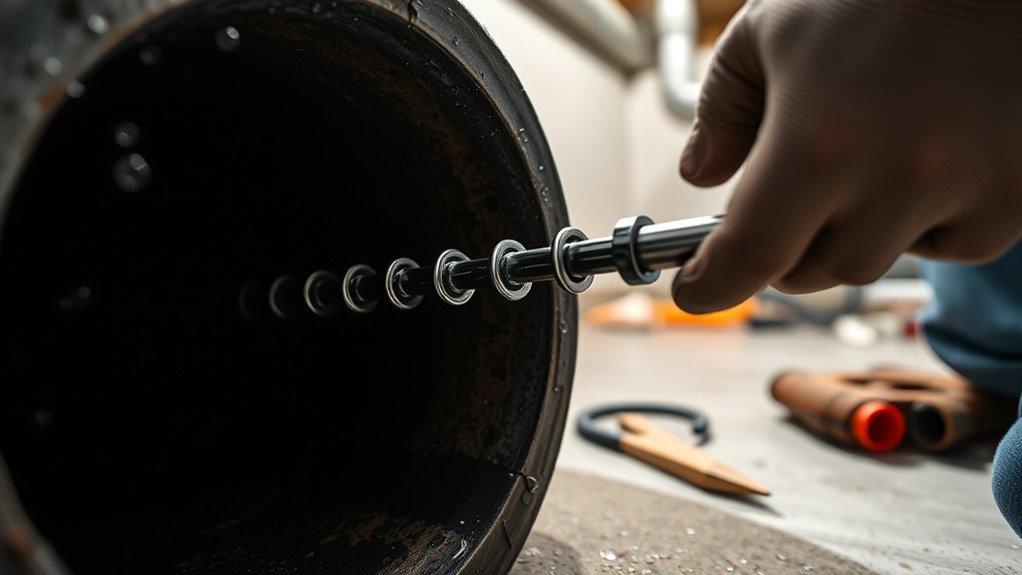
How to Clean Sewer Line in 3 Easy Steps
To clean your sewer line in three easy steps, start by gathering essential tools like a plumbing auger, heavy-duty gloves, and a drain camera.
These tools will help you tackle clogs and inspect your pipes effectively. Having everything ready makes the job much smoother.
Next, locate the cleanout, then use the auger to break up blockages. It might take some effort, but this step clears the way for water to flow freely again.
After that, flush debris out with a hose to wash away any remaining buildup.
If problems persist, don’t worry. Simply replace the cleanout cap and try some simple prevention hacks like running hot water regularly and using drain screens.
These small habits can save you from future clogs. Stick around to discover more tips for maintaining a healthy plumbing system!
Key Takeaways
- Locate the sewer cleanout in your home. It’s usually found in the basement, crawl space, or outdoors for easy access.
- Use a plumbing auger to break up clogs. Just feed the snake into the cleanout and rotate it to dislodge blockages.
- Flush the line with a hose to clear debris while watching the drainage flow. If water backs up after the first try, go ahead and repeat the process.
- Check for signs of blockages like slow drainage or unpleasant odors. Catching these early can help you avoid bigger problems down the road.
- Securely replace the cleanout cap once you’re done cleaning. It’s also a good idea to schedule regular maintenance to keep clogs at bay.
Step 1: Gather Tools for Cleaning Your Sewer Line
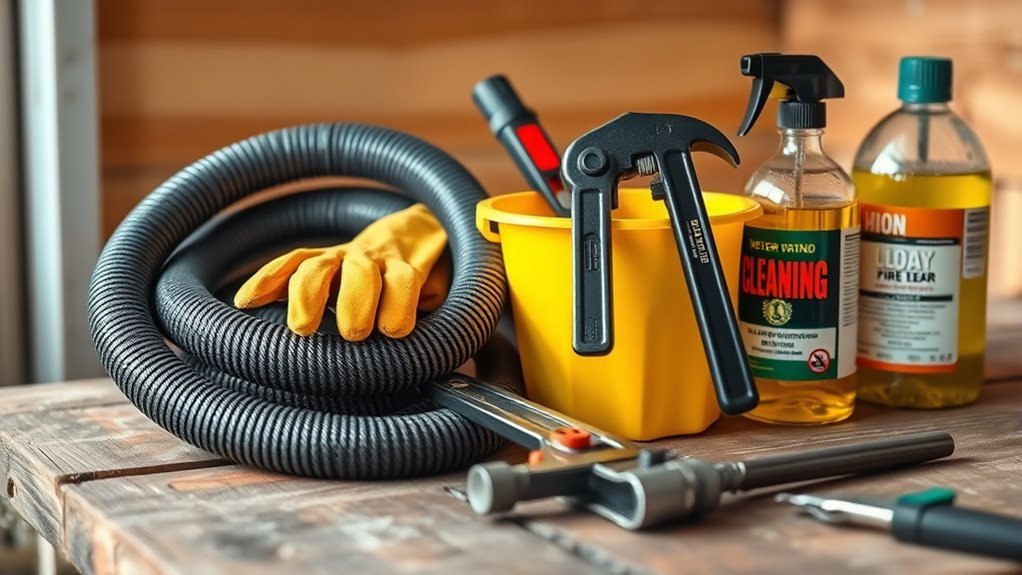
To effectively clean your sewer line, you’ll need a few essential tools. First, gather a plumbing auger, also known as a snake, to break apart tough clogs. Don’t forget a pair of heavy-duty waterproof gloves to protect your hands during the cleaning process.
A drain cleaning tool with barbs is great for removing hair and debris lodged in the pipes, especially above the P-trap. You’ll also want a high-quality drain camera to inspect the sewer line, helping you identify the location and nature of any blockages.
Finally, make sure you have a wrench handy to unscrew the cleanout cap, which provides access to the sewer line for effective cleaning and maintenance. And hey, a garden hose can help flush out any remaining debris.
Step 2: Implement Your Sewer Line Cleaning Strategy
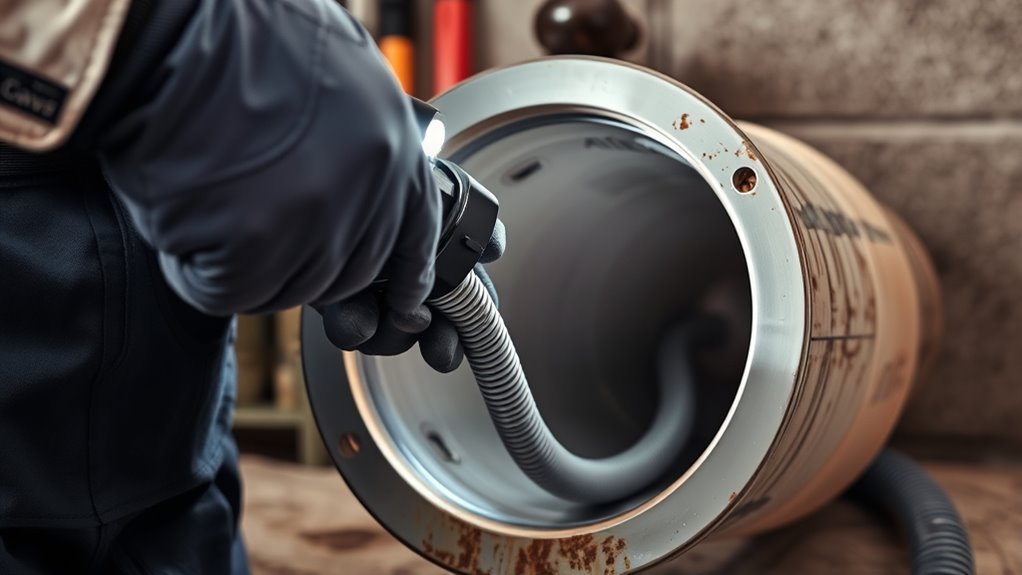
With your tools ready, it’s time to implement your sewer line cleaning strategy. Start by locating the sewer cleanout, which is usually found in basements, crawl spaces, or outside.
Use your plumbing auger to break up any blockage. Feed the snake line into the cleanout until you hit resistance, then push further to break it up.
Next, insert a hose to flush out debris while keeping an eye on the drainage flow. After using the auger, run water to see how well the blockage is cleared.
If water backs up, just repeat the process. Finally, securely replace the cleanout cap and think about scheduling regular maintenance to prevent future issues.
Consistent cleaning really helps keep your sewer system functioning smoothly.
Step 3: Keep Your Sewer Line Clear: Simple Prevention Hacks
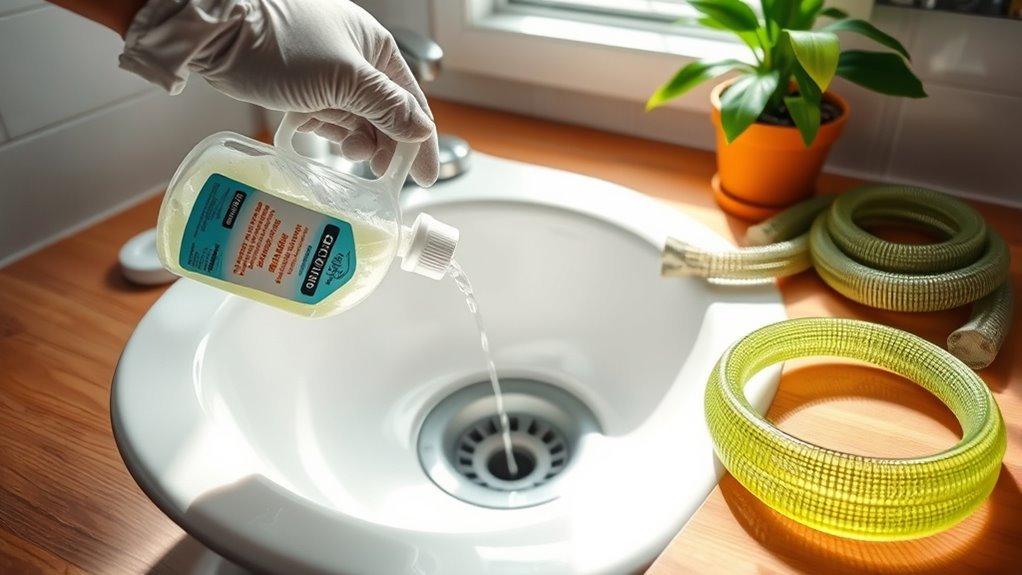
While you’ve successfully tackled the cleaning process, maintaining a clear sewer line is essential for long-term peace of mind. To keep your sewer line clear, start by regularly running hot water through your drains; this helps dissolve grease and debris.
Maintaining a clear sewer line is vital; regularly running hot water can help dissolve grease and debris.
Use drain screens to catch hair and other materials, preventing major blockages. Avoid disposing of grease, oil, and food particles, as they can solidify and create stubborn clogs.
A monthly mix of baking soda and vinegar can break down minor clogs, promoting smoother drainage. Additionally, consider investing in drain cleaners for preventative maintenance.
If you encounter tree roots or stubborn blockages, don’t hesitate to call for professional cleaning—it can save you time and hassle in the long run.
Frequently Asked Questions
How to Clear a Clogged Sewage Line?
To clear a clogged sewage line, start by locating the cleanout access. Make sure you wear safety gear before you begin.
Next, use a plumbing auger to break up the blockage. This tool really helps get through tough clogs.
After that, flush the line with hot water to clear out any remaining debris. If the clog is stubborn and won’t budge, it might be best to call in a professional. They have the right equipment and experience to handle it safely.
Does Dawn Really Unclog Drains?
Yes, Dawn can unclog drains by breaking down grease and food particles. Pour a generous amount down the drain, followed by boiling water.
But keep in mind, it’s not a fix for stubborn clogs like solid debris. For those, you might need something stronger or a plumber.
Is It Good to Pour Vinegar Down Your Drains?
You wouldn’t use a rotary phone to fix your plumbing, but pouring vinegar down your drains is great! It breaks down grease, eliminates odors, and keeps your pipes fresh.
Just don’t rely on it for serious clogs. Vinegar’s awesome for maintenance, but tough blockages need a stronger solution.
What Chemical Can Unclog a Main Sewer Line?
You can use sodium hydroxide or sulfuric acid to unclog a main sewer line. Just make sure it’s safe for your plumbing and always follow the manufacturer’s instructions.
It’s really important to handle these chemicals carefully. They’re powerful, so using them the right way will give you the best results without causing damage.
Conclusion
By diligently diving into these three straightforward steps, you can effectively eliminate clogs and combat costly complications. Remember, regular maintenance and mindful habits keep your sewer line sparkling and smoothly functioning.
So, don’t delay—discover the power of prevention and promote a problem-free plumbing paradise. With a little effort and the right tools, you’ll enjoy a clean, clear sewer line for years to come!
Happy cleaning! Keeping your sewer line clean not only prevents backups but also saves you from expensive repairs down the road. Regular cleaning and proper care make all the difference in maintaining a healthy plumbing system. Start today, and you’ll thank yourself later with a smoothly running sewer line that keeps your home safe and odor-free.