Are Sewing Needles Allowed on Planes?
You can bring sewing needles on planes, but you’ll need to pack them carefully. Needles are allowed in both carry-on and checked bags if stored securely, preferably in a hard case or pouch to avoid injury and speed security checks.
Sharp tools like scissors over 4 inches must go in checked luggage. Airlines may have specific rules, so it’s smart to check before you go.
Keep your sewing supplies organized to breeze through screening, and discover tips to make traveling with your kit easier.
Key Takeaways
- Sewing needles are allowed in both carry-on and checked luggage if stored securely in cases or pouches.
- Needles should be packed in hard or transparent containers to prevent injury and aid TSA inspection.
- Scissors with blades shorter than 4 inches are generally permitted in carry-on, but longer blades must go in checked bags.
- TSA officers have final authority, so check airline and airport-specific policies before traveling with sewing supplies.
- Proper organization and labeling of sewing kits help speed up security screening and reduce the risk of confiscation.
TSA Regulations for Sewing Needles in Carry-On Bags
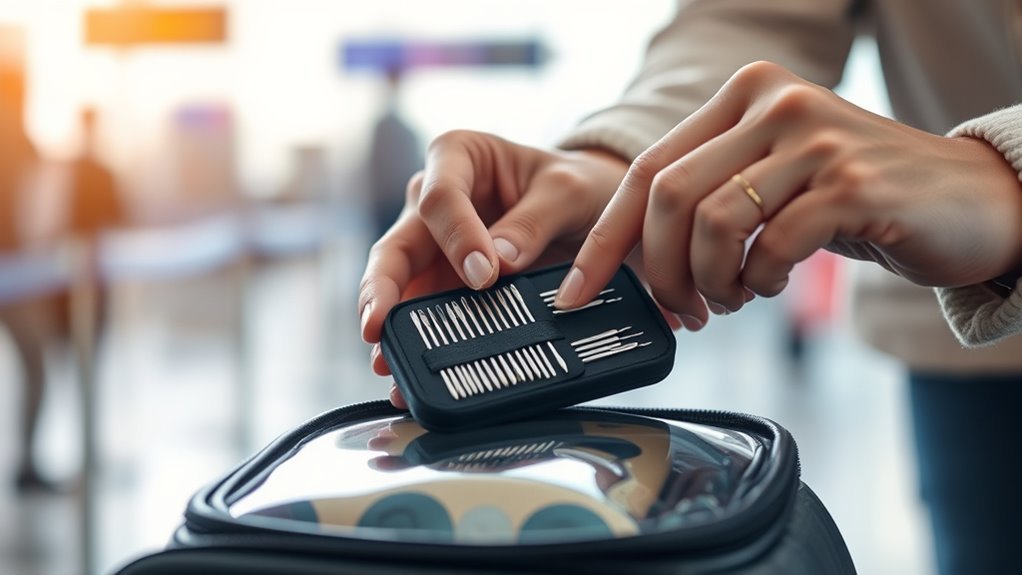
Wondering if you can bring sewing needles in your carry-on bag? According to TSA regulations, sewing needles are permitted in carry-on bags, but you need to store them securely.
It’s best to keep them in cases or small pouches to prevent injury and make security screening smoother. TSA officers may closely examine bags containing visible sharp objects, so organizing your needles in clear containers helps speed up the process.
While sewing needles are generally allowed through security screening, the final decision rests with TSA officers at the checkpoint. By following these guidelines, you can confidently pack your sewing needles in your carry-on bag without worrying about delays or confiscation.
Guidelines for Packing Sewing Needles in Checked Luggage
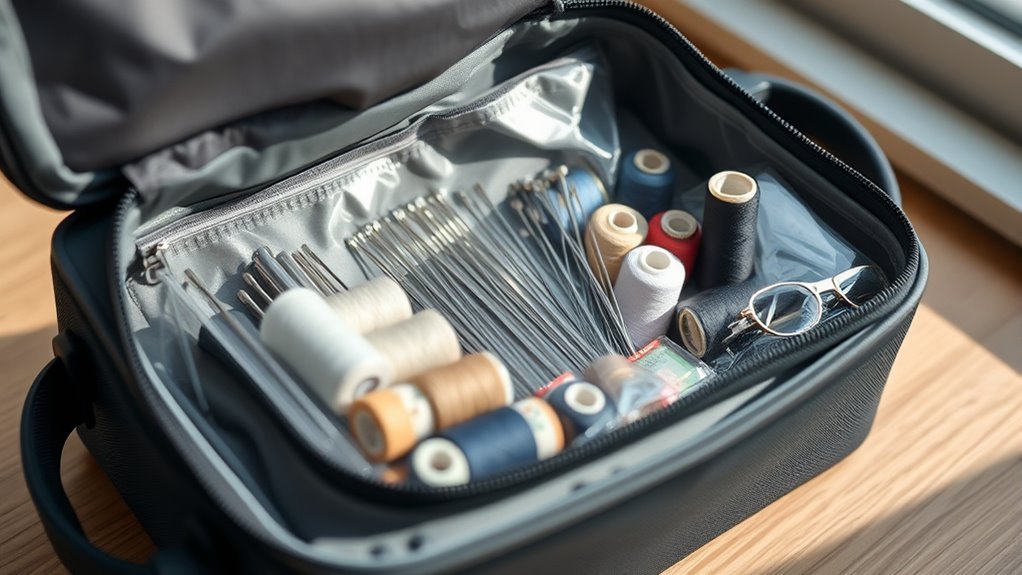
When packing sewing needles in your checked luggage, use a secure, padded container or a dedicated needle case to keep them safe and prevent injury. Wrap sharp needles or place them in a hard-shell case to avoid damage to your bags or other items.
Also, consider labeling the container to ease TSA inspections. And don’t forget to always check your airline’s specific rules before you travel. It’s better to be prepared than to face surprises at the airport!
Needle Storage Solutions
Although sewing needles are allowed in checked luggage, you should store them securely to prevent injury and ease security checks. Use a hard, secure needle case or a small sewing kit for safe storage. This prevents needles from puncturing your luggage and makes security inspection smoother.
Avoid leaving needles loose or attached directly to fabric; instead, keep them in dedicated compartments within your needle storage. It’s best to store needles separately from fabric, using a plastic container with a tight-fitting lid or a dedicated sewing box.
Make sure each needle is capped or covered to avoid accidental pricks during handling. Clearly label your needle storage as containing sewing supplies. Taking these steps ensures your needles stay organized and safe throughout your journey.
Safety Precautions Checked Bags
Since sewing needles are permitted in checked luggage, you should pack them carefully to prevent injury and damage. Proper packing ensures your sewing needles pass through security smoothly without causing issues.
Unlike sharp objects prohibited in carry-on bags, sewing needles can be transported safely in checked bags if secured well.
Here’s how to pack your sewing needles in checked bags:
- Use a sturdy, padded container or a small sewing kit to hold needles securely.
- Avoid loose needles; always keep them in a sealed container to prevent punctures.
- Store sharp objects like rotary cutters only in checked bags, never in carry-on.
- Organize all sewing tools neatly to minimize risk of loss or damage during transit.
Following these steps keeps your needles safe and compliant with security regulations. It’s pretty straightforward once you get the hang of it!
TSA Inspection Considerations
Packing your sewing needles properly in checked luggage not only keeps you safe but also helps speed up TSA inspections. To comply with security guidelines, place your sewing needles in a hard, padded container inside your checked baggage.
This prevents injury and damage during handling. Using clear, resealable plastic bags or dedicated needle cases can make it easier for TSA officers to inspect your items quickly.
While sewing needles are allowed in both carry-on luggage and checked baggage, storing them securely reduces the risk of confiscation. Remember, TSA inspection officers have the authority to deny items if they suspect safety concerns.
Following these tips ensures your needles pass through security smoothly, letting you focus on your travels without hassle.
Airline Policies on Sewing and Knitting Tools
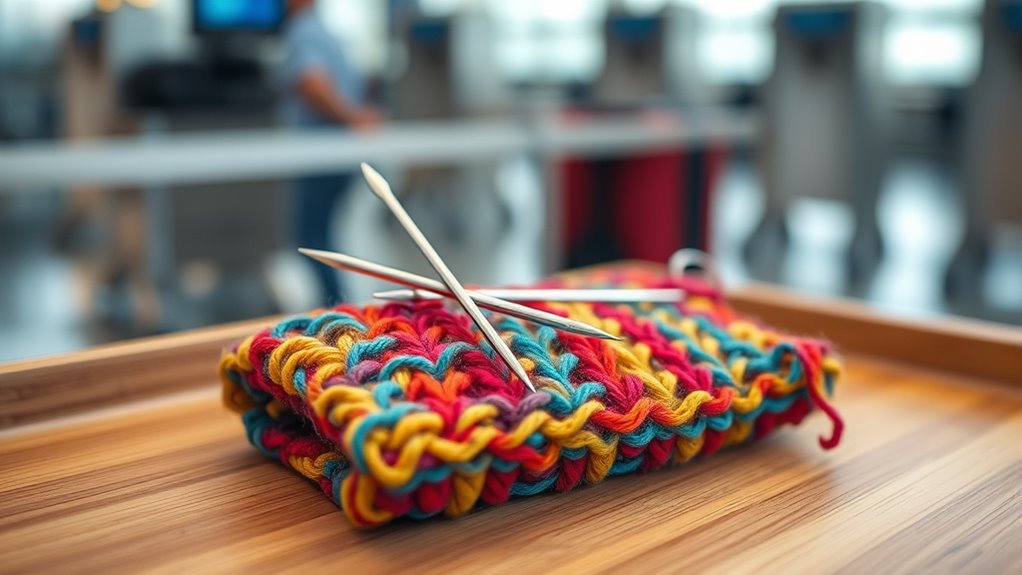
When you travel with sewing or knitting tools, you’ll find that most airlines allow sewing needles and small scissors under 4 inches in your carry-on bags. Airline policies generally align with TSA guidelines, permitting these items in carry-on luggage, but sharp tools like rotary cutters must go in checked bags.
Remember, security officers have the final say, so it’s best to be prepared.
Keep these tips in mind: store sewing needles and knitting tools in secure, clearly labeled cases. Avoid carrying sharp cutting tools in carry-on luggage.
Also, check your airline’s specific policies before packing. Be ready for possible additional screening at security checkpoints.
Following these guidelines helps ensure smooth travel while keeping your sewing supplies accessible.
Traveling Internationally With Sewing Supplies
When traveling internationally with sewing supplies, you need to check the security rules for each country and airport you’ll pass through.
Packing your needles in a secure, labeled case helps avoid issues at checkpoints. Also, keep in mind that airlines may have different regulations, so reviewing their policies before you fly is essential.
International Security Variations
Because security regulations differ widely across countries, you’ll need to check the rules for carrying sewing needles and related supplies before traveling internationally.
What’s allowed in your carry-on luggage on one international flight might be restricted on another. Airport security in some countries is stricter, especially regarding sharp objects.
Keep these points in mind:
- The UK permits scissors with blades up to 6cm in hand luggage, but security may still apply discretion.
- Australia and New Zealand often ban scissors and nail clippers in carry-on bags.
- Security regulations for sewing needles vary markedly worldwide.
Always verify rules at departure, transfer, and destination airports to avoid confiscation or delays.
Remember to check with your airline and airport authorities before traveling to ensure compliance with current security regulations.
Packing Sewing Supplies
Although sewing needles are generally permitted on international flights, you’ll want to pack them carefully to avoid injury and delays. Always store sewing needles in small, hard-sided cases or pouches to keep them secure and easy for security to inspect.
Avoid leaving needles loose or attached to fabric, as this can cause injury or lead to confiscation. You can carry them in your carry-on luggage or checked bags, but check airline policies and security regulations beforehand to ensure compliance.
For scissors, pack blades under four inches and consider TSA-approved or rounded-tip scissors to meet safety standards. Proper packaging not only protects you but also smooths your security experience when traveling internationally with sewing supplies.
Airline Regulations Differences
Since airline regulations on sewing supplies vary widely across countries, you’ll need to check each destination’s rules before packing your needles and scissors. Different nations handle sewing needles and sharp tools differently in carry-on luggage and checked baggage.
Security officers may also interpret rules case-by-case, so staying informed is key.
In the US, TSA allows sewing needles in both carry-on and checked baggage, but large scissors usually go in checked.
UK airports permit scissors up to 6cm in carry-on, though sewing needles can be subject to security officers’ discretion.
Australia and New Zealand often ban sharp tools in carry-on luggage entirely.
Always verify airline regulations and airport policies for each country to prevent confiscation or travel delays.
Restrictions on Sharp Sewing Tools and Accessories
When you travel with sharp sewing tools, you need to be aware of specific restrictions to avoid issues at airport security. Sewing needles and other sharp tools are generally allowed in both carry-on luggage and checked baggage.
However, items with blades, such as rotary cutters or needlepoint tools with blades, must be packed in checked baggage due to strict security regulations. Scissors with blades longer than 4 inches are prohibited in carry-on luggage, while shorter ones are permitted.
Security personnel may inspect sharp tools and confiscate any item they consider a risk. To guarantee smooth screening, keep your sharp tools organized and easily accessible.
Following these rules helps you comply with security regulations and prevents delays or confiscations during your travel.
Safe Storage Solutions for Sewing Needles During Travel
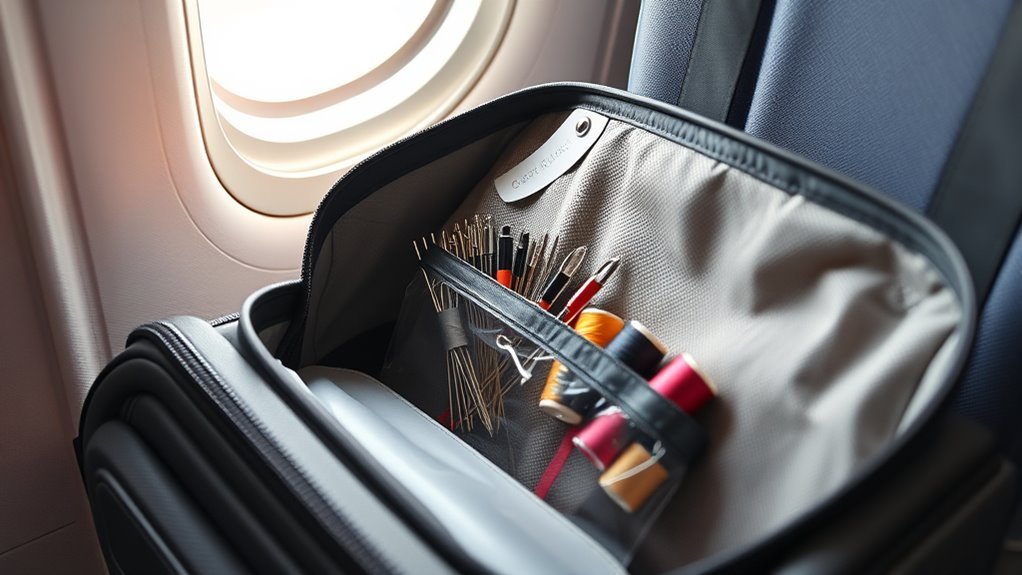
To keep your sewing needles secure during travel, choose hard plastic or metal cases with tight lids that prevent them from spilling. Using secure containers helps guarantee your needle storage complies with TSA guidelines and keeps your needles safe in your carry-on.
For ideal travel safety, follow these tips:
- Store needles in small, labeled pouches or zipped fabric cases designed for crafts.
- Avoid threading needles onto fabric or using magnetic keepers inside luggage.
- Use transparent containers for easy TSA inspection and quick identification.
- Ensure all containers are tightly closed and padded to prevent injury and damage.
Tips for Organizing Your Sewing Kit for Air Travel
Although packing a sewing kit for air travel might seem straightforward, organizing it thoughtfully can save you time and hassle during security checks. Store your needles in a secure, hard-sided case within your sewing kit to prevent loss and protect your carry-on luggage.
Use clear, resealable plastic bags to separate and organize supplies, which speeds up security screening. If you pack scissors, make sure their blades are under 4 inches and properly sheathed or wrapped to comply with regulations.
Keep all sharp tools separate from fabric or loose items to avoid injury and simplify inspections. Label your sewing kit clearly and be ready to explain its contents if asked.
These steps ensure your sewing kit stays organized and passes through security smoothly. It’s all about being prepared and making the process easier for yourself!
Handling Security Checks With Sewing Supplies
Since sewing needles can sometimes raise concerns during security checks, you should pack them carefully and be ready to explain their purpose if asked. Following TSA regulations is key to a smooth process when carrying sewing supplies in your carry-on luggage.
Here are essential packing tips to help you handle security checks efficiently:
- Store sewing needles in a hard, protective case to prevent injury and comply with TSA safety requirements.
- Clearly label your sewing supplies to make inspection easier for security officers.
- Keep needles organized and avoid loose items that might prompt additional scrutiny.
- Be prepared to open your bag and show your sewing kit if requested by TSA personnel.
Alternatives to Traditional Sewing Tools for Flying
When you fly, you might want to swap traditional sewing needles for safer, TSA-friendly alternatives like small blunt-tipped scissors or nail clippers. These small scissors are TSA-compliant and fit easily in your carry-on without raising security concerns.
Consider using compact sewing kits designed specifically as travel tools; these often include pre-threaded needles and thread bobbins, reducing the need to carry multiple sharp items. A magnetic needle minder is another smart addition, securely holding your needles during transit and while you work.
Lightweight embroidery hoops or frames also help maintain project tension without the need for sharp tools. By opting for these alternatives, you’ll breeze through airport security and keep your sewing projects safe and accessible throughout your journey.
Frequently Asked Questions
Will TSA Confiscate Sewing Needles?
TSA usually won’t confiscate your sewing needles if you keep them in a secure case or small sewing kit.
But if they’re loose or look suspicious, officers might ask to remove or inspect them for safety reasons.
Will TSA Stop You for Needles?
Needles, like tiny swords, rarely stop you at TSA checkpoints. You might face questions or inspections, but if you keep them in a case and explain their use, they usually let you pass without issue.
It’s pretty straightforward. Just be honest and organized, and you should be fine.
Can I Take a Small Pair of Sewing Scissors on an Airplane?
You can bring small sewing scissors with blades under 4 inches in your carry-on. Just make sure they have rounded tips or blade covers for safety.
Always double-check your airline’s specific rules before flying. It’s better to be safe than sorry!
What 7 Things Should You Not Wear on a Plane?
Wondering what not to wear on a plane? Avoid metal-studded clothes, belts with buckles, and excessive jewelry.
Bulky pockets, strong perfumes, uncomfortable shoes, and tight outfits are also no-gos. You’ll breeze through security and stay comfy throughout your flight.
Conclusion
Think of your sewing needles as tiny keys opening creativity, even miles above the ground. By following TSA rules and packing them safely, you guarantee these keys stay with you, ready to stitch memories on your journey.
Just like a well-organized kit keeps threads untangled, careful preparation smooths your travel experience.
So, pack smart and fly confident. Let your sewing supplies be the bridge connecting your art to every destination you explore. Remember, knowing if sewing needles are allowed on planes and how to pack them properly ensures a hassle-free trip. With the right precautions, your sewing needles will travel safely, keeping your creative spirit alive wherever you go.