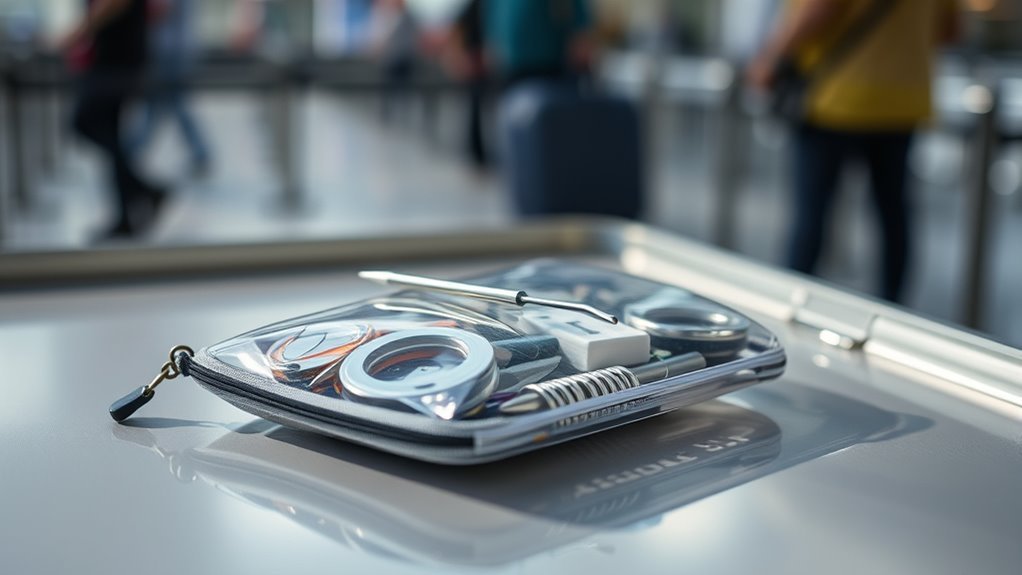
Are Sewing Needles Allowed on a Plane?
Yes, you can bring sewing needles on a plane, but it’s important to pack them securely. Make sure to use clear, labeled containers and carry them in your carry-on bag. This helps keep your needles organized and makes security checks go more smoothly.
TSA allows various types of needles, including embroidery and tapestry ones, without specific quantity limits. So, feel free to bring what you need for your projects.
Just remember, keeping them neatly organized speeds up the process at security.
If you’re traveling with medical needles, make sure you have proper documentation. Also, use puncture-proof cases to keep everything safe.
Following these simple guidelines will help you avoid delays and ensure a smooth screening experience as you travel.
Key Takeaways
– Sewing needles, including embroidery and tapestry needles, are allowed in carry-on luggage with no specific quantity limits under TSA regulations. Just make sure you pack them securely in clear, labeled containers.
This helps speed things up during security screening at airport checkpoints. It’s a simple way to avoid any hassle!
- Try to avoid carrying large or sharp needles in checked luggage. They might get confiscated or cause extra security scrutiny, which is definitely something you want to steer clear of.
- Carry craft needles in your carry-on bags instead. You might even want to use blunt or travel-sized needles for a smoother TSA inspection.
- And hey, always check the latest TSA and airline policies before you travel. Rules can change, so it’s best to stay updated to avoid delays or having your needles taken away.
Overview of TSA Regulations for Sewing Needles
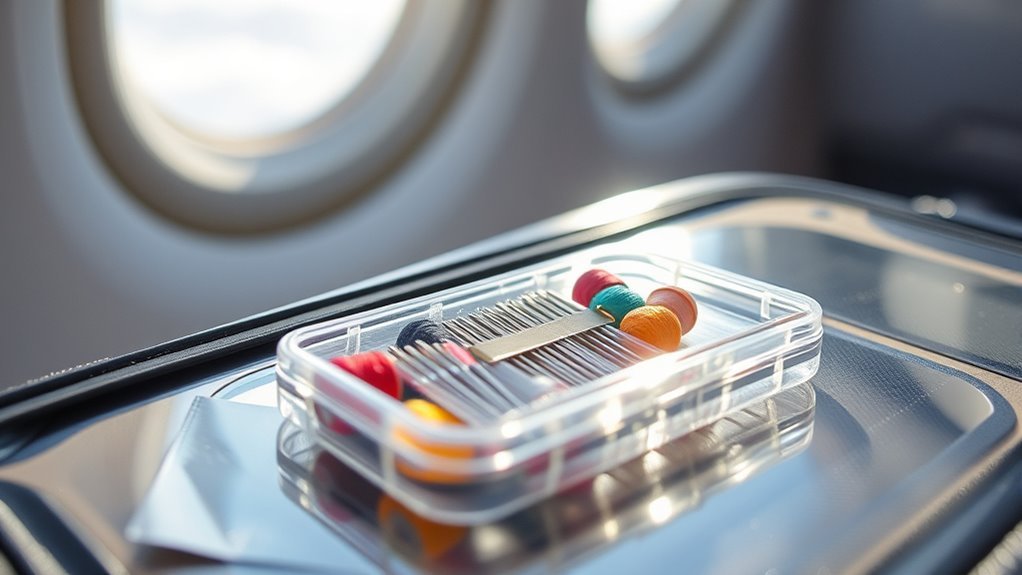
Wondering if you can bring sewing needles on a plane? The TSA allows sewing needles in your carry-on luggage, including embroidery, tapestry, and hand sewing needles. There’s no specific limit on the number or type of needles you can carry, but you should pack them securely to avoid any issues during screening.
It’s a good idea to keep your needles in a labeled, clear container, which helps TSA officers quickly identify them. While most needles pass through without trouble, sharp or large needles might draw extra attention or questions.
Keep in mind that international rules can differ, so you should check the regulations of your destination country before flying with needles. Following these tips helps guarantee a smooth security process.
Carrying Medical Needles and Syringes on Flights
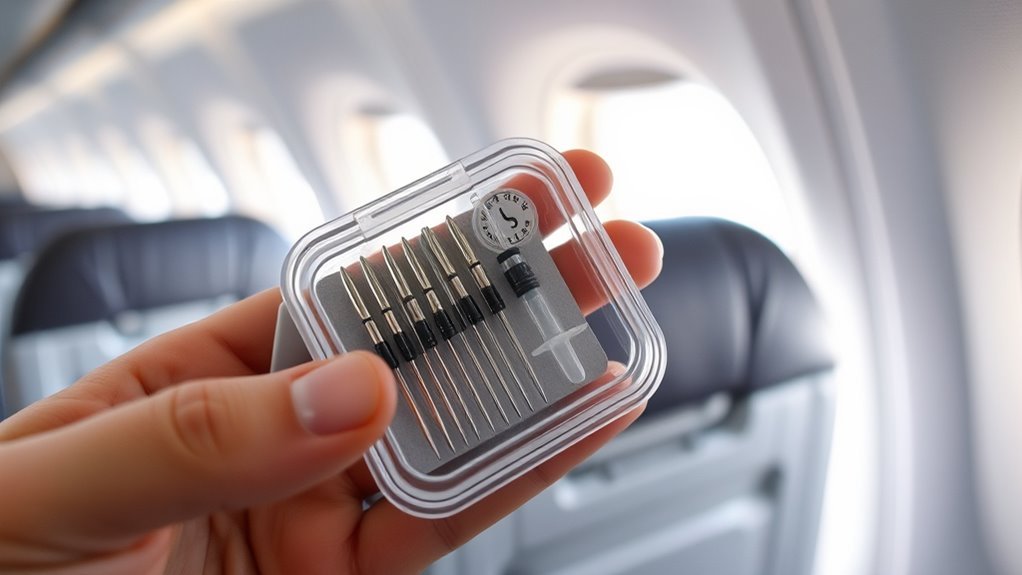
If you need to carry medical needles or syringes on a flight, make sure they’re for personal medical use and properly labeled. Keep documentation like prescription labels or a doctor’s note handy to avoid delays at security.
Also, pack used needles in puncture-proof containers. And don’t forget to check your airline’s rules before you travel. It helps to be prepared so your trip goes smoothly!
Medical Needle Regulations
Although carrying medical needles and syringes on a plane requires some preparation, TSA allows you to bring them in your carry-on luggage when you have a prescription or medical documentation. According to TSA guidelines, medical needles like insulin syringes are exempt from the usual 3-1-1 liquids rule if you declare them at security.
To stay safe and compliant, place used needles in puncture-proof, leak-proof containers and declare them during screening. Make sure to carry supporting documents such as doctor’s notes or prescriptions to verify your medical need.
Keep in mind that international regulations may differ; some countries require needles to be in checked bags unless properly labeled and accompanied by proof of necessity. So, always check local rules before traveling.
Packing and Documentation
How should you pack and document medical needles and syringes to guarantee hassle-free air travel? First, always pack your medical equipment in properly labeled, FDA-approved, or impact-resistant sharps containers. Keep these containers in your carry-on luggage, not checked bags, to ensure easy access.
Before you travel, check TSA guidelines and carry a valid prescription or medical documentation confirming the necessity of your needles and syringes. At security checkpoints, declare all medical needles, syringes, and related liquids to facilitate a smooth check process.
It’s also wise to carry a doctor’s note or medical letter, ideally translated into the local language, to verify your medical needs during customs inspections. Staying organized with proper documentation and packing helps avoid delays and guarantees your medical equipment stays safe during your flight.
Packing and Security Screening Tips for Needles
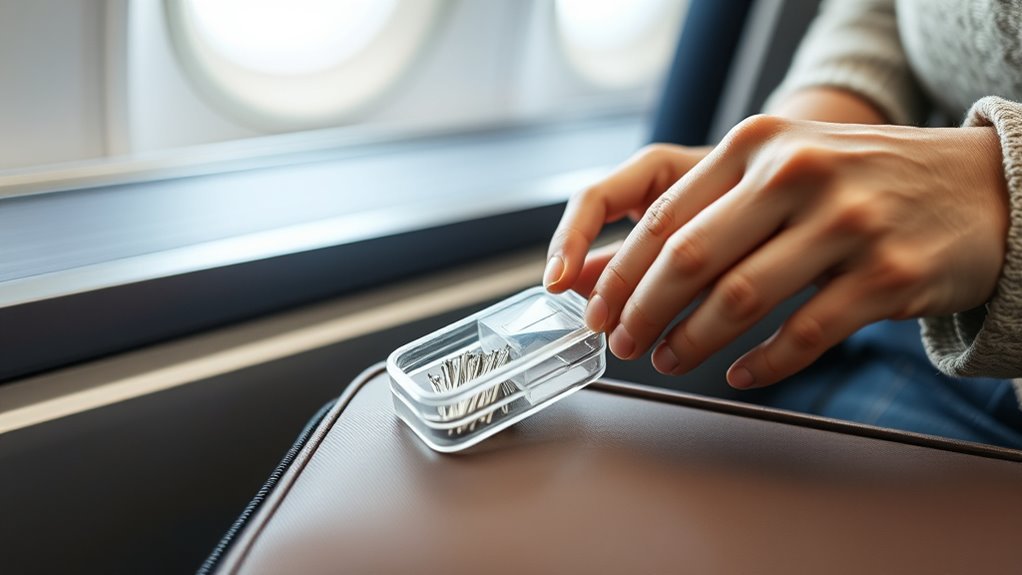
When packing your sewing needles, use a clear, labeled case to keep them organized and visible during TSA screening. This way, the security staff can easily see what they are.
Make sure to carry them in your carry-on luggage to avoid confiscation, and check any specific rules if you’re flying internationally. Every country might have slightly different regulations, so it’s good to be prepared.
Bringing documentation that shows your craft purpose can also help smooth the security process. It just adds an extra layer of explanation if needed.
Needle Packing Essentials
Since sewing needles can pose safety concerns during security checks, you should pack them carefully to avoid delays or confiscation. Always store your sewing needles in a clear, labeled container to prevent injury and help TSA officers quickly identify them.
Carry your needles in your carry-on luggage, as TSA rules generally allow this, but avoid placing them in checked bags to reduce the risk of loss or damage. Make sure the container is secure to keep needles from shifting during travel.
If you’re traveling internationally, consider carrying a doctor’s note or prescription if your needles are for medical use. Lastly, double-check specific airline and country regulations before your trip to ensure your sewing needles comply with all rules.
TSA Screening Procedures
Properly packing your sewing needles sets the stage for a smoother security screening experience. Keep your needles in a clear, labeled container inside your carry-on bag to help TSA agents easily identify them.
Avoid pockets and separate needles from scissors or thread cutters to prevent confusion. TSA may inspect your craft tools, but blunt needles usually pass if stored correctly.
Always declare your needles if asked, and be ready to show them.
| Item | Packing Tip |
|---|---|
| Sewing Needles | Clear, labeled container |
| Scissors | Keep separate, follow size rules |
| Thread Cutters | Store with other craft tools |
Following these tips helps you breeze through security without hassle.
Documentation and Compliance
Although carrying sewing needles might seem straightforward, you need to follow specific documentation and compliance guidelines to guarantee a hassle-free security screening. First, pack your needles in a clear, labeled container within your carry-on luggage. This makes inspection easier and prevents injury.
If you’re carrying medical needles, bring prescription labels or a doctor’s note to verify medical necessity. Always declare these medical supplies at security checkpoints to avoid delays or confiscation.
For craft needles, keep them in a small, labeled case to clearly show they’re for sewing or embroidery. Following these documentation and compliance steps helps TSA officers quickly understand the purpose of your needles, ensuring a smoother screening process and reducing the chance of complications during your travel.
International Rules for Traveling With Needles
When you travel internationally with sewing needles, you need to check each country’s and airline’s rules carefully, as they can differ widely.
For example, while the U.S. TSA generally permits sewing needles, including those used for cross stitch or knitting needles, in carry-on bags, places like the UAE and Singapore require needles to be packed in checked luggage unless medically documented.
Many countries demand proof of medical necessity, such as prescriptions, if you carry needles for health reasons.
Proof of medical necessity, like prescriptions, is often required when carrying needles for health reasons internationally.
To avoid confiscation or delays, always review local customs regulations and airline guidelines before your trip.
Taking these precautions guarantees your needles—whether for cross stitch, knitting, or other crafts—stay with you throughout your international journey without issues.
Airline-Specific Policies on Needles and Sharps
Since airlines often set their own rules, you should check specific policies on sewing needles and sharps before your flight. Most carriers follow TSA guidelines, but variations exist.
Here’s what to keep in mind:
- Airlines like Southwest and American Airlines allow sewing needles in carry-on bags without special documentation. But they should not be excessively sharp or numerous.
- Some airlines recommend carrying needles in a secure, labeled container. This helps avoid safety concerns or confiscation by a TSA officer.
- If you pack needles in checked luggage, confirm the airline’s rules. Certain carriers or countries may have stricter policies or even require documentation.
Handling Needle-Related Issues at Security Checkpoints
If you carry sewing needles through airport security, packing them securely in a clear, labeled container can help prevent delays or confiscation. At the security checkpoint, TSA allows needles on a plane in your carry-on, but small, blunt-tipped needles clear screening more easily.
Keep needles with other craft tools to streamline inspection. If TSA agents question you, calmly explain their purpose and show any documentation, like a doctor’s note or craft project details, to avoid confusion.
Remember, sharp or large needles may raise concerns, so opting for shorter, blunt needles reduces issues. Always check current TSA guidelines before your trip, as policies can change, and final decisions rest with security officers at the checkpoint.
This approach helps you navigate needle-related issues smoothly.
Recommendations for Craft and Embroidery Needles
Although TSA allows craft and embroidery needles in your carry-on, you should store them securely in a clearly labeled container or dedicated pouch to guarantee a smooth security screening. This helps prevent delays and confusion at the checkpoint.
When packing your needlepoint tools and larger scissors, follow these recommendations:
- Use a sturdy, transparent case specifically designed for needles and small tools.
- Label the container clearly with contents to assist TSA agents during inspection.
- Keep larger scissors and sharp sewing needles separate from blunt-tipped embroidery needles to avoid damage and meet airline policies.
Remember to check international regulations and airline rules before traveling. It’s also a good idea to carry a copy of TSA guidelines if needed. Proper preparation ensures your craft supplies travel hassle-free.
Alternative Needle Options and Medical Devices for Travel
When traveling with needles, you can choose alternatives like blunt-tipped or travel-sized options that meet TSA requirements. This makes your journey smoother and less stressful.
For medical purposes, devices such as insulin pens, auto-injectors, and jet injectors are allowed in the cabin. They often replace traditional sharp needles, which is super convenient.
These medical devices reduce hassle during security checks, especially when you have proper documentation like prescriptions or doctor’s notes. It’s always good to have those handy!
Needle-free injection systems offer another convenient option. They minimize the need to carry sharp objects, making travel even easier.
For craft enthusiasts, using enclosed needle containers and TSA-approved blunt scissors helps keep your supplies secure and compliant. This way, you avoid any trouble at security checkpoints.
Frequently Asked Questions
Can You Take Sewing Needles in Your Checked Baggage?
Yes, you can take sewing needles in your checked baggage. Just make sure you secure them in a labeled, impact-resistant container to avoid damage or loss.
It’s a good idea to double-check your airline’s specific rules before you travel. That way, you’ll be sure everything goes smoothly!
What 7 Things Should You Not Wear on a Plane?
You shouldn’t wear metal jewelry, belts, or clothing with metal accents. Shoes with metal parts and heavy watches are also best avoided.
Bulky accessories or anything with large metal buckles can cause problems too. These items might set off security alarms and slow you down at checkpoints.
It’s just easier to keep things simple and metal-free when you’re flying. That way, you can breeze through security without any hassle.
Will TSA Confiscate My Tweezers?
TSA usually won’t confiscate your tweezers if they have blunt tips. But if yours are sharp or pointed, you might lose them.
It’s a good idea to keep them in checked luggage or a clear container to avoid hassle. That way, you’re all set and won’t have to worry at security.
What Items Are Banned in Hand Luggage?
You can’t bring sharp objects like knives, large scissors, aerosols, flammable liquids, firearms, ammunition, explosives, corrosives, or toxic substances in your hand luggage.
Always check airline rules before packing to avoid surprises at security. It’s better to be safe than sorry!
Conclusion
So, when you’re packing your sewing needles for a flight, remember TSA’s rules and pack smartly to avoid any hiccups at security—like a knight preparing his armor before battle. Keep medical needles separate and declare them if needed.
Check your airline’s specific policies, too. With a little foresight and care, your needles will travel smoothly, letting you focus on crafting or health without the stress of unexpected delays.
By following these simple guidelines, you can ensure your sewing needles are allowed on a plane without any trouble. Always double-check TSA regulations and airline rules before you pack. That way, your sewing needles and medical needles will be safely in your carry-on, ready for your next project or health needs. Safe travels and happy stitching!