Are Sewing Needles Allowed on Airplanes?
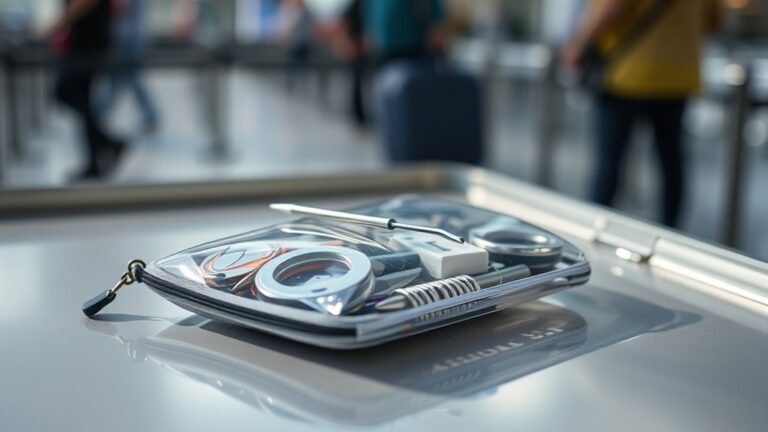
You can bring sewing needles on airplanes, but you’ll need to pack them carefully and follow TSA rules to avoid issues. Needles are allowed in both carry-on and checked bags if stored safely in a case or pouch. This makes traveling with your sewing supplies easier than you might think.
Small scissors under four inches with rounded tips are also permitted in carry-on luggage. However, larger tools and sharp items should be packed in your checked luggage to stay within security guidelines.
Proper packing helps speed security checks and prevent confiscation. Keep going to find out how to organize and pack your sewing supplies safely. With a little preparation, your sewing needles and accessories can fly with you without any hassle.
Key Takeaways
- Sewing needles are generally allowed in both carry-on and checked luggage but must be securely stored in a case or small sewing kit.
- TSA officers have the final say, so keeping your needles properly packaged and organized helps avoid any confiscation during security checks.
- Small scissors under 4 inches with rounded tips are okay to bring in carry-on bags. Bigger or sharper cutting tools, though, should go in checked luggage.
- Using safety covers and packing needles in a clear, resealable plastic bag makes TSA inspections smoother and keeps you compliant.
- It’s a good idea to double-check your airline’s specific rules before traveling. Following TSA guidelines ensures your sewing needles and tools get through without any hassle.
TSA Regulations for Sewing Needles
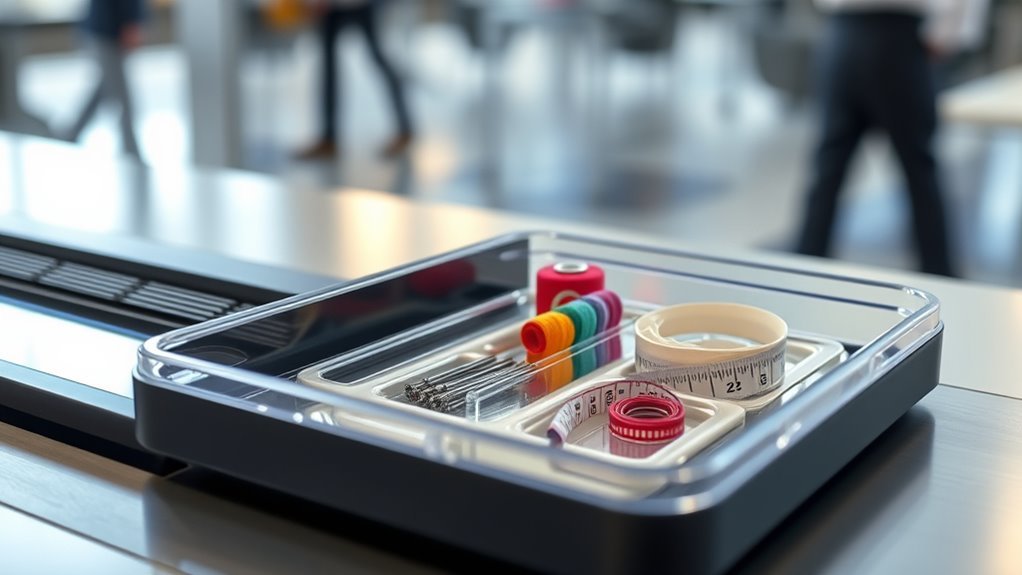
Although TSA allows you to bring sewing needles, including knitting needles, in both carry-on and checked bags, final approval depends on the TSA officer at the security checkpoint. According to TSA guidelines, sewing needles fall under sharp objects, so you should store them securely in cases or pouches to avoid injury during security screening.
You can pack sewing needles in your carry-on luggage or checked bags without worrying about specific size limits. However, remember that TSA officers have the discretion to deny any item if they believe it poses a safety risk.
Regulations may vary by country or airline, so always check before you travel. By following these rules, you can carry your sewing tools confidently without unexpected issues during your journey.
Carry-On Baggage Rules for Sewing Tools
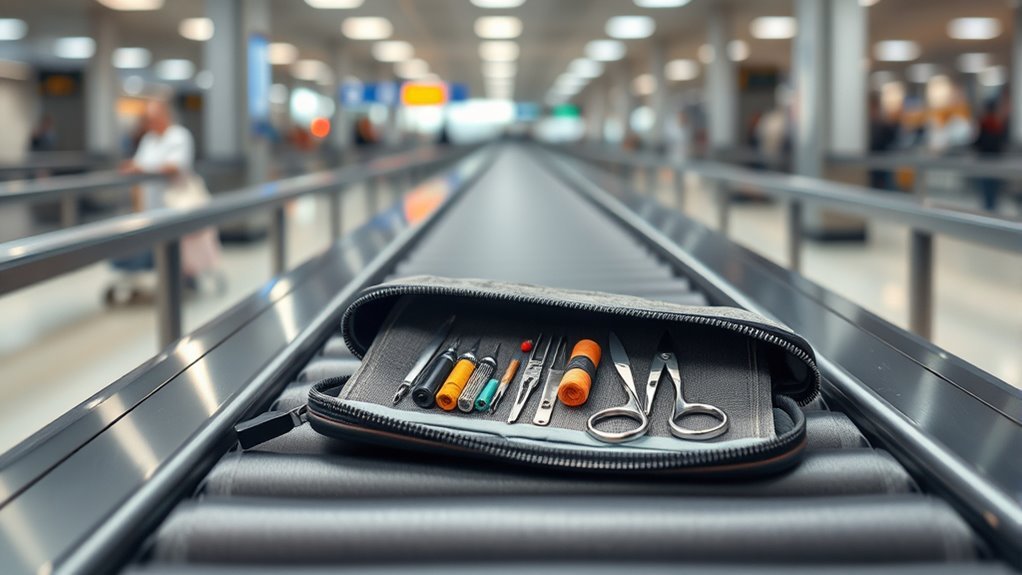
When you pack sewing tools in your carry-on, make sure to keep needles safely stored in a case or small sewing kit to prevent injury and loss. According to TSA rules, sewing needles are allowed in carry-on baggage without restrictions, but they must be secured in a protective case.
Small scissors under 4 inches are also permitted in your carry-on, while larger scissors need to go in checked luggage. Be prepared for a security inspection, as TSA agents may ask questions or examine your sewing supplies.
Always verify current TSA rules before your flight since regulations can change. By organizing your sewing needles and small scissors properly, you’ll breeze through security and keep your tools safe during travel.
Checked Baggage Guidelines for Sewing Supplies
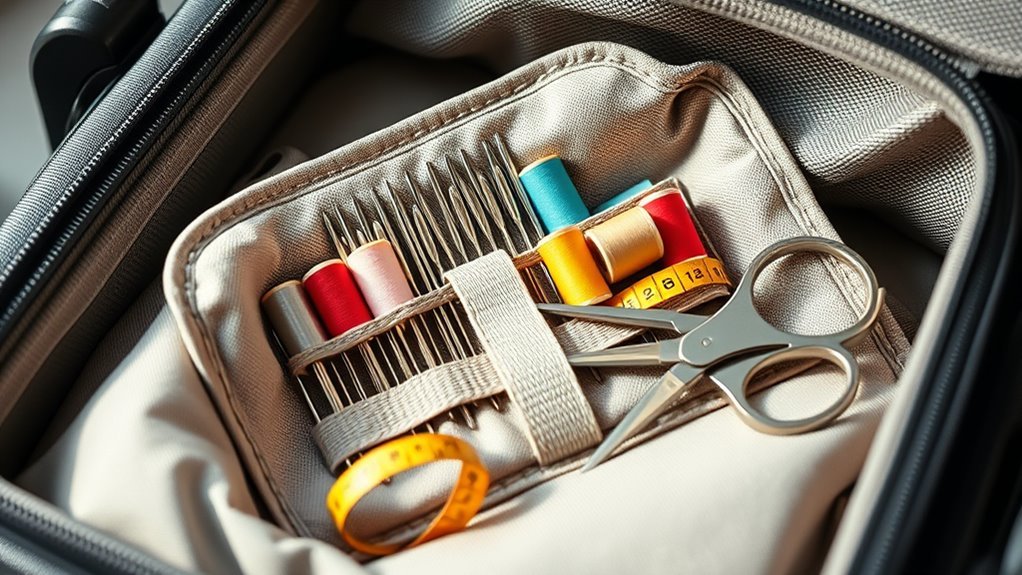
Packing sewing needles and other sharp tools in your checked baggage requires careful preparation to guarantee safety and compliance with TSA regulations. You can pack sewing needles in checked baggage, but it’s best to store them in a protective case or small sewing kit to avoid injury or damage during handling.
Sharp tools, especially those with blades, must be checked rather than carried on, so avoid placing them in your carry-on. Wrapping or padding these items adds an extra layer of protection.
During security screening, TSA officers have the final say on whether your sewing supplies are allowed, so ensure everything is securely packed and clearly organized. Following these guidelines helps you travel hassle-free while keeping your sewing tools safe.
Airline Policies on Sewing Needles and Tools
Since sewing needles are allowed in both carry-on and checked bags under TSA rules, you can usually bring them on your flight without issue. However, airline policies may vary, so it’s smart to check specific rules before traveling.
According to TSA guidelines, scissors under 4 inches with rounded tips are permitted in carry-on luggage, making it easier to carry sewing tools onboard. Sharp cutting instruments like rotary cutters must be packed in checked baggage to meet security regulations.
Keep in mind, TSA officers have the final say at security checkpoints, so compliance with their instructions is essential. By staying informed about both TSA guidelines and airline policies, you can confidently travel with your sewing needles and tools hassle-free.
Traveling With Knitting Needles and Crochet Hooks
You can usually bring knitting needles and crochet hooks in both your carry-on and checked bags, but make sure to pack them safely in a secure case.
Small scissors with blades under 4 inches are also allowed in carry-ons, while sharper tools need to go in checked luggage.
Keep in mind, TSA officers have the final say and may inspect or confiscate items if they don’t meet safety rules. Just be prepared and pack smart!
Carry-On Vs Checked
While TSA generally allows knitting needles and crochet hooks in both carry-on and checked bags, you should pack them carefully to avoid delays. Sewing needles and smaller scissors with blades under 4 inches can go in your carry-on, but larger scissors or items with blades must be in checked luggage to meet security regulations.
Proper packing helps TSA officers quickly approve your tools at checkpoints.
- Store sewing needles and scissors in secure, labeled cases for easy inspection.
- Keep blades under 4 inches in carry-on; place larger blades in checked bags.
- Avoid carrying needlepoint tools or circular cutters in carry-on to comply with rules.
Following these packing tips lets you travel smoothly without surprises related to your sewing supplies.
Packing and Safety
Although knitting needles and crochet hooks are permitted in both carry-on and checked bags, packing them properly guarantees safety and smooth security checks.
To comply with TSA regulations and ensure safety during travel, store your sewing needles and knitting tools in protective cases or a small sewing kit. Secure packing prevents injury to you and baggage handlers, and helps avoid confusion during screening.
Avoid leaving needles threaded or attached to fabric, as this can raise security concerns. Use organized containers like plastic tubes or fabric pouches to keep everything tidy and accessible.
When placing your needles in carry-on luggage, prioritize safety and neatness to speed up the security process and protect your tools throughout your journey.
TSA Regulations Overview
Knowing how to pack your sewing needles and knitting tools safely is just one part of traveling with them. TSA regulations allow sewing needles, knitting needles, and crochet hooks in both carry-on luggage and checked baggage.
However, security officers at the checkpoint have the final say and may confiscate items if they think they’re unsafe. So, always pack your needles in secure sewing kits or padded cases to avoid injury or loss.
Keep in mind, items with blades, like needlepoint tools, must go in checked baggage, not your carry-on.
To keep your trip smooth, remember to verify current TSA regulations before traveling. Store needles in protective cases within your sewing kits.
Also, separate any blade-containing tools and pack them only in checked baggage.
Following these guidelines helps ensure your sewing supplies stay with you.
Packing and Organizing Sewing Needles Safely
Since sewing needles can easily cause injury or get lost during travel, you should store them in hard, secure cases or small pouches. Use a needle case or protective containers like plastic tubes or magnetic keepers to guarantee packing safety.
Wrapping needles in fabric adds an extra layer of security, preventing accidental pricks. Keep your sewing needles separate from other craft supplies and pack them in your carry-on luggage for easy access and to comply with TSA regulations.
Labeling or color-coding your kit helps identify needles quickly at security checkpoints, reducing delays. By following these travel tips and ensuring all needles are fully enclosed in secure storage, you’ll meet TSA safety requirements and protect yourself and others during your flight.
Restrictions on Cutting Tools and Scissors
Besides sewing needles, other tools like cutting instruments and scissors face stricter rules when flying. TSA regulations prohibit sharp cutting tools with blades, such as rotary cutters, in carry-on luggage. You must pack these cutting tools safely in checked baggage, ensuring blades are sheathed or wrapped to avoid injury.
Scissors follow specific size rules: blades longer than 4 inches aren’t allowed in carry-on luggage, while those under 4 inches—especially with rounded tips—are generally permitted. Remember, TSA officers have the final say after inspection.
- Cutting tools with blades belong in checked baggage, wrapped securely
- Scissors under 4 inches with rounded tips are usually allowed in carry-on luggage
- Always expect TSA inspection and comply with their decisions regarding blades
Following these rules keeps your sewing needles and cutting tools safe and compliant.
Tips for Sewing While Traveling by Air
When you travel by air and want to sew, packing your needles in a secure, hard case or a small sewing kit helps prevent injury and loss during security checks. To meet TSA regulations, store scissors with blades shorter than 4 inches and use safety covers.
Organize all sewing tools in a clear, resealable plastic bag for easy security screening. Carry small, portable items like thread snips or nail clippers as makeshift cutters, which are often allowed in carry-on bags.
If possible, pack sharp or larger tools in checked luggage to avoid issues. Prepare your sewing project in advance, selecting compact and non-sharp supplies to ensure smooth passage through airport security.
These travel tips will keep your sewing needles and tools safe and accessible while flying.
How to Handle Confiscated Sewing Items
Although it’s frustrating to have your sewing needles confiscated at airport security, staying calm and polite can help you understand the reason behind it. TSA officers may confiscate needles if they’re not stored properly or deemed unsafe.
Stay calm and polite if your sewing needles are confiscated at airport security to understand the reason behind it.
If this happens, ask for clarification politely and document the incident. Remember, once confiscated, needles usually can’t be reclaimed, so you might need to replace them.
To handle this situation better:
- Always store needles in a hard case or covered container before placing them in your carry-on.
- Check TSA guidelines on what’s allowed to avoid surprises.
- Contact TSA customer service if you believe your needles were wrongly confiscated.
Proper storage and awareness can prevent your sewing items from being confiscated at security.
Frequently Asked Questions
Will TSA Confiscate Sewing Needles?
TSA usually won’t confiscate sewing needles if you keep them in secure cases or kits. But if they seem suspicious or unsafe, officers might inspect or remove them.
Is It Better to Wear Leggings or Jeans on a Plane?
It’s better to wear leggings on a plane because they’re stretchy and comfy, making long flights easier.
Jeans offer durability but might feel restrictive. Choose based on your comfort and destination climate for the best experience.
Can I Put a Sewing Needle in My Checked Luggage?
You can definitely pack a sewing needle in your checked luggage. Just like a knight safeguarding his sword, store it securely in a case to prevent injury or damage.
Don’t forget to check your airline’s rules before flying. It’s always good to be sure!
Can I Take a Small Pair of Sewing Scissors on an Airplane?
You can take a small pair of sewing scissors on an airplane if the blades are under 4 inches. Make sure they’re securely sheathed, and double-check airline rules to avoid any surprises during security screening.
Just remember, each airline might have slightly different policies, so it’s always good to confirm before you pack. That way, your sewing scissors won’t get confiscated at security.
Conclusion
Traveling with sewing needles doesn’t have to unravel your plans. By knowing TSA rules and packing your tools safely, you’ll breeze through security without a hitch.
Remember, checked baggage is often your best friend for sharper items, while carry-ons require extra care. Think of your sewing kit as a delicate thread—handle it wisely, and your creativity will stay intact, no matter where your journey takes you.
Stay prepared, and stitch your travel experience smoothly. When it comes to sewing needles on airplanes, understanding the regulations and packing smartly ensures your sewing supplies are allowed and secure. So whether you’re a hobbyist or a pro, you can keep your sewing needles safe and travel-ready without any hassle.