How Much Slope Should a Sewer Line Have
You should slope your sewer line at least 1/4 inch per foot if the pipe is 2-1/2 inches or smaller to keep wastewater flowing smoothly and prevent clogs. This recommended slope ensures that solids and liquids move efficiently through the pipes without causing blockages.
For larger pipes, the slope can be less steep. For example, 3–6 inch pipes typically need about 1/8 inch per foot. This gentler slope prevents solids from settling while avoiding the water rushing too fast, which can cause other issues.
Getting the slope right is crucial because it helps avoid backups and costly repairs down the line. If the slope is too shallow, wastewater can pool and cause clogs. Too steep, and water can flow too quickly, leaving solids behind.
Keep reading to find out what causes slope issues and how to fix them properly.
Key Takeaways
- Sewer lines 2-1/2 inches or smaller require a minimum slope of 1/4 inch per foot for proper flow. This helps keep everything moving smoothly.
- Larger pipes (3 to 6 inches) typically need about 1/8 inch slope per foot to avoid clogs. It’s all about finding that sweet spot.
- An 8-inch sewer pipe generally requires a slope around 1/16 inch per foot for efficient drainage. That slight angle does the trick.
- Proper slope ranges from 0.8% to 1.5% to ensure solids do not settle and flow remains self-cleaning. This keeps the system working without issues.
- Incorrect slope causes backups, slow drainage, or pipe erosion, so adherence to recommended slopes is critical. Getting it right saves a lot of headaches down the line.
Understanding the Importance of Proper Sewer Line Slope
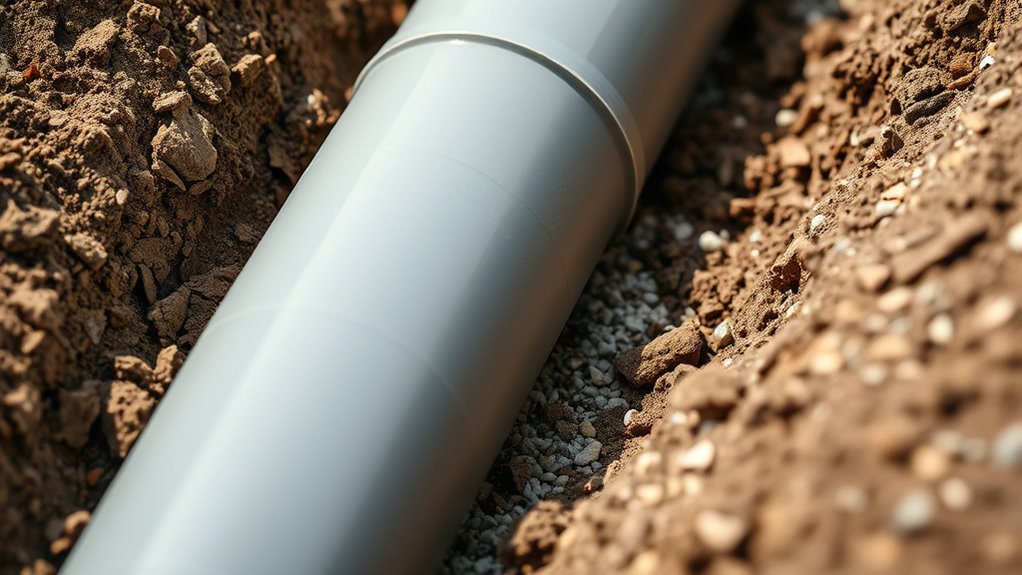
When you install or inspect a sewer line, getting the slope right is essential because it guarantees wastewater flows smoothly by gravity, preventing backups and clogs. The pipe slope controls how water flows through the system, carrying solids along without letting them settle.
If the slope is too shallow—below the minimum slope recommended—you risk solids accumulating, which leads to slow drainage and blockages. On the other hand, an excessive slope causes water to rush ahead, leaving solids behind that can erode the pipe and cause buildup.
Maintaining the correct pipe slope balances these factors, ensuring solids move efficiently and the sewer system stays functional over time. Following proper slope guidelines also keeps your installation compliant with plumbing codes, avoiding costly repairs.
Recommended Slope Guidelines for Different Pipe Sizes
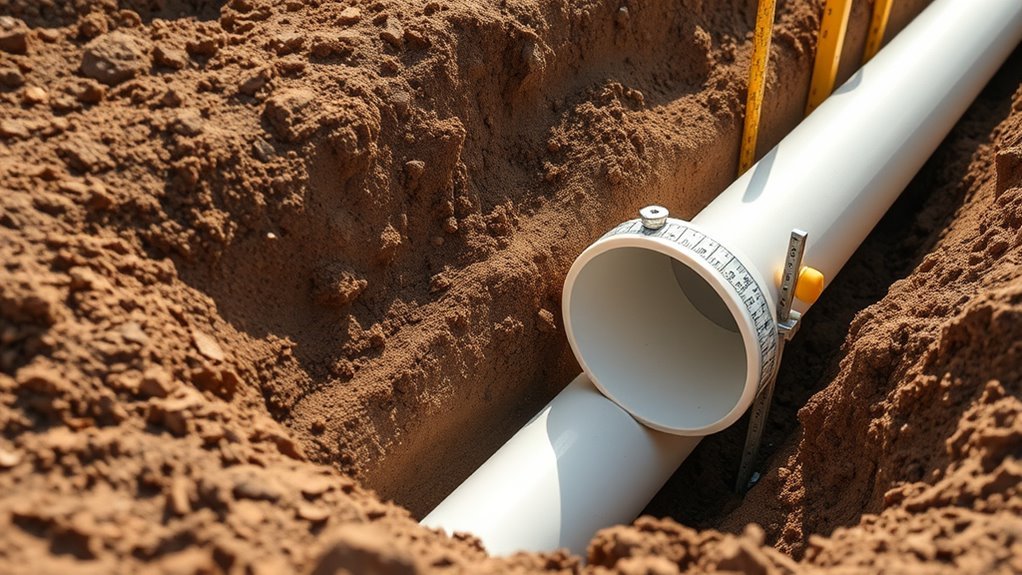
Although pipe size influences sewer line slope, you should always follow specific guidelines to guarantee proper flow and prevent clogs. For pipes 2-1/2 inches or smaller, aim for a minimum slope of 1/4 inch per foot to keep solids moving and avoid buildup.
For pipes 2-1/2 inches or smaller, maintain a minimum slope of 1/4 inch per foot to prevent clogs.
Larger pipes, like those 3 to 6 inches in diameter, require about 1/8 inch per foot. When dealing with 8-inch pipes, a slope of 1/16 inch per foot usually suffices.
These slopes help prevent solids from settling in the sewer line while ensuring efficient drainage. Keep the slope within roughly 0.8% to 1.5% to maintain self-cleaning flow.
Going beyond 2% inch per foot can cause water to rush past solids, so stick to recommended values based on your pipe size.
Effects of Insufficient or Excessive Sewer Line Slope
Getting the slope right is key to keeping your sewer line flowing smoothly. If the slope is inadequate, wastewater moves too slowly, causing solids to settle, leading to clogs and foul odors.
On the other hand, excessive slope makes water rush ahead, leaving solids behind and causing buildup. Both extremes can cause pipe sagging, disrupting proper drainage and increasing maintenance costs.
The pipe diameter also influences the ideal slope to guarantee self-cleaning velocity.
| Slope Condition | Effect on Sewer Line |
|---|---|
| Insufficient slope | Slow flow, clogs, odors |
| Excessive slope | Solids left behind, buildup |
| Both extremes | Pipe sagging, drainage issues |
| Proper slope | Efficient flow, fewer clogs |
Common Causes of Slope Loss and Pipe Sagging
Soil movement and foundation settling can gradually shift your sewer pipes, causing slope loss and sagging that disrupt proper drainage.
In areas with clay-rich soil, like Knoxville, soil movement causes pipes to lose their original slope over time. Foundation settling, common in older homes, often leads to horizontal misalignment and deterioration of the pipe slope.
These shifts pull pipes out of their proper pitch, resulting in pipe sagging. Additionally, if the original installation was done improperly—perhaps without permits or as a DIY job—the pipes may have had an insufficient slope from the start.
Pipe sagging creates low spots where waste collects, increasing the risk of clogs, odors, and drainage problems. Understanding these causes helps you recognize when slope loss affects your sewer line’s performance.
Best Practices for Inspecting and Correcting Sewer Line Slope
When you notice signs like slow drains or recurring clogs, it’s time to inspect your sewer line’s slope carefully. Start with a drain camera inspection to spot sags, bellies, or misalignments inside the pipe.
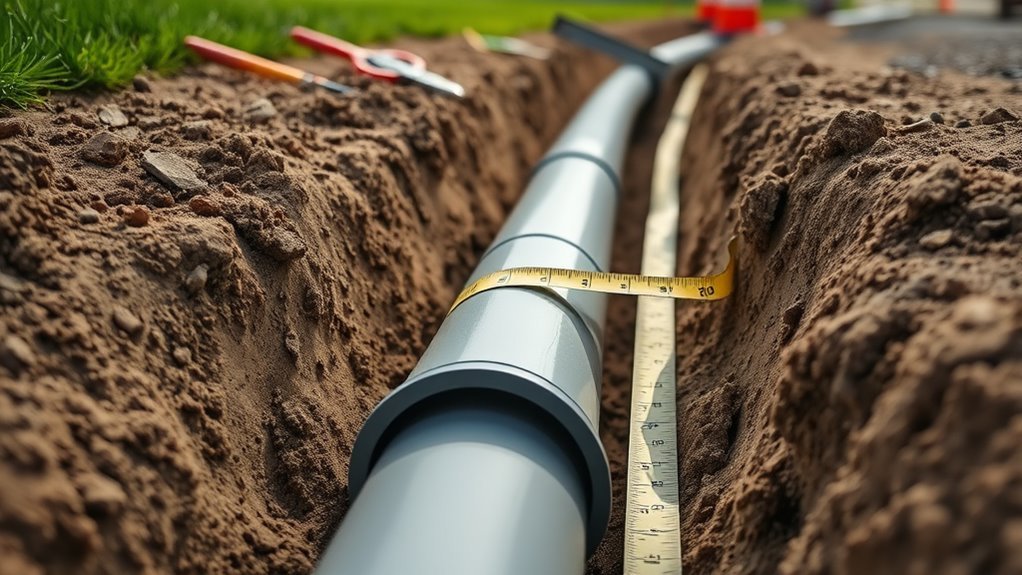
Use a level or laser tool to confirm the slope meets the minimum 1/4 inch per foot for pipes 2-1/2 inches or smaller, adjusting for larger pipes as needed. Remember, soil conditions can shift pipes, causing slope loss.
Correcting slope means re-supporting and repositioning pipes precisely, often cutting and rejoining sections to restore proper angle. Since precision is essential, always hire a licensed professional with specialized equipment to measure, diagnose, and repair issues. This way, you ensure your sewer line functions well and meets code requirements.
Frequently Asked Questions
How to Slope a Sewer Line?
You slope a sewer line by starting at the highest point, using a level or laser to maintain consistent pitch, marking intervals, and adjusting supports as needed to guarantee proper downward slope before securing the pipe permanently.
It’s important to keep checking your slope as you go. That way, you avoid any dips or flat spots that could cause drainage problems later. Take your time with this step to make sure everything flows just right.
How Deep Should Drainage Pipes Be Buried?
You should bury drainage pipes about 2.5 to 3 feet deep, like tucking them safely beneath the earth’s blanket. This protects them from freezing, damage, and shifting soil.
Doing this helps ensure they flow smoothly through seasons. It’s a simple step that keeps your drainage system working well year-round.
What Is the Minimum Recommended Slope for a Concrete Slab to Ensure Proper Drainage?
You should guarantee your concrete slab has a minimum slope of 1% to 2%. That means a drop of 1 to 2 inches per 100 inches.
This slope helps ensure effective drainage and prevents water pooling or damage. It’s a simple way to keep your slab in good shape over time.
What Is the Minimum Slope for a 6-Inch Sanitary Sewer Pipe?
You should slope a 6-inch sanitary sewer pipe at least 1/8 inch per foot, about a 1% grade. This guarantees proper flow velocity and prevents blockages.
Keeping your system operating smoothly and efficiently is the goal here. So, sticking to that minimum slope really helps.
Conclusion
Getting your sewer line slope just right is like tuning a guitar string—too loose or too tight, and it won’t play smoothly. If the slope’s off, you’ll face blockages or slow drainage.
But with the proper angle, everything flows effortlessly. Keep an eye out for sagging or loss of slope, and fix issues promptly.
By staying proactive, you’ll make certain your sewer system runs as smoothly as a well-strummed melody. Remember, the right sewer line slope is essential for preventing backups and ensuring efficient wastewater flow. So, maintaining that perfect slope keeps your plumbing working perfectly and avoids costly repairs down the road.