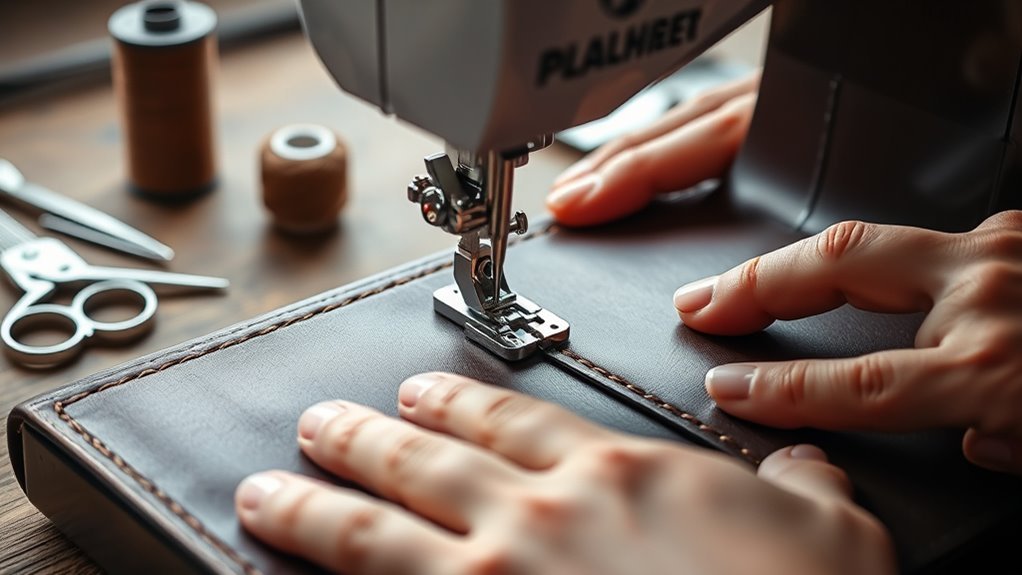
How You Can Sew Leather With a Regular Sewing Machine Step by Step
To sew leather with your regular sewing machine, start by using a leather needle sized 90/14 or 100/16 and strong, waxed polyester or nylon thread. These specialized needles and threads help prevent damage and ensure your stitches hold up well.
Attaching a walking or Teflon foot is a great idea because it helps the leather glide smoothly under the needle, avoiding any sticking or bunching.
Next, adjust your machine tension and set a stitch length of 3–4 mm for the best results. Sewing slowly is key here — take your time to keep everything neat and consistent.
Don’t forget to reinforce stress points with backstitching to make your project durable.
After you finish sewing, make sure to clean and oil your machine. This keeps it running smoothly, especially after working with tougher materials like leather.
Keep practicing, and you’ll soon discover even more tips to perfect your leather sewing projects!
Key Takeaways
- Use a walking or Teflon presser foot to smoothly guide leather and prevent slipping while sewing. This helps keep your stitches even and your leather intact.
- Insert a heavy-duty leather needle (size 90/14 or 100/16). It pierces leather cleanly without breaking, making your sewing much easier.
- Thread the machine with strong, waxed polyester or nylon thread. This ensures your seams are durable and long-lasting.
- Adjust stitch length to 3–4 mm and sew slowly. Taking your time helps maintain consistent, professional-looking stitches.
- Reinforce stress points by backstitching or tying knots. This adds extra strength and durability to your seams where it matters most.
Selecting the Best Needle and Thread for Leather
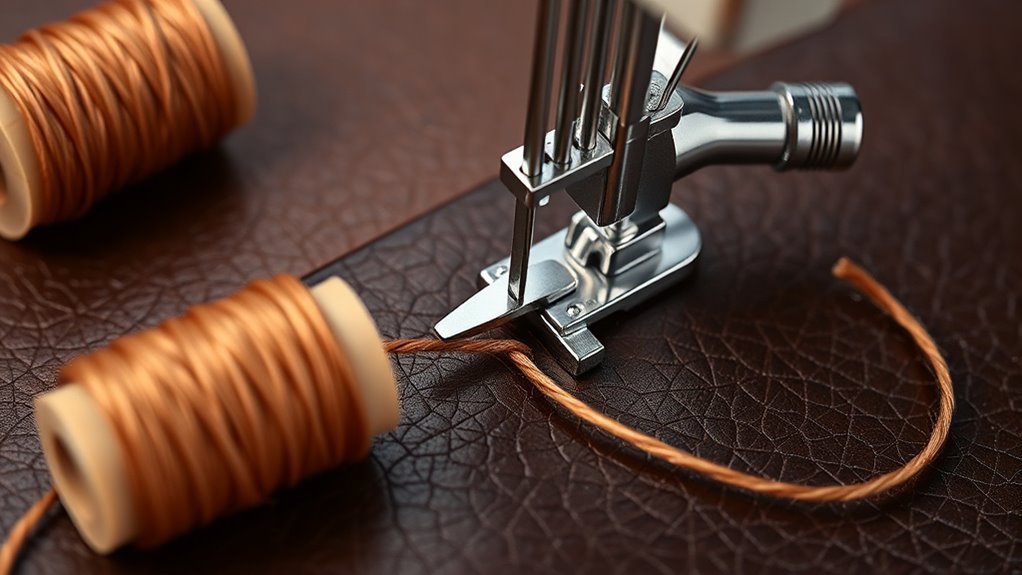
When sewing leather with a regular machine, choosing the right needle and thread makes all the difference. You’ll want leather needles like chisel-point or tri-point types that pierce thick leather cleanly without causing damage. Standard needles are too sharp and can lead to skipped stitches or tears.
Next, pick a heavy-duty thread—waxed polyester or nylon works best, ideally between 69 and 92 weight—to guarantee your seams hold strong. Matching needle size to your leather’s thickness is vital; use sizes 90/14 or 100/16 for thicker hides around 8 to 10 ounces.
This combo keeps your sewing smooth and durable when sewing leather. Also, consider a Teflon or roller presser foot to help your machine glide over heavy or textured leather effortlessly.
Preparing Your Sewing Machine for Leatherwork
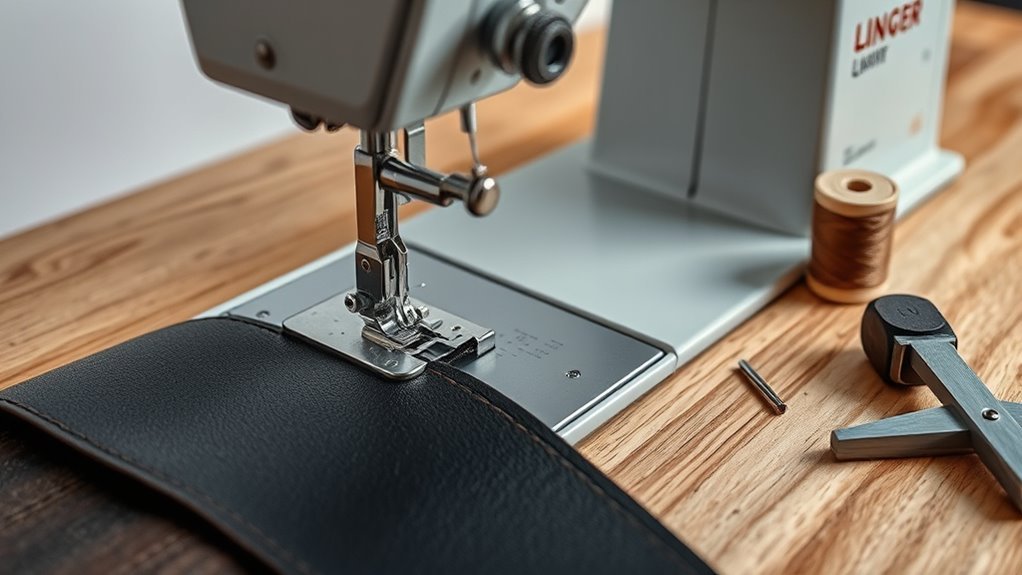
Before you start sewing leather, make sure your machine’s motor is strong enough and equipped with a walking foot or Teflon presser foot to handle the material smoothly. When preparing your sewing machine for leatherwork, check that it can handle heavy-duty tasks like an industrial sewing machine.
Adjust the tension and stitch length, setting longer stitches around 3-4 mm for durability during leather sewing. Use heavy-duty leather needles, such as 90/14 or 100/16 gauge, to avoid breakage and ensure smooth penetration.
Clean and lubricate your machine thoroughly to prevent sticking and maintain smooth operation. Always test your settings, needle, and thread on scrap leather first.
This careful preparation ensures your leather work goes smoothly and produces professional results.
Essential Tools and Accessories for Sewing Leather
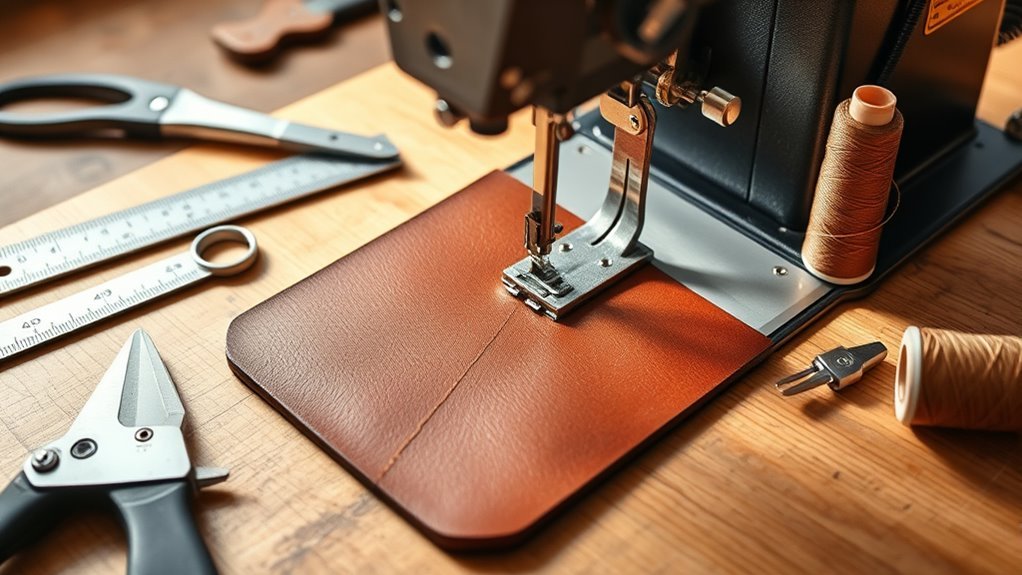
Although sewing leather requires skill, having the right tools makes the process much easier and your results more professional.
You’ll need heavy-duty needles like chisel-point or harness types to handle thick leather. For durable seams, choose waxed nylon or polyester thread.
Stitch guides help keep your lines straight, while light adhesives temporarily hold pieces in place to prevent slipping.
| Tool | Purpose |
|---|---|
| Heavy-duty needles | Penetrate thick leather fibers |
| Nylon or polyester thread | Create strong, long-lasting seams |
| Stitch guides | Mark straight stitch lines |
| Light adhesives | Temporarily hold leather pieces |
Using these tools guarantees clean, precise stitching without damaging your machine or project. It really makes a difference!
Step-By-Step Guide to Sewing Leather With a Regular Machine
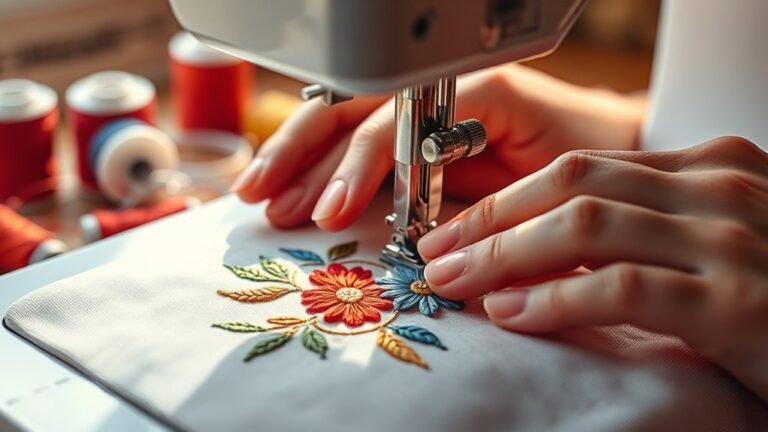
Since sewing leather demands careful handling, you’ll want to equip your regular machine with a walking foot or Teflon foot to prevent slipping and guarantee smooth stitching.
Start by inserting a sharp leather needle, such as a 90/14 or 100/16, to pierce thick leather layers effectively. Thread your sewing machine with strong, waxed polyester thread, then adjust the tension for even stitches.
Use a sharp 90/14 or 100/16 leather needle and strong waxed polyester thread for smooth, even stitching.
Sew slowly and steadily, keeping your stitch length consistent around 3-4 mm for durability. When you reach stress points, reinforce the leather by backstitching or tying knots to secure your work.
This step-by-step approach assures your leather project holds up well and looks professional, even when using a regular sewing machine. Trust me, with a little patience, you’ll get great results!
Tips for Maintaining Your Sewing Machine After Leather Projects
When you finish sewing leather, you should clean your machine thoroughly to remove any dust, debris, and tiny leather fibers that can cause problems later. Proper cleaning and maintenance keep your sewing machine running smoothly and extend its life.
To maintain your machine after working with leather, follow these tips:
- Remove lint and leather fibers from the bobbin and feed dogs.
- Oil the machine according to the manufacturer’s instructions to prevent parts from seizing.
- Check and adjust the tension settings to maintain stitch quality.
- Replace worn or bent needles promptly to avoid skipped stitches.
- Store your machine covered in a clean, dust-free environment.
Regular maintenance after sewing leather ensures ideal performance for your next project. So, taking a little extra time now really pays off later!
Frequently Asked Questions
How to Sew Leather With a Sewing Machine?
You can sew leather by using heavy-duty needles and strong thread. Adjust your machine’s tension and stitch length to suit the material.
It helps to attach a walking foot or a Teflon foot to make the process smoother. Sew slowly to ensure even, durable seams without damaging the leather.
Do I Need a Specific Sewing Machine for Leather?
You don’t necessarily need a specific machine for light leather; 4-6 oz works fine on most regular machines with adjustments.
But for anything heavier, you’ll want a heavy-duty or dedicated leather sewing machine for best results.
What Is the Best Way to Cut Leather by Hand?
The best way to cut leather by hand is to use a sharp utility knife or rotary cutter. Mark your lines with a leather pen, so you know exactly where to cut.
Then, cut slowly on a stable surface with a straight edge. This helps guarantee clean, precise edges every time.
Can You Sew Faux Leather With a Sewing Machine?
Yes, you can sew faux leather with a regular machine. About 70% of DIY crafters use universal needles and slower speeds to avoid damage.
Just pick a sharp needle, strong thread, and test settings first for best results. It’s easier than you might think! Give it a try and see how your project turns out.
Conclusion
Sewing leather with a regular machine might seem tricky, but with the right needle, thread, and preparation, you’ll get professional results. Don’t worry if you think your machine isn’t up for the task—just adjust your settings and use proper tools, and it’ll handle leather just fine.
Once you follow these steps, you’ll enjoy crafting durable, stylish leather projects without needing expensive gear. Give it a try—you’ll be surprised how easy it is! Using a regular sewing machine for leather can save you money and expand your creative possibilities. With patience and the right approach, sewing leather becomes simple and fun. So go ahead, grab your machine, and start making beautiful leather crafts today!