
How Do You Get Rid of Sewer Flies Fast?
To get rid of sewer flies fast, start by thoroughly cleaning your drains to remove organic buildup and debris where they breed. These pesky flies love damp, dirty places, so targeting their breeding grounds is key.
Flush drains with warm water to loosen grime and make sure you get rid of any slimy residue.
Next, apply a microbial treatment like Biodrain several times a week. This helps eliminate larvae and disrupts their breeding habitats.
Fix any leaks and keep your pipes dry to prevent them from coming back.
Using these steps consistently will quickly reduce fly numbers.
Keep following these practices to maintain a fly-free space and stop sewer flies from returning. It’s all about staying on top of the problem so those annoying flies don’t stand a chance!
Key Takeaways
- Flush drains with 1-2 gallons of warm water to loosen organic buildup and debris before treatment. This helps clear the way for whatever you apply next.
- Apply aerosol foam inside floor drains, holding the can upside down, and leave it undisturbed for 8-10 hours. This lets the foam reach and kill the flies where they hide.
- Use microbial treatments like Biodrain by pouring 4 ounces around drain lips and inside drains 2-3 times weekly at first. These good bacteria break down the gunk that sewer flies love.
- Remove surrounding debris and clean drains thoroughly to expose larvae and prevent re-infestation. Keeping the area clean makes it harder for flies to come back.
- Fix leaks and eliminate standing water to reduce moisture and disrupt the flies’ breeding environment quickly. Less water means fewer places for them to lay eggs.
What Are Sewer Flies and Where Do They Come From?

Although sewer flies are tiny, measuring just 1.5 to 5 mm, they can quickly become a nuisance in your home. These fuzzy insects, also called drain or sink flies, thrive where stagnant, organic-rich water exists.
Tiny but troublesome, sewer flies thrive in stagnant, organic-rich water within your home’s plumbing.
They lay eggs in the slimy buildup of bacteria and organic matter inside your pipes and drains. You’ll often spot adult flies buzzing around sinks, toilets, and drains, especially at night.
Their presence signals a breeding site with excess moisture and organic material in your plumbing system. Understanding where sewer flies come from helps you recognize the problem early.
When you notice these tiny flies, it means there’s a hidden area in your plumbing where moisture and organic debris have gathered, creating an ideal environment for them to reproduce.
Identifying Common Breeding Sites in Your Home
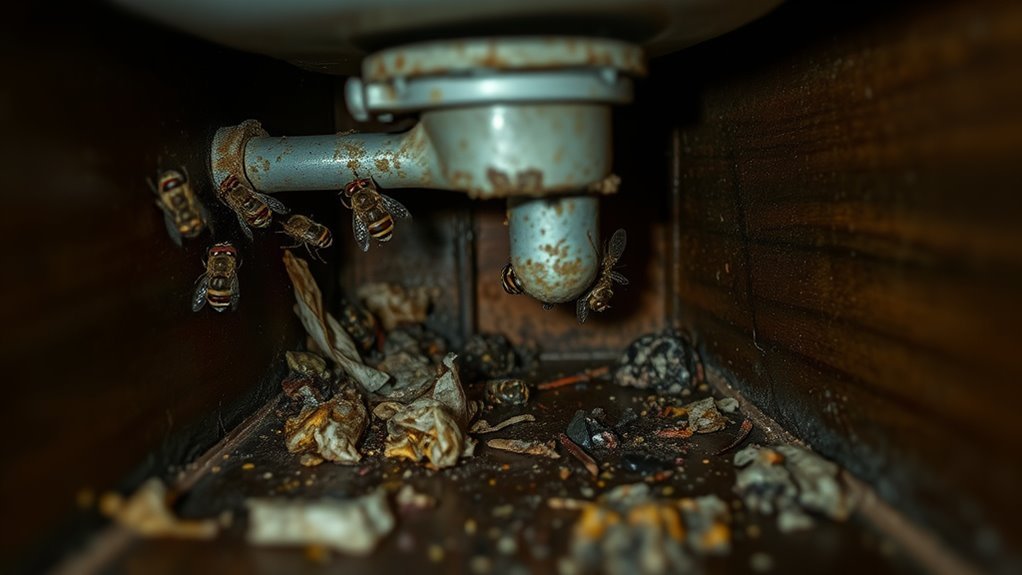
Sewer flies thrive wherever moisture and organic debris collect, so pinpointing their breeding sites in your home is key to tackling them effectively. Take a close look at drains and areas where water pools and organic matter builds up.
These flies lay eggs in the buildup inside P traps and scummy drain surfaces. You’ll often spot them buzzing near sinks and floor drains or emerging from vents.
| Common Breeding Site | What to Check For |
|---|---|
| Kitchen Sink | Food scraps, grease buildup |
| Bathroom Drain | Soap scum, hair debris |
| Floor Drains | Standing water, organic film |
| Sewer Vents | Emerging flies, moisture |
Focus on these spots to eliminate the source and stop sewer flies fast. It’s all about cutting off their breeding grounds!
Why Moisture and Organic Buildup Attract Sewer Flies

Because moisture and organic buildup create the perfect environment, sewer flies are naturally drawn to damp, food-rich areas in your home. Leaky pipes, slow drains, and standing water provide the persistent moisture these flies need to breed.
Inside your drains, organic buildup like grease, scum, and bacteria acts as a food source for their larvae. This combination of moisture and nutrients ensures that sewer flies have everything required to reproduce quickly.
Organic buildup in drains feeds sewer fly larvae, creating ideal conditions for rapid reproduction.
High humidity in bathrooms and kitchens only makes things worse by creating even more favorable conditions. When sewer flies lay eggs in these moist, organic-rich spots, their larvae have immediate access to nourishment, helping the infestation grow rapidly.
Understanding this connection is key to tackling the problem effectively. So, keeping things dry and clean is really the first step to stopping these pesky flies.
Preparing Drains Before Treatment
Before you apply any treatment, make sure to pour 1-2 gallons of warm water down each drain. This helps loosen the bacteria and organic buildup.
Next, clear any standing water or debris around the drains. That way, treatments can reach the source more effectively.
You’ll want to check all relevant drains—kitchen, bathroom, and floor—to make sure they’re accessible. For floor drains, thorough injection and aerosol application help reach deeper spots.
After prepping, avoid using the drains for 8-10 hours to get the most out of the treatment.
| Step | Action | Purpose |
|---|---|---|
| 1 | Pour warm water | Loosen buildup |
| 2 | Remove debris | Improve microbial contact |
| 3 | Access all drains | Ensure thorough treatment |
| 4 | Wait 8-10 hours post-prep | Maximize treatment effect |
How to Use Biodrain for Effective Sewer Fly Control
When you want to eliminate sewer flies effectively, applying Biodrain is a dependable method that targets the organic buildup where these pests breed. First, flush your drains with 1-2 gallons of warm water to loosen bacteria and debris.
Then pour at least 4 ounces of Biodrain around the lip of each drain, including kitchen sinks, bathroom, and floor drains. This introduces beneficial microbes that consume the organic matter attracting sewer flies.
Use Biodrain 2-3 times per week at the start, then reduce to once weekly to maintain control and prevent re-infestation. After applying Biodrain, avoid using the sink or drain for 8-10 hours to allow the microbes to work effectively.
Treating all relevant drains ensures extensive sewer fly control and lasting results. So, make sure you cover every drain to keep those flies away for good!
Treating Floor Drains With Biodrain and Hotspot Aerosol
Start by pouring warm water into the floor drains to loosen any organic buildup. Then, inject Biodrain into the drains.
Next, apply the Hotspot aerosol upside down to foam thoroughly inside. Make sure to cover the entire drain opening for the best results.
Floor Drain Treatment
Although floor drains are essential for proper drainage, they can become breeding grounds for sewer flies if neglected. To treat them, start by pouring warm water down the drain to loosen bacteria and organic buildup.
Next, inject Biodrain into the drain, making sure it thoroughly coats the entire interior. Follow this by using a Hotspot aerosol held upside down to foam inside the drain.
Leave the treated drain undisturbed with no water flow for 8 to 10 hours to allow the microbial agents to work effectively. For lasting results, repeat this treatment weekly.
Aerosol Application Technique
Before applying any treatment, you’ll want to pour warm water down the floor drain to loosen built-up organic material. Next, inject the Biodrain microbial solution directly into the drain to start breaking down bacteria and organic matter feeding the flies.
Then, hold the Hotspot aerosol upright and foam it into the drain opening. Make sure to leave it undisturbed for 8 to 10 hours, and prevent any water from flowing into the drain during this time to maximize effectiveness.
Repeat this process about once a week until you notice a significant drop in drain fly activity. Consistency is key, so stick with these steps to clear out the breeding grounds and keep sewer flies at bay.
The Role of Microbes and Citrus Oils in Drain Fly Elimination
When you tackle drain flies, using microbes and citrus oils together can make a big difference. Biodrain contains beneficial microbes that consume organic matter and bacteria, disrupting the breeding grounds of drain flies.
These microbes naturally degrade the grime and scum where larvae hatch and develop. Meanwhile, the citrus oils not only provide a fresh scent but also break down grease and organic buildup inside drains.
This combination creates a safer, eco-friendly solution that targets the root cause of infestations. By regularly applying this treatment, you reduce the organic material that attracts drain flies, making your drains less hospitable.
Using microbes and citrus oils offers an effective, long-lasting way to eliminate drain fly habitats without harsh chemicals or environmental harm. It’s a smart, natural approach that really works.
Best Practices for Ensuring Treatment Success
To guarantee your treatment effectively eliminates sewer flies, you need to apply microbial solutions like Biodrain consistently—ideally two to three times a week for at least one to two weeks. This helps break their breeding cycle and prevents re-infestation.
Before each treatment, flush drains with warm water to loosen buildup and improve how well the treatment works. When using aerosol foam in floor drains, hold the can upside down and then leave it undisturbed for 8-10 hours.
Make sure to treat all drains—kitchen, bathroom, and floor—to remove every larval habitat. That way, you cover all bases and give yourself the best chance to win the fight fast.
| Action | Frequency | Benefit |
|---|---|---|
| Apply Biodrain | 2-3 times a week | Breaks breeding cycle |
| Flush Drains | Before each treatment | Enhances microbial work |
| Use Aerosol Foam | Once per treatment week | Targets hidden larvae |
Maintaining a Fly-Free Environment Long Term
To keep sewer flies from coming back, you need to stick to a consistent treatment schedule and perform regular preventive drain maintenance. Flushing drains with warm water and using microbial treatments weekly breaks down buildup and stops breeding sites.
Also, fixing leaks and eliminating standing water helps maintain a fly-free environment long term. It’s all about staying on top of these small tasks so the flies don’t get a chance to return.
Consistent Treatment Schedule
Although eliminating sewer flies requires initial effort, sticking to a consistent treatment schedule will keep them from returning. Apply Biodrain two to three times weekly for at least two weeks to effectively target drain fly breeding sites.
Before each application, flush your drains with warm water to boost microbial activity. Once the flies are gone, reduce applications to once a week to maintain a fly-free environment and prevent re-infestation.
This regular routine helps microbes break down organic buildup, eliminating the flies’ habitat. Long-term control depends on persistent weekly treatments combined with thorough cleaning of drains and nearby areas.
Preventive Drain Maintenance
When you maintain your drains regularly with warm water and microbial treatments like Biodrain, you disrupt the breeding cycle of sewer flies before it starts.
Keeping your drains clean and dry is key to preventing these pests from settling in for good. Here’s what you should do:
- Pour warm water and Biodrain into all drains weekly to break down organic buildup.
- Inspect pipes and drains for leaks or moisture and fix them promptly.
- Use drain covers or screens to block flies from entering.
- Remove standing water and organic debris from floor drains and damp areas.
- Stick to a consistent cleaning schedule using microbial products to eliminate breeding sites.
Tips to Prevent Sewer Fly Re-Infestation
Since sewer flies thrive in damp, organic-rich environments, you’ll need to stay vigilant by regularly cleaning and disinfecting your drains. Remove any buildup that attracts these pests to cut off their breeding grounds.
Use microbial drain treatments like Biodrain weekly to break down bacteria and prevent larvae from developing. Fix any leaking pipes or plumbing issues promptly to eliminate persistent moisture that sewer flies love.
Cover or seal floor drains and other entry points to stop flies from entering your home. Also, maintain proper ventilation and reduce standing water in damp areas to discourage infestations.
Frequently Asked Questions
Can Ammonia Kill Drain Flies?
Yes, ammonia can kill drain flies on contact, but it won’t stop new ones from breeding.
You shouldn’t rely on it alone since it risks health and plumbing damage.
Use thorough cleaning and microbial treatments instead.
Will Bleach Get Rid of Sewer Flies?
Bleach is like a quick splash of paint—it’ll cover the problem temporarily but won’t erase it.
You won’t get rid of sewer flies unless you clean their breeding sites thoroughly and remove organic buildup in drains.
What Are Bathroom Moth Flies?
Bathroom moth flies are tiny, dark insects you’ll find near drains. They breed in moist, organic buildup like scum or bacteria inside drains.
They buzz around sinks and tubs, especially in damp areas. You’ll often notice them fluttering about where it’s wet and a little grimy.
Will Drano Get Rid of Sewer Flies?
Drano won’t snuff out sewer flies like a candle’s flame—it clears clogs but leaves their breeding grounds untouched.
You’ll need microbial treatments that feast on organic matter to truly banish these persistent pests.
Conclusion
Remember, “a stitch in time saves nine.” By tackling sewer flies quickly and thoroughly—cleaning breeding sites, using BioDrain with microbes and citrus oils, and keeping your drains dry—you’ll stop them from coming back.
Stay consistent with your efforts and follow best practices to maintain a fly-free home long term. With a little care and attention, you can enjoy a clean, pest-free space without the frustration of recurring sewer flies.
Getting rid of sewer flies fast involves regular cleaning and preventing moisture buildup in drains. Using natural products like BioDrain helps break down organic matter where flies breed. Keep your drains clear and dry, and you’ll reduce their chances of returning.
By addressing the problem head-on and maintaining good drain hygiene, you can quickly eliminate sewer flies and keep your home comfortable and pest-free.