How Do You Sew Jeans in 5 Simple Steps
To sew jeans in five simple steps, start by gathering quality denim fabric, a heavy-duty needle, strong thread, and a clear workspace. These are essential to ensure your jeans are durable and well-made. Having the right materials sets you up for success.
Next, measure and cut your fabric accurately, making sure to add seam allowances. Precision here is key because it affects how your jeans will fit and look. Taking your time with this step really pays off.
Then, sew the main seams using reinforced stitching for durability. This step is what holds everything together, so strong stitching is a must. Don’t rush it—solid seams mean long-lasting jeans.
Press and finish all seams to keep them neat and prevent fraying. This helps your jeans look professional and last longer. A good press can make all the difference.
Finally, fold, pin, and sew the hems for a clean finish and perfect fit. This last step ties everything together, giving your jeans that polished look. Keep going to master each step with expert tips!
Key Takeaways
– Gather quality denim, a heavy-duty needle, and strong thread. Prepare a clean, well-lit workspace with all the necessary tools.
It’s important to have everything ready before you start sewing to make the process smooth and fun.
– Measure and accurately cut the denim fabric, adding seam allowances and marking with chalk for clean, straight edges.
Taking your time here will pay off with a better fit and easier sewing later on.
– Sew the main seams using reinforced stitches like double or triple topstitching. Use heavy-duty thread and a needle designed for denim to ensure durability.
This step is key to making sure your jeans hold up well over time.
– Press and finish seams immediately with a hot steam iron. Use pinking shears or zigzag stitches to prevent fraying.
Finishing the seams right away keeps your work looking neat and professional.
– Pin, fold, and sew the hem securely with matching thread. Then, check the fit and press for a polished final look.
And there you have it—your jeans are ready to wear!
Gather Materials and Prepare Your Workspace
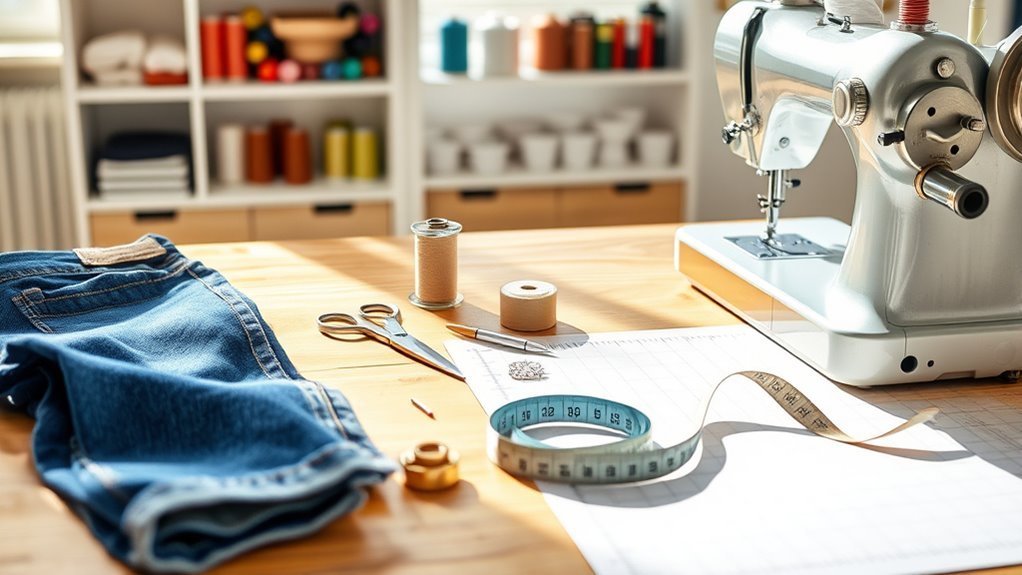
Before you begin sewing, gather high-quality denim, a matching heavy-duty needle, strong thread, pins, and scissors. These essentials guarantee your jeans hold up well and your sewing goes smoothly.
Next, clear a spacious, well-lit workspace with a flat surface where you can comfortably cut and assemble your fabric. Pre-wash and true your denim to prevent shrinkage and keep the grain aligned for precise sewing.
Set up a bright, flat workspace and pre-wash denim to ensure accurate, shrink-free sewing.
Organize your tools, including marking chalk or fabric pens, so everything’s within reach. Finally, review your sewing pattern carefully before cutting.
Pin your fabric pieces securely to avoid shifting as you sew. Preparing your materials and workspace thoroughly sets the foundation for crafting durable, well-fitted jeans with ease.
Measure and Cut the Denim Fabric
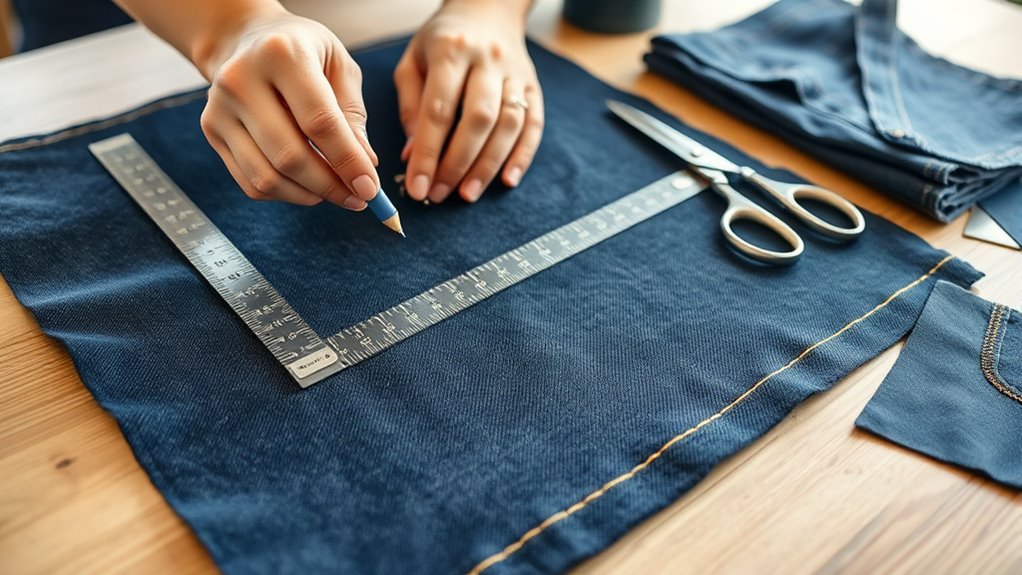
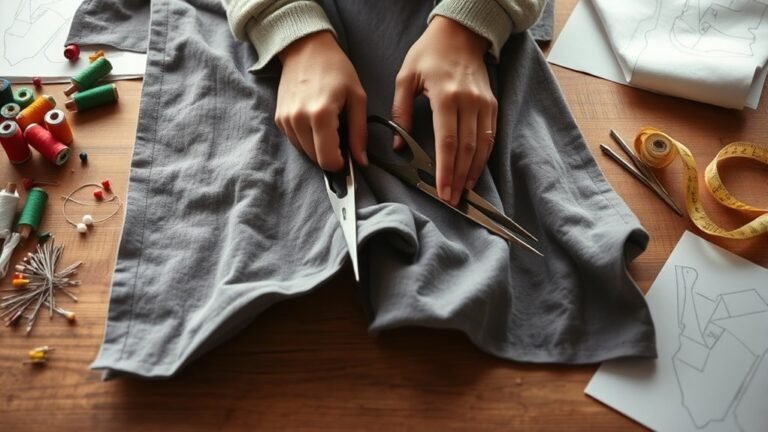
When you’re ready to shape your jeans, start by measuring the desired hem length carefully. Use a fabric measuring tape to get an accurate measurement, adding seam allowances if your sewing machine requires extra fabric for stitching.
Pin or mark the point where you want to cut using fabric chalk, a fabric pen, or tailor’s chalk. Make sure your markings are straight and parallel to the original hemline to get a clean edge.
Once marked, cut along the line with sharp scissors, keeping your cut straight and even for a professional finish. If you’re in the US, you can find fabric measuring tapes and sewing machines at local craft stores or online retailers.
This makes the step accessible and easy to prepare for the next phase of sewing your jeans.
Sew the Main Seams With Reinforced Stitching
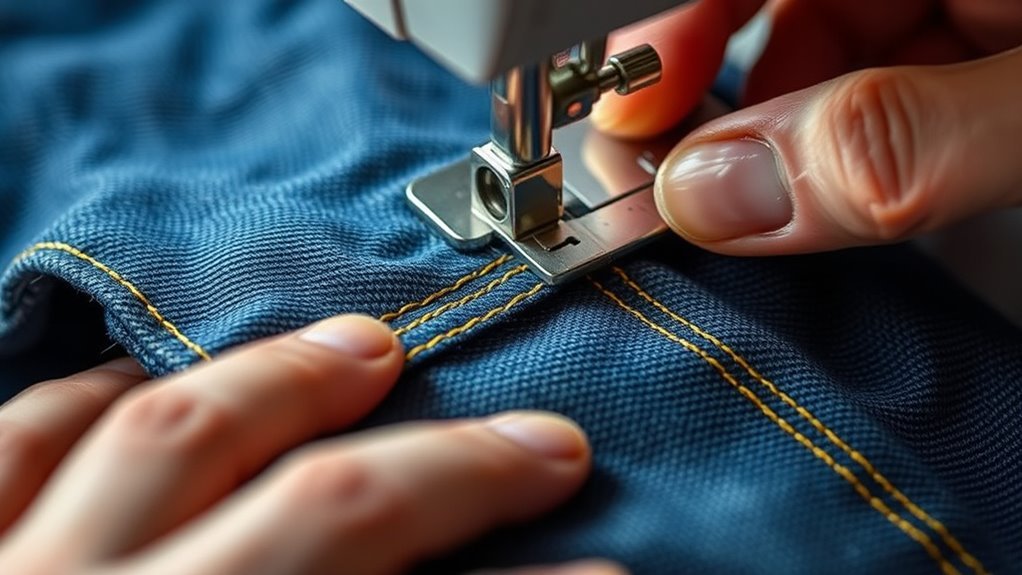
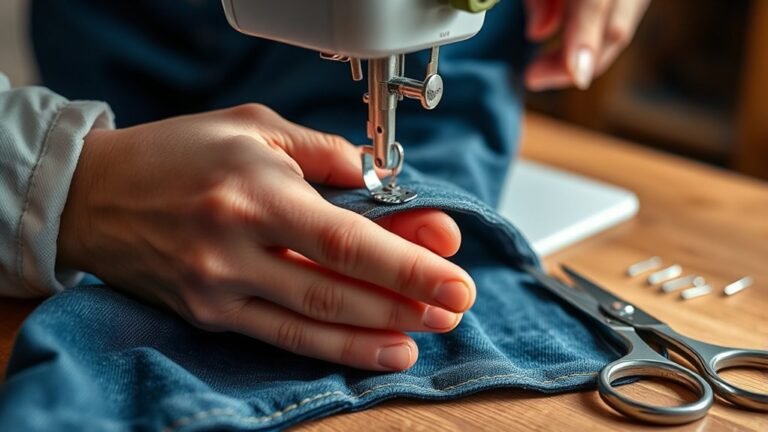
Although sewing the main seams might seem straightforward, using reinforced stitching is essential to make your jeans durable and long-lasting. Use a heavy-duty needle and strong polyester thread designed for denim.
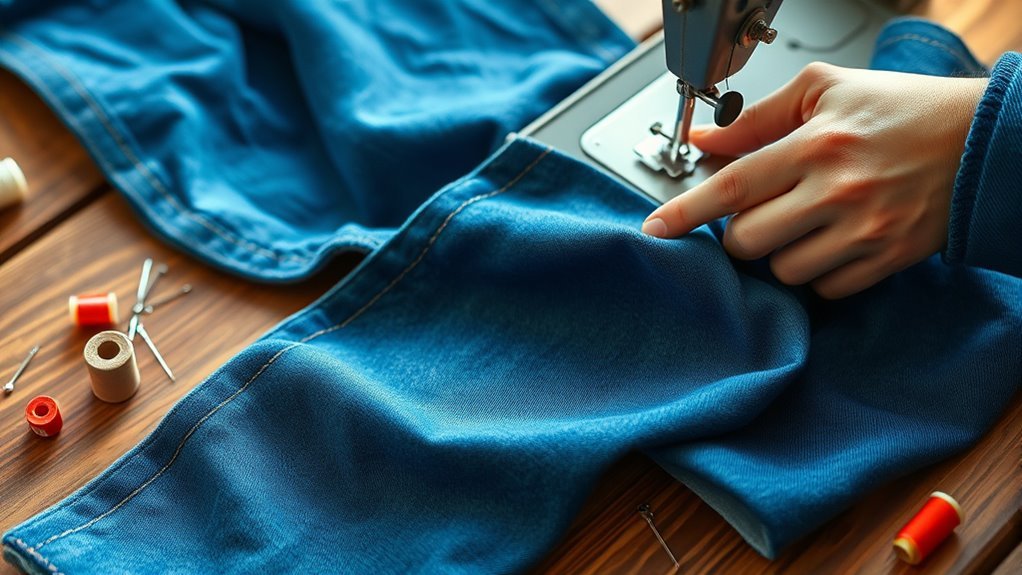
Opt for a reinforced stitch like a triple or double topstitch with a longer stitch length (around 3.5 mm) to prevent puckering and strengthen seams. Sew from the right side for a professional finish, and reinforce stress points such as pocket corners and zipper areas with extra backstitches or bar tacks.
| Step | Tip |
|---|---|
| Needle | Heavy-duty, size 100/16 |
| Thread | Strong polyester for denim |
| Stitch length | Around 3.5 mm |
| Reinforcement | Extra backstitches at stress points |
This method guarantees your denim withstands wear. So, give those seams some extra love!
Press and Finish the Seams
After sewing your main seams with reinforced stitching, you’ll want to press them right away to set the stitches and smooth the fabric. Use a hot, dry iron with steam to press seams, focusing on flattening flat-felled seams and pressed allowances for a sharp, professional look.
For curved or tricky areas, grab a pressing ham or sleeve board to maintain the shape without creating unwanted creases. Before pressing, finish raw seam allowances with pinking shears or a zigzag stitch to prevent fraying.
Follow your pattern instructions to decide whether to press seams open or to one side. Applying steady pressure and steam ensures your seams stay secure and neat.
These finishing techniques not only enhance durability but also give your jeans a polished appearance. It really makes all the difference in the final look!
Add Final Touches and Hem the Jeans
Since the seams are pressed and secure, you can now focus on adding the final touches and hemming your jeans. First, pin the jeans at your desired length and cut along the fold, leaving a small seam allowance.
Next, fold the raw edge inward to hide the cut edge, then press it flat for a clean finish. To hem the jeans, sew right sides together, wrapping the fabric around itself to create a neat, double-layered edge.
Use a heavy-duty needle and matching thread to topstitch slowly along the hemline for a professional look. Finally, check the fit and length, making any adjustments needed before giving the hem a final press.
This completes your project and guarantees your jeans look polished and well-made. Easy, right? Now you’ve got a pair of jeans that fit just right and look fantastic!
Frequently Asked Questions
How Much Fabric Do I Need to Make a Pair of Jeans?
You’ll need about 1.5 to 2 yards of 60-inch wide denim for standard jeans. Bigger sizes or designs require up to 2.5 yards.
Always add 10% extra for mistakes and pattern matching. It’s better to have a little more fabric than to run short halfway through your project.
Why Does It Take 7500 Litres of Water to Make a Pair of Jeans?
You might think producing jeans is easy, but it takes 7,500 liters because growing cotton needs tons of water. Plus, dyeing and finishing processes demand even more.
Saving water means choosing eco-friendly methods and materials. It’s all about making smarter choices to help the planet.
What Jeans Are Gen Z Wearing?
You’re rocking baggy, high-waisted jeans with vintage distressing or bright patterns. Gen Z loves relaxed fits, bold colors, and sustainable brands, so pick styles that feel comfy, trendy, and eco-friendly to match your vibe perfectly.
Seriously, it’s all about mixing comfort with style. Whether you’re into classic denim or something with a splash of color, there’s something out there that’ll fit just right. Just keep it chill and eco-conscious!
What Is the 2 Finger Test for Jeans?
The 2 finger test checks if your jeans fit right by slipping two fingers into the waistband.
If they fit snugly but comfortably, your jeans are perfect—not too tight or loose, ensuring style and comfort.
It’s a simple way to make sure your jeans feel good all day long without any pinching or sagging.
Conclusion
Now that you know how to sew jeans in just five simple steps, you’re ready to create your own stylish pair at home. Sewing your own jeans is a fun and rewarding project that lets you personalize your wardrobe exactly how you want it.
Did you know the global denim market is expected to reach over $87 billion by 2025? That shows just how popular denim is worldwide—and making your own jeans puts you right in the middle of that trend.
With a little practice, you’ll sew stronger, better-fitting jeans that stand out from the crowd. It’s all about mastering those simple jean sewing steps and enjoying the process. Keep stitching, and soon you’ll have custom jeans that are uniquely yours!