How to Hem Jeans With a Sewing Machine in 5 Easy Steps
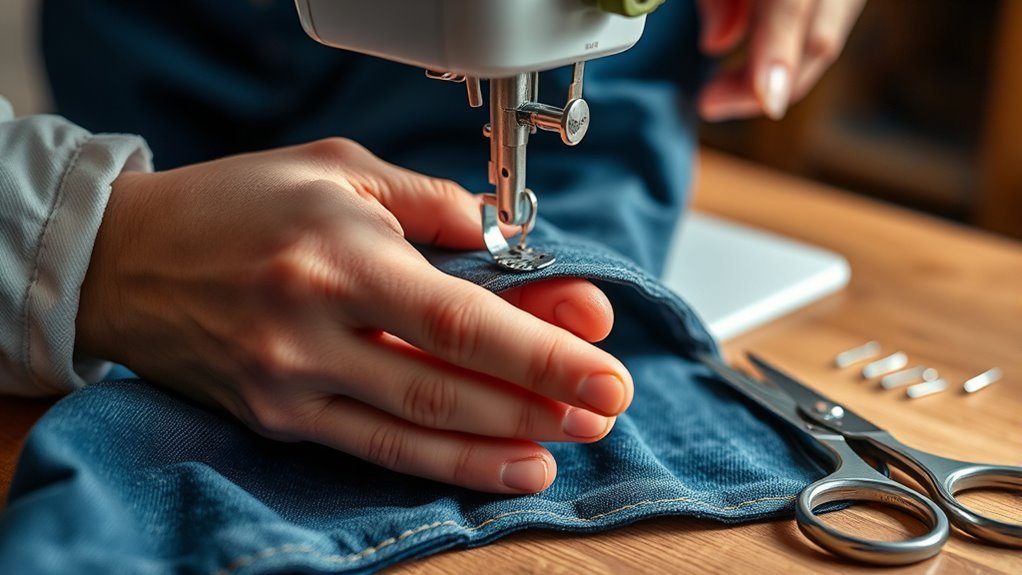
To hem your jeans with a sewing machine, start by gathering your supplies like a measuring tape, fabric scissors, and a denim needle. These tools will make the process much easier and help you achieve a neat finish.
Pre-washing your jeans is important too, as it prevents shrinkage after hemming.
Next, mark the desired length carefully and cut the fabric about an inch longer than your mark. This extra length gives you room to fold and sew the hem without it being too short.
Press the hem up with an iron to create a crisp edge.
Now, secure the hem with a straight stitch using a jeans foot on your sewing machine. Using matching thread and a longer stitch length will give your hem a professional look.
Don’t worry if you run into any problems—there are plenty of tips to help you get the perfect hem every time!
Key Takeaways
- Pre-wash your jeans first. Then, try them on with the shoes you plan to wear. Mark the desired length, but remember to cut 1 inch longer than the mark.
- Next, trim the side seam allowances to reduce bulk. Press the hem up 1 inch and set the crease using a clapper. This helps give you a crisp fold.
- When sewing, use a heavy-duty denim needle—either size 100 or 110 works well. Also, grab a Jeans Foot #8 or 8D to make stitching easier.
- Secure the folded hem with a straight stitch. Try to match the thread color to the original topstitching so it blends in nicely.
- If the fabric shifts while you sew, just re-pin it to keep things in place. You can also re-press the folds and use longer stitch lengths to get consistent results.
Gather Your Hemming Supplies
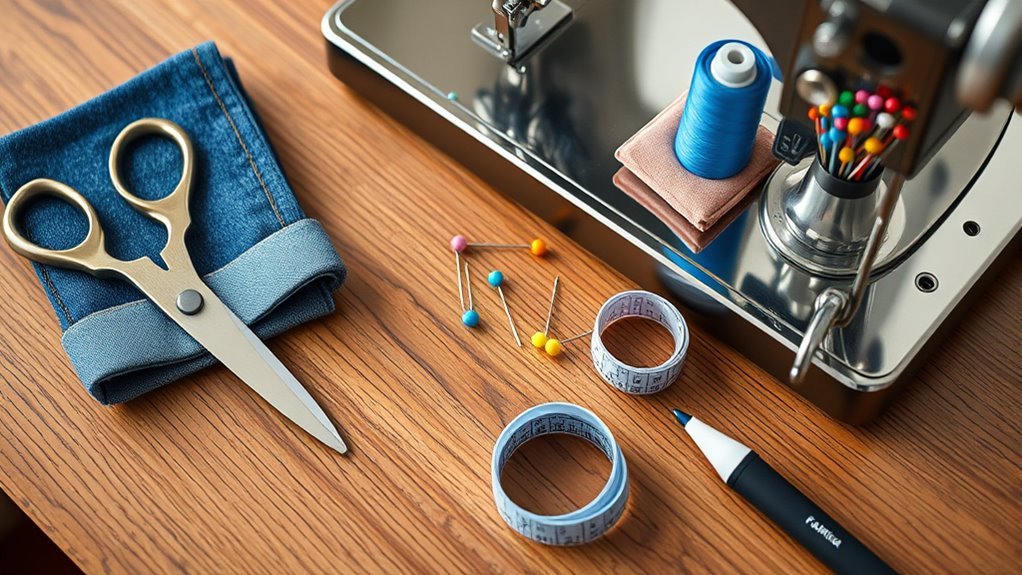
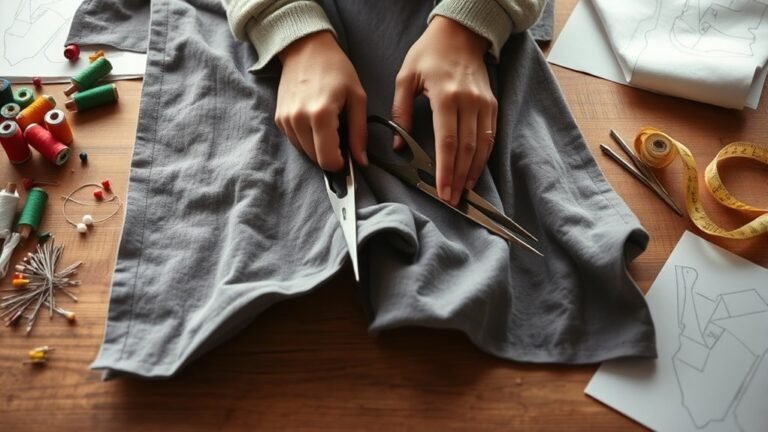
Before you get started on hemming your jeans, you’ll need to gather your hemming supplies. First, grab a measuring tape to determine the desired length for your perfect pair of jeans.
You’ll also need fabric scissors for clean cuts and high-quality thread that matches your jeans for a seamless finish. Don’t forget a heavy-duty denim needle, size 100 or 110, to handle the thick fabric.
Clips to hold the hem in place are essential, as they provide better stability than pins. If you want crisp creases, keep a clapper handy for pressing.
Finally, have a Height Compensation Tool ready to navigate any thick seams. This helps you avoid skipped stitches and achieve an even hem.
Prepare Your Jeans for the Perfect Hem
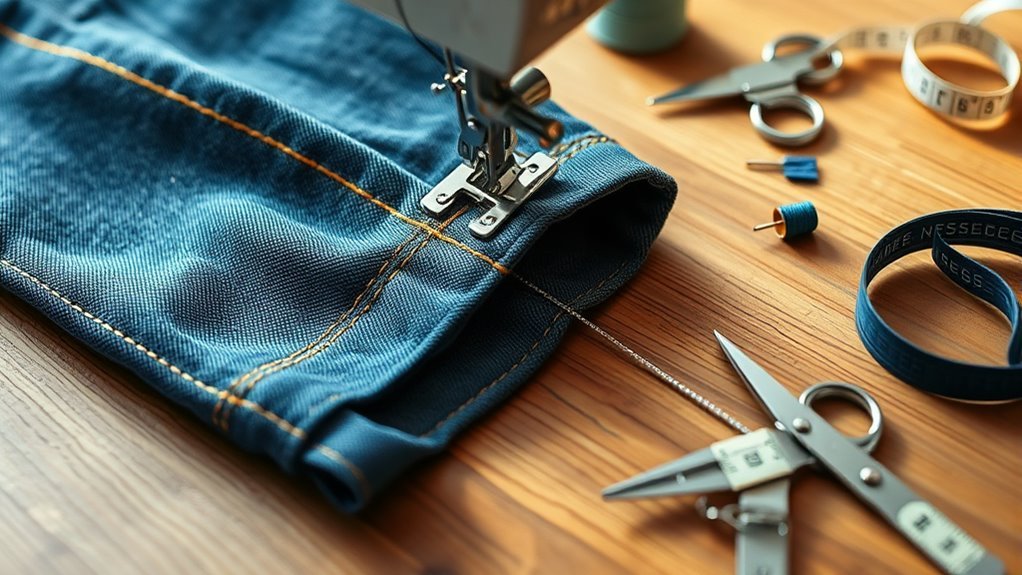
Now that you’ve gathered your hemming supplies, it’s time to prepare your jeans for the perfect hem. Follow these steps to guarantee a professional finish:
First, pre-wash your jeans to prevent any shrinkage. Then, try them on with your chosen shoes and mark the desired length using chalk or a washable fabric marker.
Cut the jeans about 1 inch longer than your marked hemline to leave room for the fold.
Next, trim the side seam allowances to reduce bulk. This makes it easier for your sewing machine needle to get through smoothly.
Once that’s done, press the hem with an iron, folding it up 1 inch. Use a clapper to set the crease firmly. This will make sure your hem looks crisp and resembles the original hem perfectly.
How to Hem Jeans With a Sewing Machine?
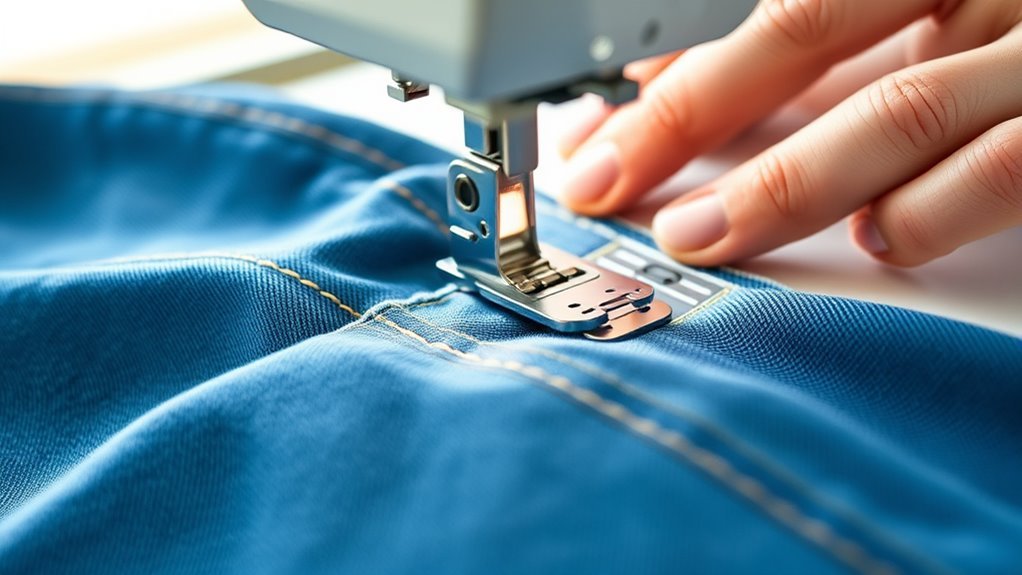
Ready to transform your jeans? Start by pre-washing them and marking your desired hem length while wearing the jeans for an accurate fit.
Cut the jeans 1 inch longer than your marked hemline, then trim the side seam allowances and press the hem up 1 inch to create a crease.
Use a Jeans Foot #8/8D and a size 100 or 110 denim needle to handle the thickness. Set your stitch length to match the existing topstitching. If necessary, use the Height Compensation Tool for thick seams.
As you sew, secure the folded hem with a straight stitch, overlapping two or three stitches at the start. Finally, tie off the thread securely and press the hem for a polished look.
Essential Tips for a Professional Hem
To achieve a professional-looking hem, it’s crucial to pay attention to details that can elevate your finished project. Here are some tips to guarantee your hemming jeans look exceptional:
Use a sturdy denim needle (size 100 or 110) to tackle thick fabric without skipped stitches. Lengthen the stitch to match existing topstitching for a seamless finish. Always match the thread color to the original topstitching for a cohesive look.
Additionally, press each fold of the hem with a clapper for crisp creases. The method I use also includes utilizing a Height Compensation Tool to manage changes over thick seams, securing even stitching throughout your hem. These steps will give your jeans a polished and professional appearance.
Troubleshooting Common Hemming Issues
While hemming jeans can seem straightforward, you might encounter a few common issues that can disrupt your project. If you notice fabric bunching or twisting, stop sewing and re-pin from side seam to outseam to guarantee an even lay.
Take the time to measure the length from the crotch seam to the hem on both legs. Re-press the fold if you find discrepancies.
For skipped stitches or broken thread, switch to a thicker needle and strong thread designed for denim. If puckering happens on stretch denim, guide the fabric lightly instead of pulling.
Always use a longer stitch length around the entire hem to prevent thread breakage and guarantee a finish that matches your jeans. It’ll make your hemming job look professional every time.
Frequently Asked Questions
What Type of Sewing Machine Is Best for Hemming Jeans?
A heavy-duty sewing machine is best for hemming jeans. Look for one with a strong motor and multiple stitch options.
Brands like Singer or Brother offer reliable models that handle denim thickness easily.
These machines make the job smoother and save you a lot of frustration. So, investing in a sturdy machine is definitely worth it!
Can I Hem Stretchy Jeans the Same Way?
Yes, you can hem stretchy jeans the same way, but use a stretch stitch or zigzag.
Picture your needle dancing over that fabric, ensuring it moves freely. This way, your jeans keep their comfy fit without any tight spots.
How Do I Choose the Right Thread Color for My Jeans?
Choose a thread color that closely matches your jeans’ fabric. For traditional denim, opt for a contrasting gold or yellow thread.
If your jeans are dark, use navy or black for a seamless look. It really helps to keep things looking neat and stylish.
Is It Necessary to Pre-Wash My Jeans Before Hemming?
Yes, it’s necessary to pre-wash your jeans before hemming. This helps prevent shrinkage and guarantees the hem fits perfectly after washing.
Plus, you’ll remove any chemicals or dirt from the fabric, making it safer to work with. It’s a simple step that saves you from potential hassle later on.
Can I Use Fabric Glue Instead of Sewing for Hems?
Absolutely, you can use fabric glue instead of sewing for hems! It’s a quick fix that’ll save you time.
But remember, it might not hold up as well in the long run. So, choose wisely!
Conclusion
Now that you’ve transformed those jeans with a fresh hem, envision slipping them on, the crisp fabric hugging your legs just right. You’ve turned a simple task into a satisfying project, breathing new life into your favorite pair.
With practice, you’ll master the art, stitching each hem like a pro. So, grab your sewing machine, feel the rhythm of the needle, and let your creativity flow.
Hemming jeans with a sewing machine is easier than you think! Each stitch adds a personal touch, making every pair uniquely yours. Happy sewing!