How Do You Get Rid of Sewer Smell in Your House Quickly?
To get rid of sewer smell in your house quickly, start by checking for dry P-traps in sinks, tubs, or floor drains. These traps hold water that blocks sewer gases, so if they’re dry, refill them to stop the odor. Flushing your drains with hot water can also help clear any buildup that might be causing the smell.
Next, take a look at your roof vent pipes. Sometimes blockages here can trap odors inside your home.
Don’t forget to inspect toilet seals as well—leaks around the base can let sewer smells escape. Fixing these leaks promptly is key to keeping your house smelling fresh.
If the smell sticks around despite these steps, it might be time to dive deeper into maintenance or call in a professional. Sometimes, sewer odors indicate bigger plumbing issues that need expert attention.
Don’t ignore persistent smells—they’re usually a sign something needs fixing!
Key Takeaways
- Run water in all sinks, tubs, and floor drains to refill dry P-traps. These traps block sewer gases from entering your home, so keeping them full is key.
- Inspect and clear roof vent pipes of any debris or blockages. This helps restore proper airflow and stops odors from building up around your house.
- Check and reseal any loose or damaged toilet seals and wax rings. This will prevent sewer gas leaks around your toilets, which can be a common source of smell.
- Flush drains with hot water and enzyme-based cleaners. These cleaners help break down organic buildup that causes those nasty odors.
- If the smell sticks around after trying these steps, it’s a good idea to call a professional plumber. They can check for hidden plumbing issues that you might not see.
Identify Common Sources of Sewer Odors in Your Home
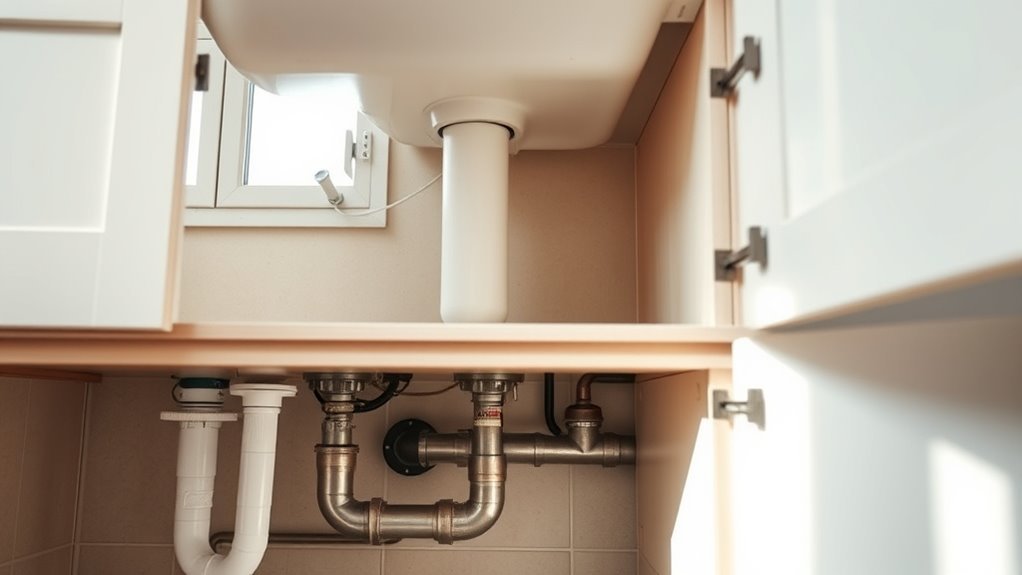
When you notice a sewer smell in your home, the first step is to identify its common sources. Dry P-traps in sinks, tubs, or floor drains often dry out, allowing sewer gases to escape and cause odors.
Faulty seals, like loose toilet seals or damaged wax rings, can also leak these unpleasant gases indoors. Additionally, vent blockages or a venting issue disrupt proper airflow, causing sewer line gases to back up into your living space.
Loose toilet seals and vent blockages can let sewer gases escape into your home, causing unpleasant odors.
Cracked or blocked sewer lines further contribute to the problem by preventing smooth waste flow and ventilation. Keep in mind that hidden problems such as deteriorated seals, faulty ejector pumps, or underground pipe damage can also produce these stubborn odors.
Recognizing these sources helps you tackle sewer smells effectively. It’s all about knowing where to look and what to fix.
Check and Refill Dry P-Traps to Seal Sewer Gases
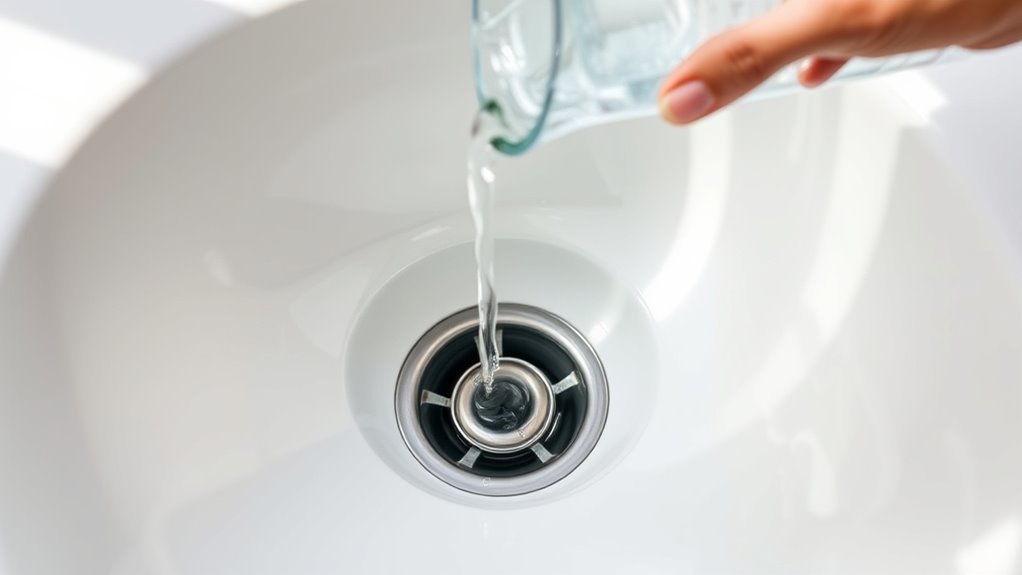
If you’ve noticed a sewer smell, check your P-traps for dryness. That’s because evaporated water no longer blocks sewer gases from entering your home.
Dry P-traps happen when water evaporates and leaves the trap empty. This lets odors escape through the drain.
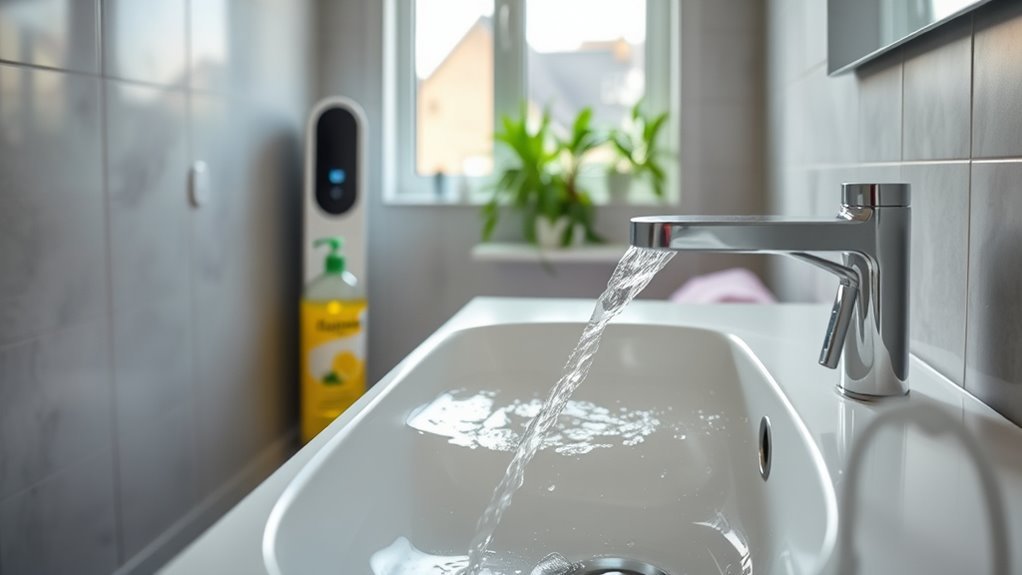
To seal sewer gases, just refill the P-trap by running water in the sink, tub, or floor drain for 10-15 seconds.
For odor prevention, make it a habit to run water through drains you use less often. This keeps the water barrier intact.
You can also add a thin layer of mineral oil or petroleum jelly on top of the water in the trap. This helps slow down evaporation.
And don’t forget to check that your vent pipes are clear. They regulate air pressure and help drains work properly, which stops sewer smells from coming into your living space.
Flush Drains With Hot Water and Odor-Neutralizing Solutions
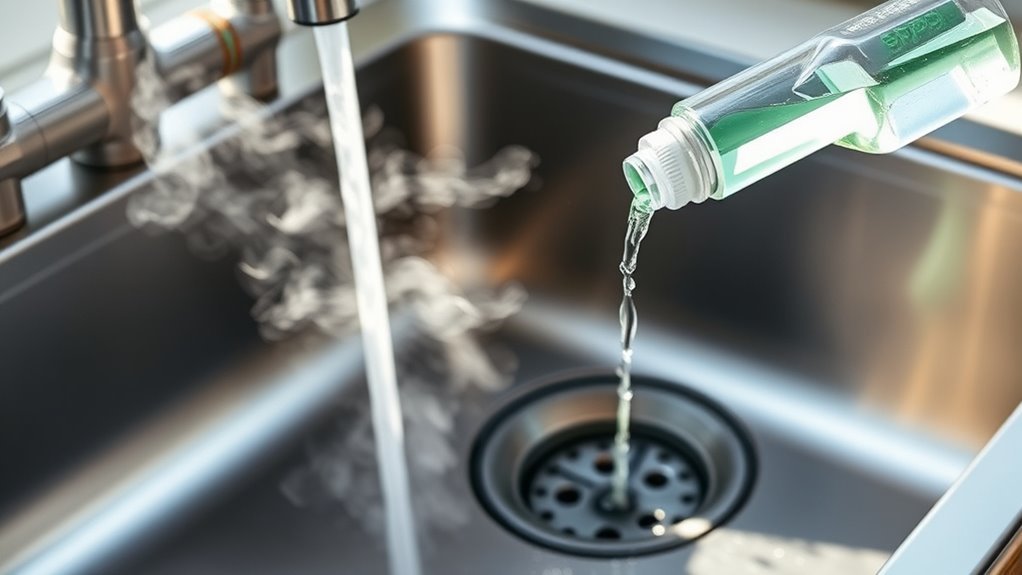
You’ll want to flush your drains regularly with hot water to break down grease and organic buildup that cause odors. Adding odor-neutralizing solutions like baking soda and vinegar or enzymatic cleaners can boost the effect and keep smells at bay.
For best results, do this when drains aren’t in use and follow with boiling water to clear away residues. It’s a simple step, but it really makes a difference!
Benefits of Hot Water
Although sewer smells can be stubborn, flushing your drains with hot water offers a simple and effective way to tackle the problem. Hot water dissolves grease, soap scum, and organic buildup that trap odors, making drain cleaning far easier.
It also helps prevent dry P-traps by keeping water levels steady, which blocks sewer gases from escaping into your home. Using hot water regularly is smart plumbing maintenance—it boosts the power of odor neutralizing agents by breaking down residues and flushing them away.
This chemical-free method not only keeps your pipes clear but also reduces persistent sewer smells. By incorporating hot water into your routine, you maintain fresher drains and minimize the risk of unpleasant odors caused by trapped organic matter and escaping sewer gases.
Odor-Neutralizing Solution Types
When you flush your drains with hot water, combining it with odor-neutralizing solutions considerably boosts their effectiveness. Odor-neutralizing solutions like enzyme-based cleaners and enzyme treatments break down organic matter that causes sewer smell, targeting residues in your septic system and pipes.
These solutions dissolve grease, soap scum, and bacteria, preventing buildup that leads to foul odors. Drain deodorizers offer an extra layer of odor control by maintaining freshness between cleanings.
Regular drain maintenance using hot water and these enzymatic products keeps your plumbing clear and smell-free. By incorporating these solutions into your routine, you’ll effectively minimize sewer odors, improve hygiene, and protect your septic system from damage caused by clogs and bacterial growth.
Application Tips and Timing
Combining hot water with odor-neutralizing solutions works best when applied with proper timing and technique. To effectively flush drains, use hot water at least 140°F to melt away grease and organic buildup that trap odors.
Pour odor-neutralizing solutions like enzymatic cleaners or diluted bleach into all drains weekly to break down bacteria and maintain wet P-traps, which prevent sewer gases from entering your home. Timing is essential—flush drains during the day so the solutions have enough contact time to work thoroughly.
Regular drain cleaning using this method ensures a rapid and lasting elimination of sewer smells. By maintaining this routine, you’ll keep drains clear, odors neutralized, and your home smelling fresh without delay.
Inspect and Clear Blocked or Damaged Vent Pipes
If you notice sewer odors lingering indoors, your vent pipes might be blocked or damaged. Look for signs like slow drainage or gurgling sounds, which often mean an obstruction.
Clearing debris with a plumber’s snake or calling a professional can restore airflow and stop the smell for good. It’s usually a quick fix once you know what’s causing the problem.
Vent Pipe Blockage Signs
Since blocked vent pipes trap sewer gases inside your home, you’ll often notice signs like gurgling noises from drains or slow drainage in several fixtures. These symptoms usually indicate a vent pipe blockage that’s preventing proper airflow.
During inspection, check the vent pipe openings on your roof for debris buildup, nests, or even ice that could be causing the obstruction. Blocked vents stop sewer gases from escaping properly, forcing them back into your living space, which creates unpleasant odors.
Clearing Vent Obstructions
How do you clear vent obstructions to stop sewer smells effectively? Start by inspecting your roof vent pipes for blockages like leaves, debris, or nests that trap sewer gases inside.
These vent obstructions can disrupt proper ventilation, causing unpleasant odors indoors. Use a garden hose or plumber’s snake to clear clogs and buildup within the vent pipes, restoring airflow.
Check vent caps for damage or cracks and replace them to prevent further debris entry and maintain proper ventilation. Also, confirm that your vent pipes extend above the roofline, allowing sewer gases to disperse safely into the atmosphere.
Regularly maintaining and clearing your vent pipes during routine plumbing inspections helps prevent blockages and keeps sewer smells at bay. It’s a simple step, but it makes a big difference!
Repair Leaking Toilet Seals and Faulty Plumbing Components
When you notice persistent sewer odors in your bathroom, repairing leaking toilet seals and faulty plumbing components often provides a quick solution. Start by inspecting toilet seals for cracks or wear, as damaged seals let sewer gases escape into your bathroom.
Tighten loose seals or replace worn wax rings to restore an airtight connection between the toilet base and drain. Applying sealant or caulk around the base adds an extra barrier against leaks and odors.
Don’t overlook flexible rubber seals, which ensure a snug fit and prevent leaks causing unpleasant smells. Regular leak repair and maintenance of all bathroom plumbing components can effectively prevent sewer gas intrusion, improving odor prevention and keeping your bathroom fresh.
Addressing these issues promptly saves you from more extensive repairs later. It’s always better to fix small problems before they turn into big headaches!
When to Call a Professional Plumber for Persistent Sewer Smells
If you’ve tried basic fixes like refilling traps and clearing vents but sewer odors still linger, it’s time to call a professional plumber. Persistent sewer smell often signals hidden problems, such as cracked pipes or vent issues, that require specialized tools to diagnose.
When the odor is strongest near drains or accompanied by gurgling sounds, water pooling, or backups, these plumbing problems can pose health risks and damage your home. A professional plumber can pinpoint the source and apply lasting solutions.
Don’t wait if home remedies don’t work within a few days. Scheduling regular maintenance with a licensed plumber helps catch issues early, preventing ongoing odor problems and costly repairs.
Acting promptly ensures your home stays safe and fresh. So, if the smell just won’t go away, it’s definitely time to call in the pros.
Frequently Asked Questions
What Can I Pour Down My Basement Drain to Make It Smell Better?
You can pour a mixture of equal parts baking soda and vinegar down your basement drain to neutralize odors.
Follow that with hot water or bleach to disinfect and eliminate bacteria causing the smell quickly and effectively.
This combo works pretty well to freshen things up. Just be sure not to overdo the bleach, though—it’s strong stuff!
What Could Be Causing a Bad Smell Outside My House?
That smell outside your house could be a sewer gas bomb! You might have cracked pipes, clogged drains, dry vents, or even an overflowing septic tank.
Take a moment to check for gaps around manholes too. Those little openings can let those odors escape.
How Long Will Sewage Smell Last?
Sewage smell can last from a few hours to several days, depending on the cause. You’ll need to fix leaks, refill dry traps, ventilate, and possibly call a professional to stop the odor quickly and effectively.
It might sound like a lot, but tackling these issues step-by-step really helps. Plus, getting the smell gone sooner rather than later makes your space way more comfortable. So, don’t wait too long—take action as soon as you notice the smell.
Why Does My Mobile Home Smell Like Sewer?
Why does your mobile home smell like sewer? It’s likely due to dry P-traps, cracked vent pipes, or faulty wax rings under toilets.
You’ll want to check plumbing seals and vents to stop those odors quickly.
Sometimes, the smell sneaks in when water evaporates from traps, letting sewer gases escape.
Cracked vents or damaged wax rings can also be culprits, so a quick inspection can save you from that nasty smell.
Conclusion
Getting rid of sewer smells in your house doesn’t have to feel like chasing ghosts. Start by checking those dry P-traps and flushing drains with hot water and odor-neutralizers.
Don’t overlook vent pipes or leaky seals—they’re often the culprits hiding in plain sight. If the smell sticks around like an unwelcome guest, it’s time to call in a professional plumber.
With these steps, you’ll breathe easy and reclaim your fresh-smelling home in no time. Addressing sewer smell quickly not only improves your indoor air quality but also prevents potential health hazards. Remember, regular maintenance of drains and plumbing fixtures can keep those stubborn odors at bay. So, take action now and enjoy a clean, odor-free environment that feels welcoming every day.