5 Factors That Affect How Much to Replace a Sewer Line
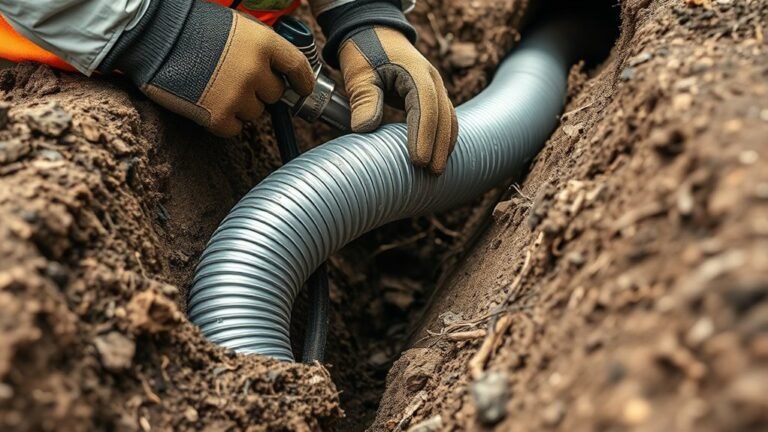
You’ll pay more to replace a sewer line if it’s old, made of expensive materials like cast iron, or badly damaged. These factors directly impact the overall cost because older pipes often require more work to remove and replace safely.
Cast iron, while durable, is pricier than modern materials, so choosing it can increase your expenses.
Hard-to-reach locations under driveways or near utilities also drive up costs. When the sewer line is in a tricky spot, it takes more time and specialized equipment to access and repair. This makes the job more labor-intensive and, naturally, more expensive.
Emergency repairs typically cost more than planned maintenance because they require quick, costly labor and permits.
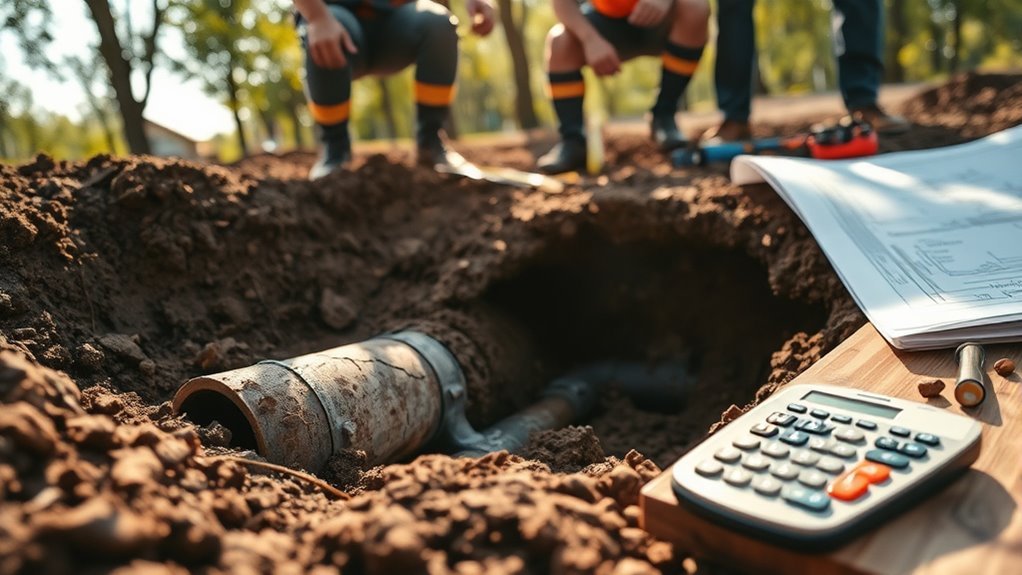
If you want to make the best decisions and avoid surprises, understanding these factors can help you manage your sewer line replacement wisely. Being informed lets you plan ahead and potentially save money in the long run.
Key Takeaways
- Age of the sewer infrastructure influences replacement cost due to pipe deterioration and material lifespan. Older pipes tend to need more work, which can drive up expenses.
- Type of pipe material affects expenses, with PVC being cheaper and longer-lasting than cast iron or fiber pipes. So, choosing the right material can make a big difference in cost.
- Location and accessibility of the damaged sewer line increase costs, especially under concrete or in dense urban areas. When it’s hard to get to, it usually means more labor and equipment.
- Severity and extent of damage dictate repair complexity and whether trenchless or traditional replacement methods are used. The worse the damage, the more complicated and costly the job might be.
- Emergency repairs are significantly costlier than planned maintenance due to urgent labor, permits, and scheduling constraints. So, it’s always better to catch problems early before they turn into emergencies.
Age of Sewer Infrastructure
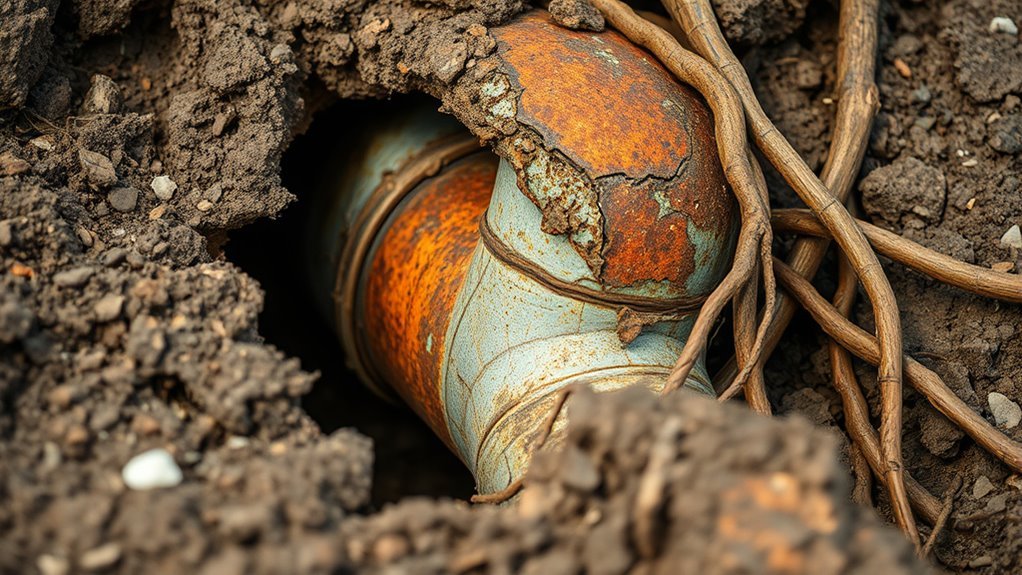
When you deal with sewer lines built before 1940, you’ll find they often require more costly replacements. The age of sewer infrastructure directly impacts replacement costs because older pipes face more deterioration.
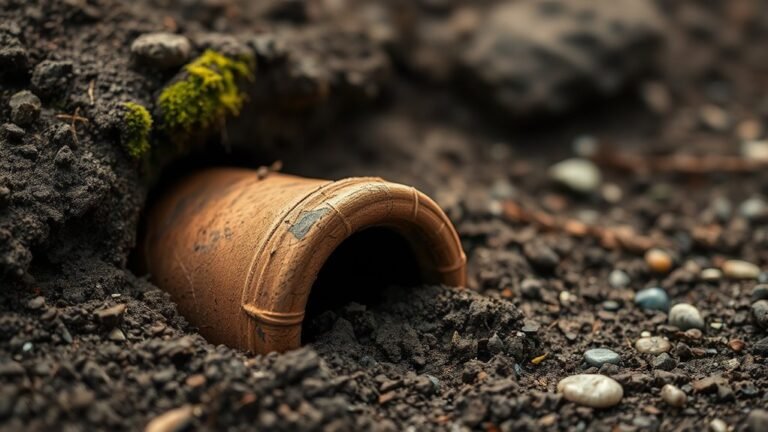
As the material age advances, clay or cast iron pipes weaken, increasing the risk of structural damage. Over time, root intrusion worsens, causing cracks and collapses that push repair expenses higher.
The pipe lifespan shortens, and minor fixes often won’t cut it. Instead, the infrastructure age demands a full replacement to address widespread issues effectively.
You’ll notice that older systems seldom respond well to patching or lining, making replacement the more practical—and expensive—solution. Understanding the impact of infrastructure age helps you anticipate and manage these repair challenges and costs.
Type of Pipe Material
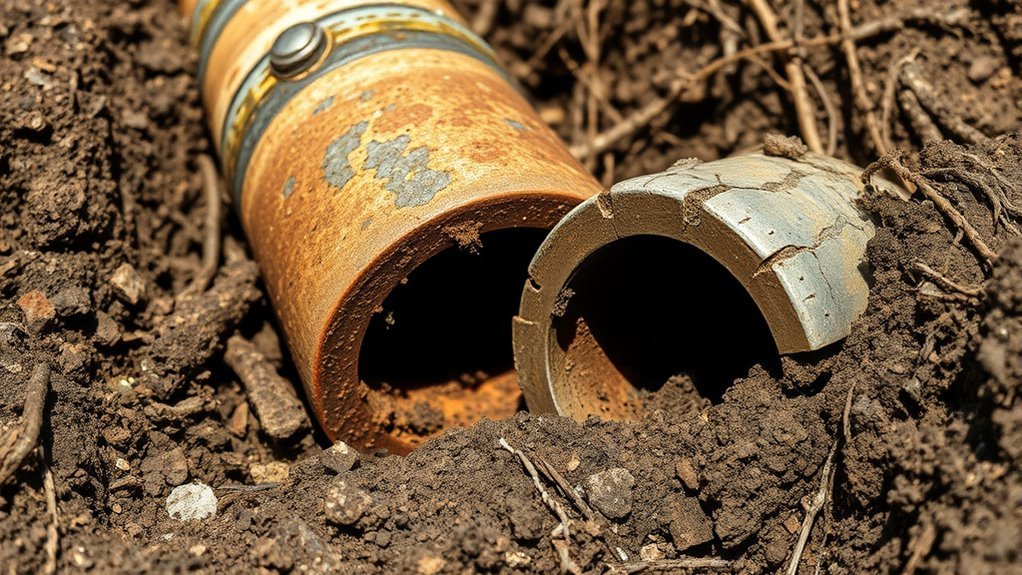
Although the age of your sewer line plays a big role in replacement costs, the type of pipe material you have can make an even bigger difference. PVC pipes, known for their material durability and corrosion resistance, cost about $4.50 per linear foot and can last over 100 years, making them a smart choice.
Cast iron pipes, while sturdy, come with a much higher pipe replacement cost—around $50 per linear foot—and are prone to corrosion, which can lead to expensive repairs. Fiber pipes like Orangeburg are outdated, deteriorate quickly, and usually require full replacement.
Modern plastics such as PVC and ABS are lightweight, chemical-resistant, and easier to install, cutting down labor costs. Choosing the right pipe material directly impacts the pipe lifespan, repair frequency, and overall expense. So, picking the right one really pays off in the long run!
Location and Accessibility of Damage
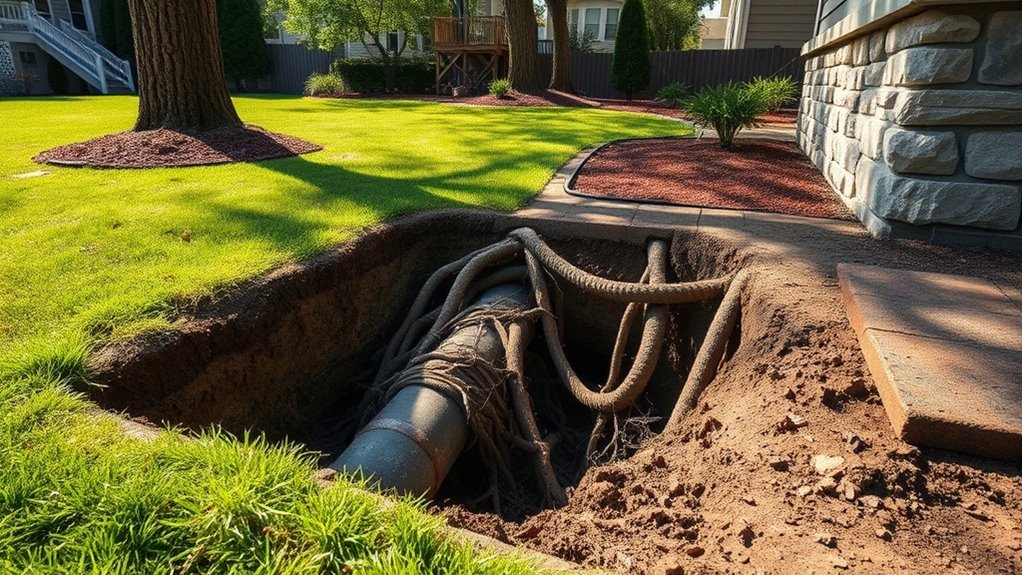
Choosing the right pipe material helps reduce long-term costs, but where your sewer line damage occurs can substantially affect repair expenses too. The underground location and site accessibility influence excavation costs and repair complexity.
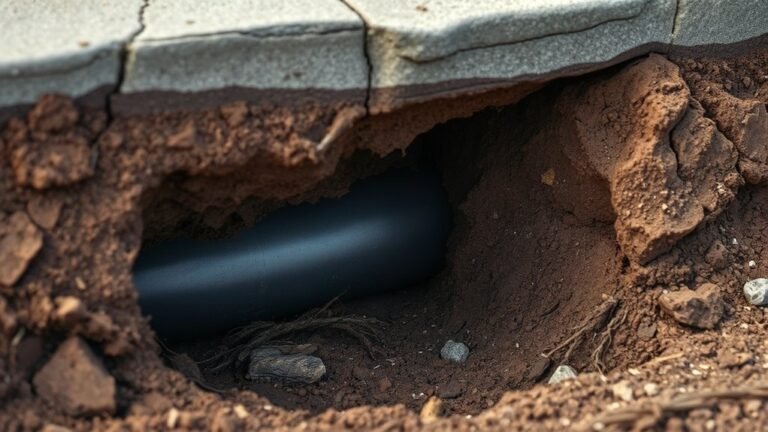
Damage beneath driveways or concrete slabs requires specialized equipment and careful access points, increasing costs. Dense urban property conditions or restricted areas under landscaping further complicate repairs, demanding extra permits and labor.
| Damage Location | Site Accessibility | Impact on Costs |
|---|---|---|
| Deep underground | Limited access points | High excavation costs |
| Under concrete slabs | Requires heavy equipment | Increased repair complexity |
| Urban dense area | Constrained site | Longer repair time |
| Near utilities/tree roots | Restricted property conditions | Additional permits needed |
Understanding these factors helps you anticipate expenses tied to your sewer line’s accessibility and repair area. It’s all about knowing what you’re dealing with before the work begins.
Severity and Extent of Damage
Because the severity and extent of sewer line damage directly influence repair methods and costs, understanding the scope is essential. After a thorough inspection, you’ll learn if minor issues like small cracks require localized repairs, keeping repair costs between $600 and $1,500.
However, extensive pipe deterioration or multiple breaks often call for full replacement, pushing replacement costs above $7,000. The damage extent also determines the repair method—trenchless techniques suit less severe damage, while traditional excavation may be necessary for deep or hard-to-access pipes.
This can increase excavation complexity and labor costs. Early detection plays a pivotal role, allowing you to address issues before damage severity worsens. Doing so reduces both repair costs and the need for invasive repairs due to limited pipe access.
Emergency Repairs Versus Planned Maintenance
When sewer problems catch you off guard, emergency repairs can quickly drain your wallet, often costing 50% to 100% more than planned maintenance. Emergency repairs incur higher labor costs, expedited permit fees, and limited scheduling options, driving up overall repair costs.
You might also face greater property damage due to the urgent nature and broader scope of work. In contrast, planned maintenance lets you schedule repairs at your convenience, choose cost-effective repair methods like trenchless lining, and receive accurate cost estimates.
Regular inspections help catch issues early, minimizing expensive emergencies. By opting for planned maintenance, you control repair costs and reduce disruptions, while emergency repairs often force costly decisions under pressure.
Prioritizing scheduled upkeep prevents unexpected expenses and preserves your property’s integrity over time. So, it really pays to plan ahead rather than letting problems catch you by surprise.
Frequently Asked Questions
How Much Does It Typically Cost to Replace a Sewer Line?
You’ll typically pay between $3,000 and $10,000 to replace a sewer line. Costs vary based on length, depth, and materials.
But here’s the good news: trenchless methods usually cost less per foot than traditional excavation. So, if you’re looking to save some money, that might be the way to go!
What Is the Average Lifespan of a Sewer Line?
Back when knights roamed, sewer lines weren’t a worry, but today, your sewer line’s lifespan varies: PVC lasts over 100 years, cast iron 50-75, clay tile 50-60, and Orangeburg 30-50 years before replacement.
Different materials mean different lifespans. So, it really depends on what your sewer line is made of. Knowing this can help you plan for maintenance or replacement down the road.
Will Homeowners Insurance Pay for Sewer Line Replacement?
Homeowners insurance usually won’t cover sewer line replacement unless sudden damage occurs, like a burst pipe.
You’ll need to check your policy or add endorsements, as normal wear and tear repairs typically aren’t covered.
Does a New Sewer Line Increase Home Value?
Think of a new sewer line as a fresh foundation for your home’s health—it does increase your home’s value.
Buyers notice reliability, and you’ll gain peace of mind and stronger resale appeal when you upgrade.
Conclusion
When it comes to replacing your sewer line, you might think it’s a straightforward fix—but there’s more beneath the surface. The age of your pipes, what they’re made of, where the damage hides, and how bad it really is all play a role.
Plus, whether it’s an emergency or planned repair can change everything. You’re about to face decisions that could save you thousands—or cost you more than you imagined.
Understanding these factors is key to managing your sewer line replacement costs. By knowing what affects the price, from pipe materials to the extent of damage, you can make smarter choices. Whether it’s an urgent fix or scheduled maintenance, being prepared helps you avoid unexpected expenses and ensures your home’s plumbing stays in top shape. Ready to dive in and learn what really matters when replacing your sewer line?