How Long Do Clay Sewer Pipes Last?
You can expect clay sewer pipes to last about 50 to 60 years if they’re properly installed and maintained. These pipes have been a popular choice for sewer systems because of their durability and resistance to corrosion.
Some clay pipes even last over 100 years under ideal conditions, which is pretty impressive! However, factors like ground movement, root intrusion, and poor installation can shorten their lifespan.
It’s important to watch for signs of damage like leaks or backups to avoid costly repairs. Knowing when to repair or replace your clay sewer pipes can save you a lot of trouble down the road.
There’s more to know about how to keep clay pipes working longer and when replacement becomes necessary. Taking care of your sewer system helps prevent unexpected problems and keeps everything flowing smoothly.
Key Takeaways
- Clay sewer pipes typically last 50 to 60 years with proper installation and maintenance. However, their lifespan can vary depending on several factors.
- Things like root intrusion, soil movement, and groundwater infiltration can really shorten how long these pipes hold up.
- You might notice your clay pipes aging if you start seeing leaks, smelling foul odors, or dealing with frequent clogs. Wet patches above the pipes are also a telltale sign.
- To keep your clay pipes going strong, regular inspections and cleaning are key. These steps help prevent premature failure and extend their durability.
- When clay pipes become extensively damaged or just outlive their usefulness, it’s usually best to replace them with PVC or HDPE alternatives.
Typical Lifespan of Clay Sewer Pipes
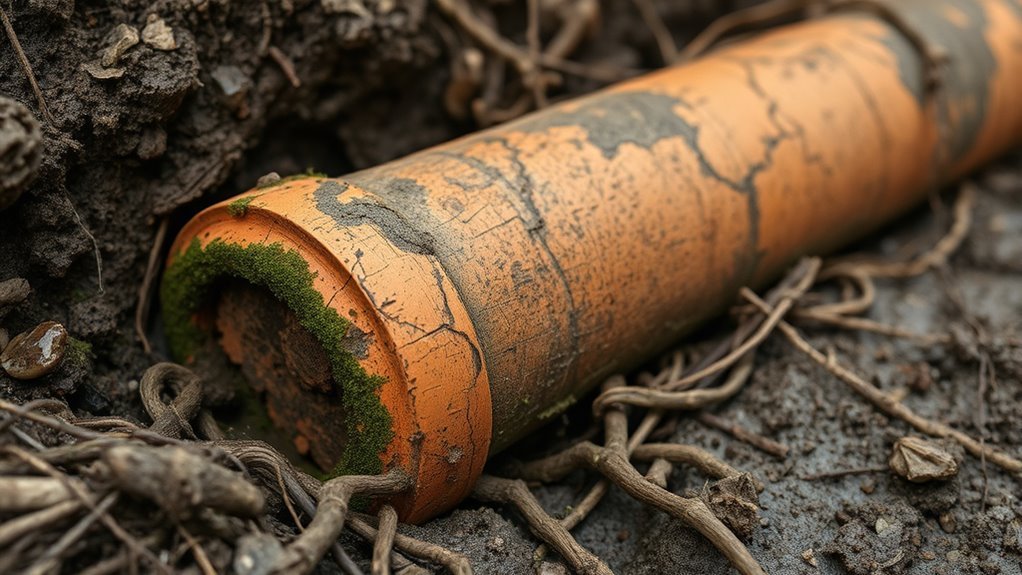
Although clay sewer pipes are known for their durability, they typically last between 50 to 60 years when properly maintained and installed in stable ground. You can extend the service life of these pipes by ensuring correct installation and performing regular maintenance.
Damage from root intrusion or ground shifting can considerably shorten their lifespan, so it’s essential to inspect your pipes routinely. Many clay sewer pipes installed over half a century ago still function well, proving their resilience under ideal conditions.
To avoid unexpected failures, address minor damage promptly and keep an eye on any signs of wear or blockages. By staying proactive with maintenance, you’ll help your clay sewer pipes reach or even surpass their expected service life.
Historical Use and Durability of Clay Pipes
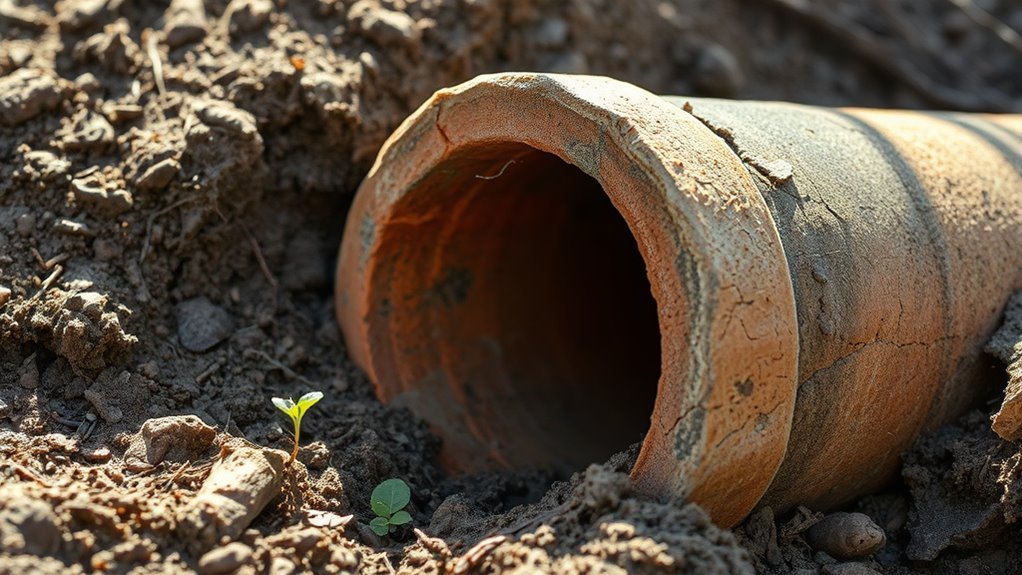
Since ancient times, clay sewer pipes have proven their durability and effectiveness in managing wastewater. You can still find ancient systems from Babylonia and Ephesus functioning, showcasing the historical use of these pipes.
In the 19th century, vitrified clay pipe emerged, gaining popularity in U.S. cities for its enhanced durability and corrosion resistance. These pipes are kiln-fired, creating a strong, ceramic-like material that fits tightly.
Many older neighborhoods still rely on their original clay sewer lines, some lasting over 100 years. However, you should be aware that despite their resilience, clay pipes face challenges like ground shifting and root intrusion, which can compromise their integrity over time.
Understanding this history helps you appreciate clay’s lasting value in sewer systems. It’s pretty amazing how these materials have stood the test of time, isn’t it?
Factors Affecting the Longevity of Clay Sewer Pipes
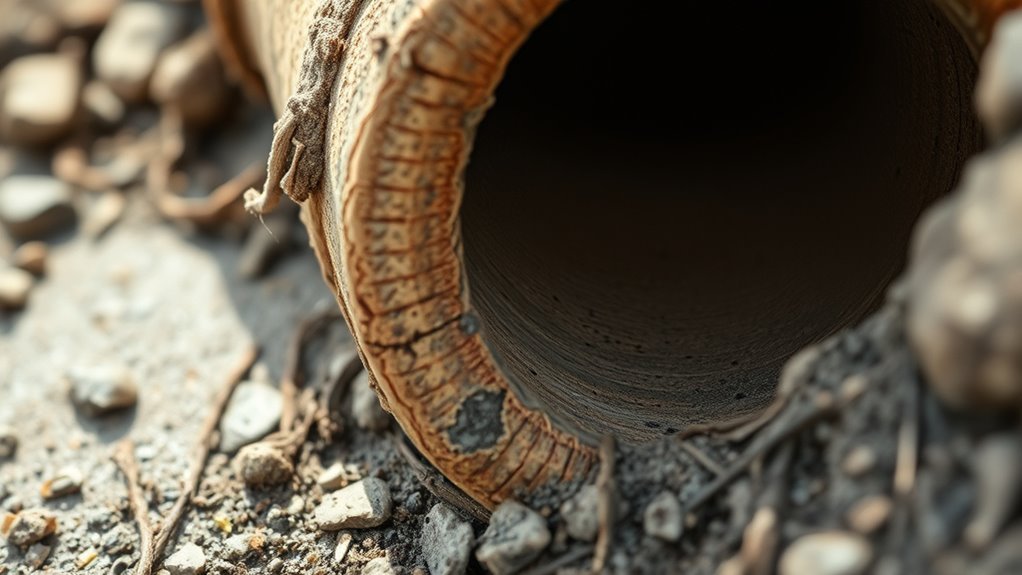
Because clay sewer pipes face various environmental and installation challenges, their lifespan can vary widely. Factors like soil movement and ground erosion can shift or expose pipes, increasing the risk of damage.
Root intrusion from nearby trees often accelerates pipe deterioration by infiltrating joints. Installation quality also plays a *vital* role; well-bedded pipes with sealed joints last longer by resisting external pressures.
Changes in water tables or drought conditions can further stress the pipes, reducing their functional life. Here’s a quick look at key factors:
| Factor | Impact on Longevity |
|---|---|
| Soil Movement | Causes shifting, leading to cracks |
| Root Intrusion | Penetrates joints, causing blockages |
| Installation Quality | Proper bedding and sealing extend lifespan |
Common Causes of Clay Sewer Pipe Failure
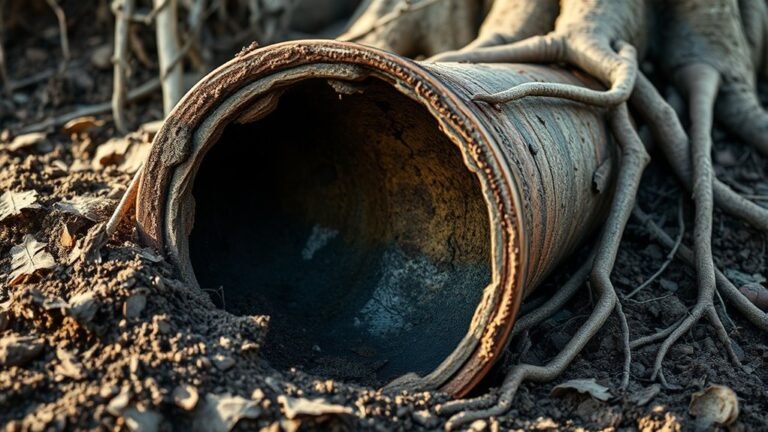
When tree roots find their way into the small gaps between clay sewer pipe joints, they cause cracks and blockages that worsen over time. This tree root intrusion is one of the most common causes of pipe failure in clay sewer pipes.
Also, soil movement—like shifting ground or erosion—can weaken or displace these pipes. That leads to leaks and breaks, which can be a real headache.
Over time, the clay material itself starts to deteriorate as it ages. This makes the pipes more prone to cracking, which only adds to the problem.
Groundwater infiltration doesn’t help either. It weakens the pipe’s structure and speeds up failure.
And let’s not forget improper installation. Poor bedding or misalignment puts extra stress on the pipes, causing them to fail faster.
Knowing these factors can really help you catch issues early. That way, you can extend the life of your clay sewer pipes and avoid costly repairs down the road.
Signs Indicating Clay Sewer Pipe Replacement Is Needed
If you notice persistent foul odors around your property or recurring clogs in multiple drains, these could be clear signs that your clay sewer pipes need replacement. Pipe deterioration often leads to leaks and blockages, making pipe replacement essential to avoid further damage.
| Sign | What It Indicates |
|---|---|
| Persistent foul odors | Cracks or leaks in clay sewer pipes |
| Recurring clogs | Pipe deterioration causing blockages |
| Wet patches or lush grass | Underground leaks seeping into soil |
Ignoring these signs can worsen leaks and clogs, causing expensive repairs. When multiple drains back up simultaneously or you see mold or mildew near walls and floors, it’s time to call a professional.
Early pipe replacement prevents major sewer issues and protects your property. Don’t wait until the problem gets worse!
Maintenance Practices to Extend Clay Sewer Pipe Life
To extend the life of your clay sewer pipes, you should prioritize regular maintenance practices that address common causes of deterioration. Proper upkeep can notably delay costly repairs and replacements.
Here are four key steps to maintain your clay sewer lines:
- Schedule annual inspections using sewer camera technology to spot early signs of deterioration like cracks or misalignments.
- Clean out roots and debris yearly to prevent blockages and reduce pressure on joints.
- Install root barriers around your pipes to inhibit invasive roots that cause damage.
- Ensure proper soil compaction and drainage around the pipes to minimize ground shifts and avoid cracks.
Repair Options for Aging Clay Sewer Pipes
When you spot isolated cracks or minor joint issues, spot repairs can be a quick, cost-effective fix if the pipe’s structure is mostly intact.
Pipe relining offers a durable solution that strengthens aging pipes without digging them up.
However, if damage is widespread or severe, a full replacement might be your best bet to avoid ongoing problems.
Spot Repair Suitability
Although clay sewer pipes can develop localized issues over time, spot repairs offer a practical solution for addressing specific problems like cracks or defective joints. You should consider spot repair when the pipe damage is confined to a small, isolated area. Also, the surrounding pipe should remain structurally sound on both sides.
There should be minimal root intrusion affecting the damaged section, and ground shifting around the pipe should be negligible. Spot repair helps maintain pipe longevity by fixing targeted defects without replacing entire sections.
However, it’s not suitable for widespread damage or multiple defects. If you notice extensive pipe damage or significant root intrusion, more extensive methods are usually necessary.
Pipe Relining Benefits
Since repairing aging clay sewer pipes can be challenging, pipe relining offers an effective solution that reinforces and seals existing pipes without the need for full replacement. Pipe relining involves inserting a resin-coated liner into the damaged clay sewer pipe, sealing cracks, gaps, and leaks.
This sewer repair method is minimally invasive, causing less disruption and requiring less time than traditional replacement. If your clay sewer pipe has minor to moderate damage like small cracks or root intrusion, relining can restore its integrity and prevent further damage.
Properly installed, pipe relining can extend your pipe’s longevity by 50 years or more, improving flow and reducing future repair costs. Overall, pipe relining provides a durable, cost-effective option to address aging clay sewer pipes efficiently.
Full Replacement Necessity
If your clay sewer pipes show severe cracking, collapse, or extensive damage, full replacement becomes necessary to guarantee proper function. You’ll want a professional inspection, often using a sewer camera, to assess the extent of the damage.
Signs that full replacement is needed include persistent leaks, severe root intrusion, and multiple pipe failures. When replacing clay pipes, the old sewer line is excavated and removed, then modern materials like PVC or HDPE are installed.
Here’s what to expect with full replacement:
- Thorough sewer line inspection to identify damage
- Excavation of the existing clay pipes
- Removal of damaged sections causing blockages or leaks
- Installation of durable, modern piping to prevent future issues
Full replacement ensures long-term reliability when repair isn’t enough. It’s a big job, but it’s worth it to avoid ongoing problems down the line.
Comparing Clay Pipes With Other Sewer Pipe Materials
You’ll find that clay pipes typically last around 50 to 60 years. But materials like PVC and cast iron can last much longer—up to 100 years or more.
Durability also varies. Modern pipes tend to resist root intrusion and ground movement better than clay.
Let’s compare these differences to help you understand which material might suit your needs best.
Lifespan Comparison Overview
While clay sewer pipes usually last between 50 to 60 years, you’ll find that other materials offer different lifespans worth considering. When comparing clay pipes, lifespan varies markedly depending on the material’s durability and maintenance needs.
Here’s a quick overview:
- Clay pipes typically last 50-60 years but can require earlier replacement if damaged.
- Cast iron pipes offer greater durability, often lasting 75-100 years.
- PVC pipes provide the longest lifespan, frequently exceeding 100 years with less maintenance.
- Proper installation and upkeep can extend all pipe types’ functional life.
Understanding these differences helps you choose the right sewer pipe material based on your needs for durability and replacement timing. It’s all about finding what fits your situation best.
Material Durability Differences
Understanding how different sewer pipe materials hold up over time reveals why clay pipes, despite their traditional use, may not always be the best choice for durability. Clay pipes typically last 50 to 60 years, but their material durability heavily depends on soil conditions and maintenance.
They’re prone to cracking and root intrusion, which shortens their pipe lifespan considerably. In contrast, synthetic materials like PVC and HDPE offer better flexibility and resist ground movement, often lasting up to 100 years.
These modern options withstand shifting soil and joint deterioration better than clay pipes. When you consider long-term performance, synthetic materials generally provide greater reliability, especially in challenging soil conditions.
Frequently Asked Questions
What Is the Typical Lifespan of a Cast Iron Sewer Pipe?
You can expect cast iron sewer pipes to last about 75 to 100 years if you maintain them properly. Keep an eye out for rust, corrosion, and cracks.
Schedule regular inspections to extend their life. It really helps catch problems early before they get worse. Just a little upkeep goes a long way.
Is It Safe to Smoke Out of a Clay Pipe?
Don’t beat around the bush—smoking out of a clay pipe is generally safe if it’s made for that purpose.
However, avoid old or cracked pipes, as harmful substances might leach in, risking your health. Just stick to well-made, intact pipes, and you should be good to go.
What Does Clay Sewer Pipe Look Like?
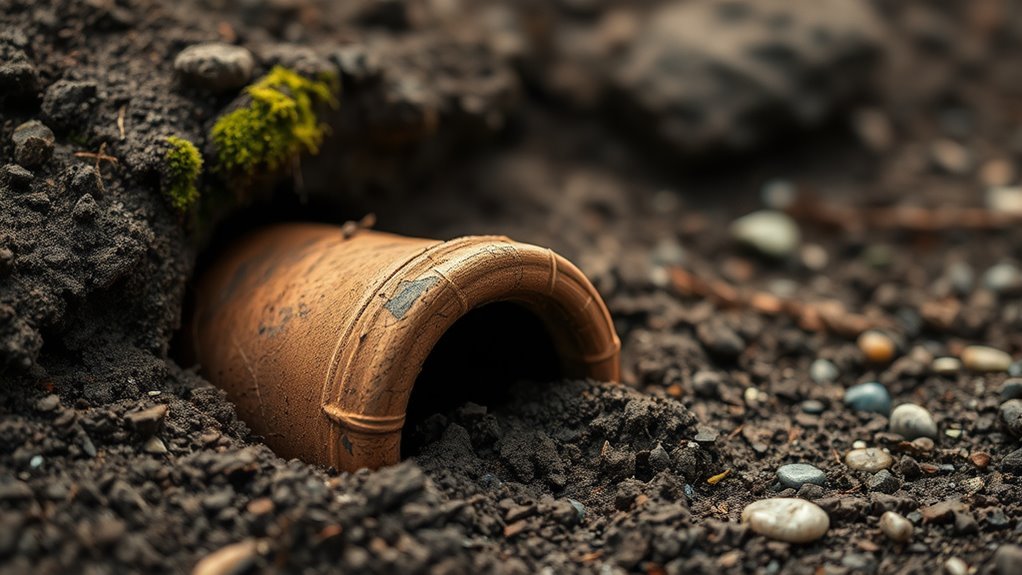
You’ll notice clay sewer pipes are usually light to dark gray, round with smooth, glossy interiors. They have hard, ceramic-like walls and bell-and-spigot joints, sometimes sealed with rubber or clay gaskets for a tight fit.
These pipes are pretty distinctive because of their material and design. The bell-and-spigot joints help them connect securely, which is important for preventing leaks. Plus, the glossy interior helps waste flow smoothly through the system.
When Did They Stop Using Terra Cotta Pipes?
Like a fading sunset, they stopped using terra cotta pipes mainly during the 1960s and 1970s.
You’ll find them mostly in older homes since modern materials replaced these pipes for better durability and easier installation.
Conclusion
Clay sewer pipes can last over 50 years, but factors like soil conditions and tree roots can shorten their life.
Imagine you notice slow drains and foul odors in your home—these signs often mean your clay pipes need attention.
By maintaining them regularly and addressing issues early, you can avoid costly replacements.
Just like the Johnsons, who saved thousands by repairing rather than replacing their aging clay pipes, proactive care really pays off.
Taking care of your clay sewer pipes means watching out for damage caused by shifting soil or invasive tree roots. Regular inspections can catch small problems before they become big headaches.
If you’re proactive, your clay sewer pipes can serve you well for decades. So, don’t wait for serious plumbing issues—monitor, maintain, and protect your pipes to ensure a long-lasting and trouble-free sewer system.