How to Follow a Sewing Pattern in 3 Easy Steps
To follow a sewing pattern, start by getting comfortable with the instructions. Familiarize yourself with the terminology, and highlight key pieces. Understanding these basics is essential for a smooth sewing experience.
Next, select the right size by measuring your bust, waist, and hips against the size chart. This step helps ensure your garment fits perfectly. Don’t rush—accurate measurements make all the difference.
Finally, cut your fabric carefully, ensuring the grain aligns, and assemble your pieces step by step. Pay attention to fit as you go.
Stick around to uncover more tips that can boost your sewing confidence and skills!
Key Takeaways
- Read the entire pattern instructions and familiarize yourself with the terminology before starting your project. This way, you won’t get stuck halfway through.
- Take accurate body measurements and match them with the size chart to select the right pattern size. It makes a huge difference in how your garment will fit.
- Cut fabric carefully, making sure the grainlines align. Don’t forget to trace notches and darts—they’re key for putting everything together correctly.
- Assemble the garment step-by-step, checking the fit and alignment as you go. This helps catch any issues early on.
- Enhance your skills by practicing techniques regularly. Also, using online tutorials can give you great visual guidance and boost your confidence.
Get Comfortable With Your Pattern Instructions
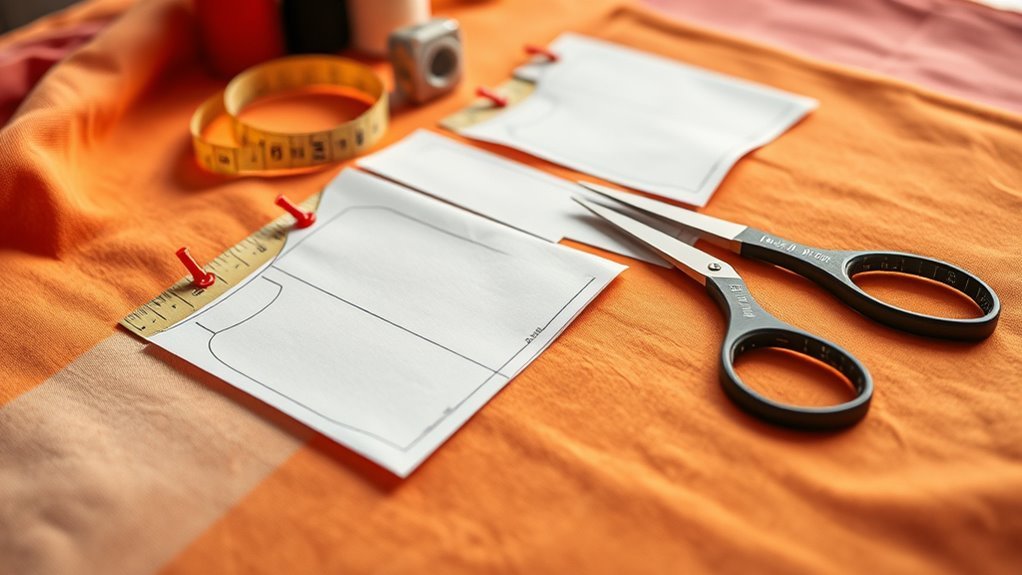
To get comfortable with your pattern instructions, start by reading the entire booklet thoroughly. Familiarizing yourself with the sewing pattern’s terminology and steps is vital before diving into your project.
Highlight or circle the specific pattern pieces you’ll use based on your chosen design view to avoid confusion later. Pay close attention to markings on the pattern pieces, like notches, darts, and grainlines, as they’re fundamental for accurate assembly and fit.
If you encounter unfamiliar terms, check the glossary in the sewing instructions to clarify. You might also consider watching online tutorial videos that correspond with your pattern for visual guidance and extra tips.
This approach will enhance your basic sewing skills and boost your confidence. Give it a try—you’ll feel more prepared and ready to tackle your project!
Select the Right Size for Your Sewing Pattern
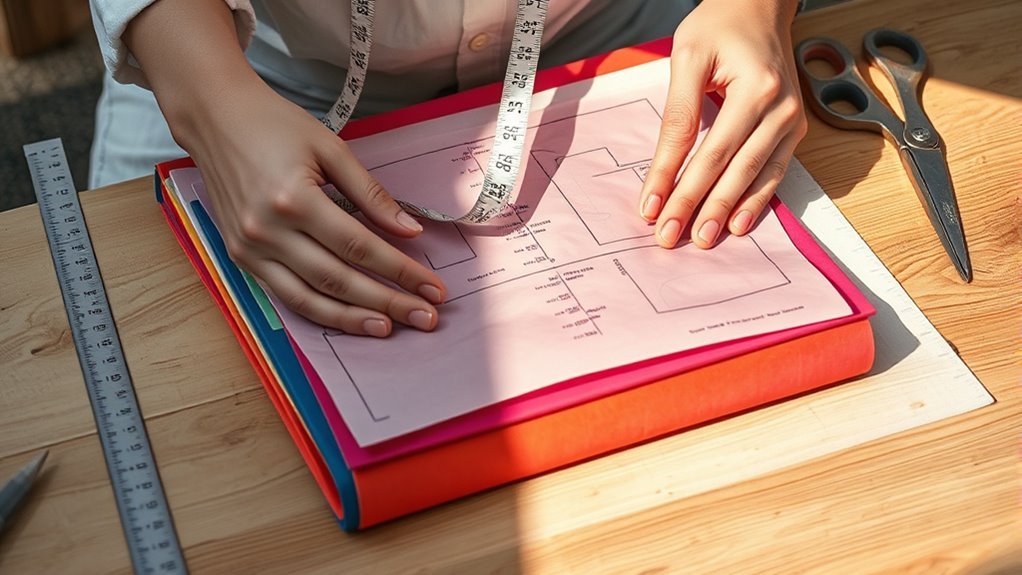
Understanding your pattern instructions sets the stage for selecting the right size. To guarantee a perfect fit, follow these steps:
- Use Your Body Measurements: Always refer to your bust, waist, and hips measurements instead of shop sizes. These can vary quite a bit, so it’s best to rely on your own numbers.
- Check the Size Chart: Take a look at the size chart on the pattern envelope. Find your matching pattern size based on your body measurements — this really helps narrow things down.
- Consider Finished Garment Measurements: Pay attention to the finished garment measurements given on the pattern. If you happen to fall between sizes, think about grading between them for a better fit. It’s a simple way to make your garment just right!
Cut and Assemble Your Pieces
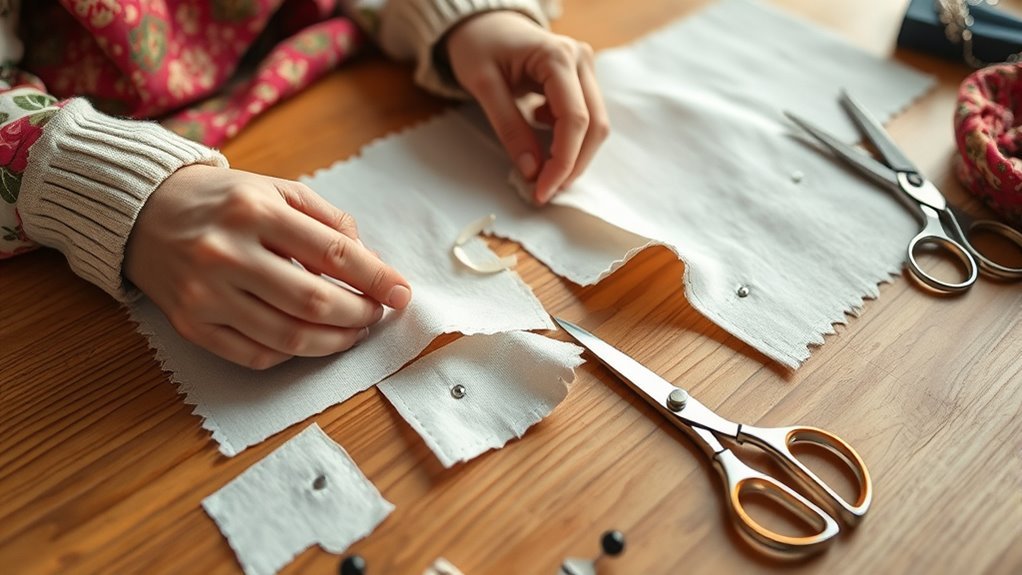
Start by laying out your fabric carefully, ensuring the straight of grain aligns with the selvedge. Pin or weigh down the pattern pieces before you cut.
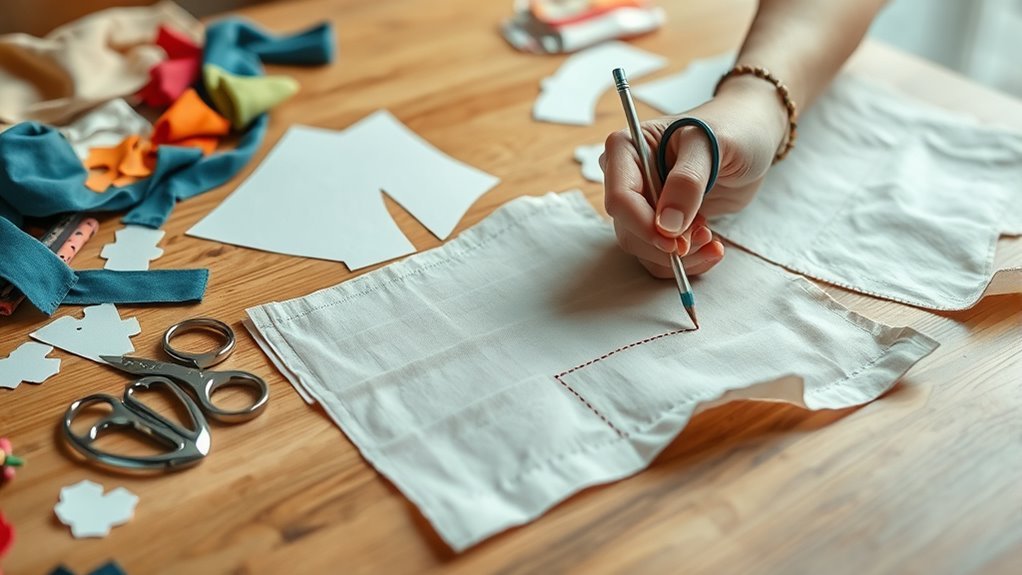
Use fabric chalk or a marker to trace markings like notches and darts for accurate assembly later. When you cut each pattern piece, use sharp fabric scissors and follow the cutting lines closely. Avoid deep notches to keep the integrity intact.
Use fabric chalk or a marker to mark notches and darts, ensuring precise assembly for your sewing project.
After cutting, organize your pieces and label them if necessary. Make sure all components, like interfacing and facings, are accounted for.
Follow the pattern instructions step-by-step for assembly. Start with complex sections and move to simpler areas.
Check fit and alignment as you go, and soon you’ll be ready to use your sewing machine!
Frequently Asked Questions
How Do I Choose Fabric for My Sewing Pattern?
To choose fabric for your sewing pattern, consider the pattern’s style and intended use. Check the fabric weight, drape, and texture.
Don’t forget to feel the fabric; it should inspire your creativity and suit your project. Trust your instincts when picking the right material—it makes all the difference!
What Tools Do I Need for Sewing a Pattern?
To sew a pattern, you’ll need fabric scissors, pins, a measuring tape, a seam ripper, and a sewing machine.
Think of these tools as your trusty compass, guiding you through the fabric adventure ahead.
Can I Modify a Sewing Pattern?
Yes, you can definitely modify a sewing pattern! Adjust the fit, change the length, or add design elements.
Just remember to make notes of your changes for future reference and to maintain consistency.
How Do I Care for My Finished Garment?
After sewing your masterpiece, treat it gently. Hand wash in cool water, air dry, and store it away from sunlight.
Picture your garment thriving, colors vibrant, fabric soft—preserving the love and effort you poured into it.
What Should I Do if I Make a Mistake?
If you make a mistake, don’t panic! Assess the error, then carefully unpick or make adjustments.
Conclusion
So, there you have it! You’ve bravely navigated the wild world of sewing patterns—an endeavor as perilous as deciphering ancient hieroglyphs. You’ve sized up, cut, and assembled like a pro.
Now, just remember, if your fabric piece ends up looking like abstract art instead of a chic garment, you can always claim it’s a bold statement on modern fashion. After all, who needs perfection when you can have creativity?
Following a sewing pattern isn’t just about precision; it’s about enjoying the process and letting your creativity shine. Whether you’re a beginner or an experienced sewist, mastering these steps opens up a world of DIY fashion possibilities. So keep practicing, stay patient, and happy sewing! Your next project is just a pattern away from becoming a stylish reality.