How Deep Should a Sewer Line Be?
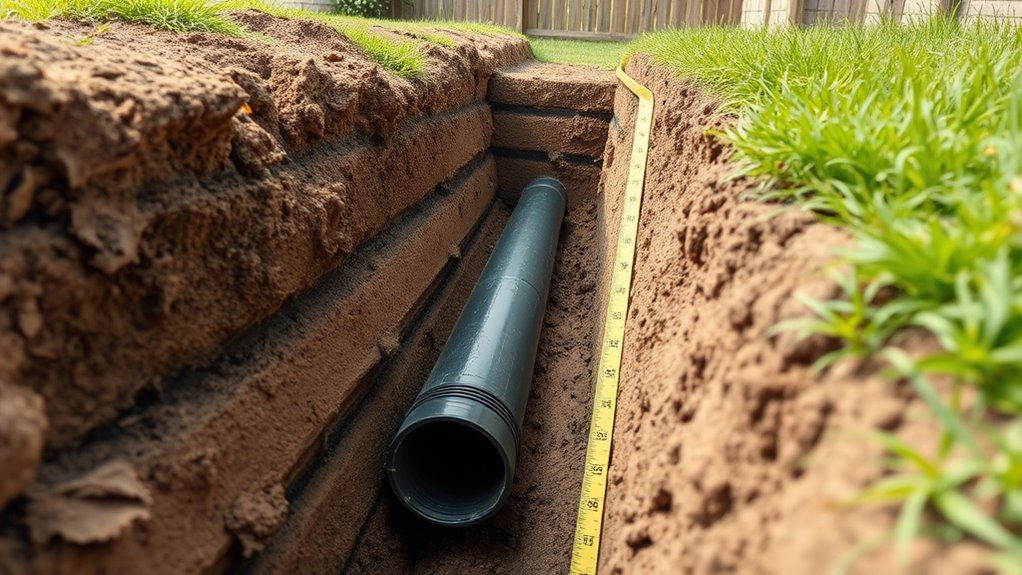
You should install your sewer line between about 3 and 6.5 feet deep to ensure proper gravity flow, protect pipes from freezing, and handle traffic loads. Getting the depth right is crucial for a reliable sewer system that lasts.
Shallower depths, around 1.5 to 2.5 feet, might work in warmer, low-traffic areas. But keep in mind, local codes and soil conditions often require deeper burial. So, it’s not just about digging; you need to follow regulations and understand your land.
Depth also varies depending on terrain slope and frost lines. And remember, deeper lines add cost and can make maintenance trickier.
There’s definitely more to contemplate for the best setup than just how deep the pipe goes.
Key Takeaways
- Residential sewer lines are generally buried 3 to 6.5 feet deep. Shallower depths are allowed in low-traffic or warm areas, depending on local codes.
- Sewer lines need to maintain a proper slope, about 1/4 inch per foot, to keep gravity flow going. This helps avoid blockages or pipes flowing too fast.
- In cold climates, it’s important to bury lines below the frost line, usually 3 to 5 feet deep. This prevents freezing and potential damage.
- When sewer lines run under roads or driveways, they typically require 3 to 5 feet of cover. This protects the pipe from traffic loads.
- Deciding how deep to bury your sewer line depends on soil type, the slope of the terrain, local regulations, and how easy it will be to access for maintenance and repairs.
Typical Depth Ranges for Sewer Lines
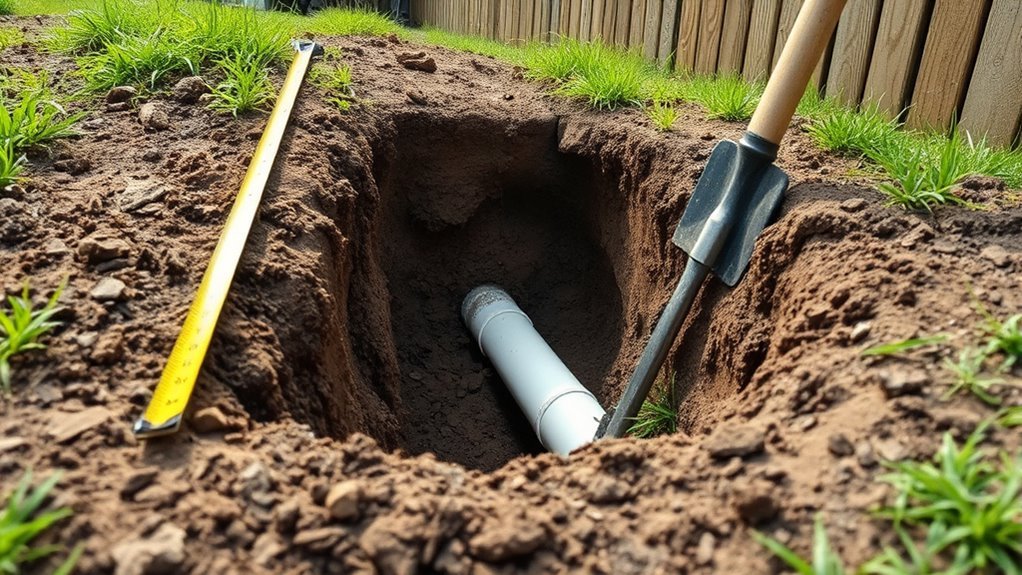
While sewer line depths can vary, you’ll typically find residential sewer lines buried between 3 and 6.5 feet below ground. This range ensures proper gravity flow while meeting local standards designed to protect the system from freezing and damage.
In less trafficked areas, local regulations often allow depths around 1.5 to 2.5 feet. But in public rights-of-way, sewer lines may need to be as deep as 5 feet or more. These local standards help balance accessibility with safety and durability.
When installing or inspecting sewer lines, understanding these typical depth ranges helps you comply with regulations and maintain efficient wastewater flow. Always check your area’s specific requirements before proceeding with any sewer line work.
Factors Influencing Sewer Line Depth
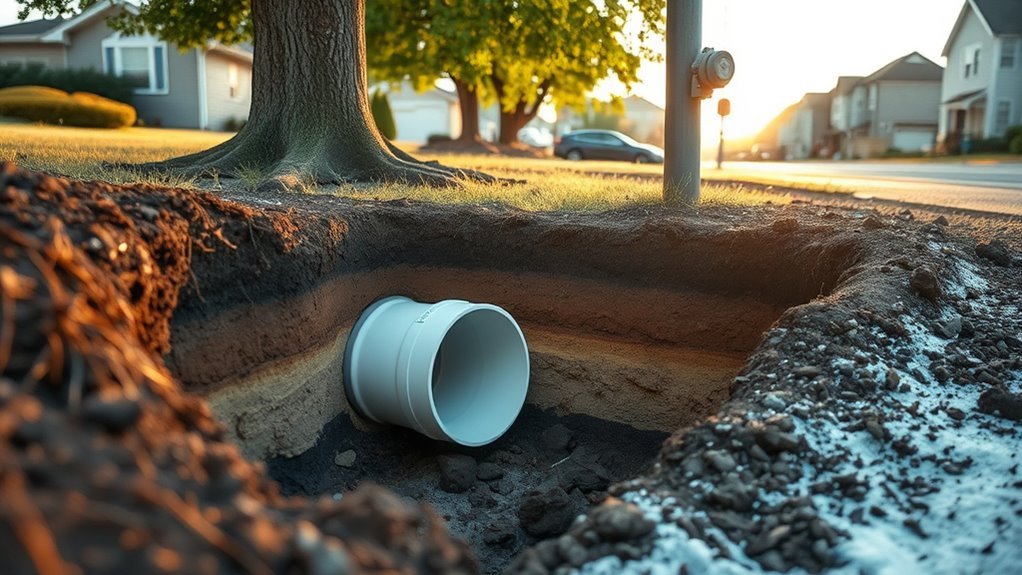
Because various conditions affect how deep sewer lines must be installed, you need to contemplate several key factors before deciding on the proper depth. Sewer depth depends heavily on the slope required for gravity to move waste efficiently.
If the slope is too shallow, blockages can occur; too steep, and flow may be too fast, causing issues. Local codes play a vital role, often setting minimum depths based on traffic loads and utility zones to protect the pipes.
Additionally, the property’s grade and topography influence how deep the line must go to maintain the right slope. Distance from the main sewer or septic system also matters since longer runs may require deeper installation.
Depth Requirements in Different Climates
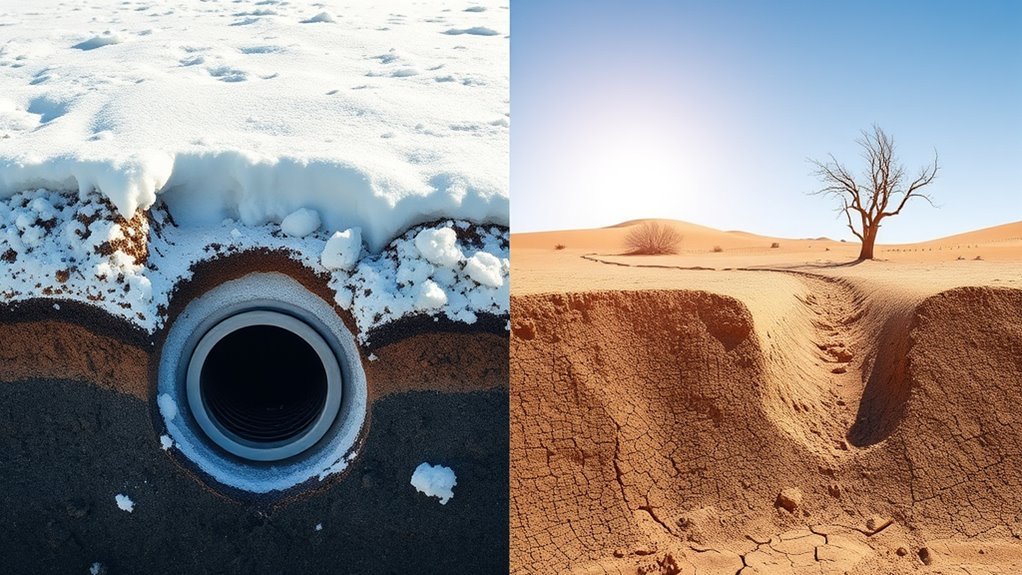
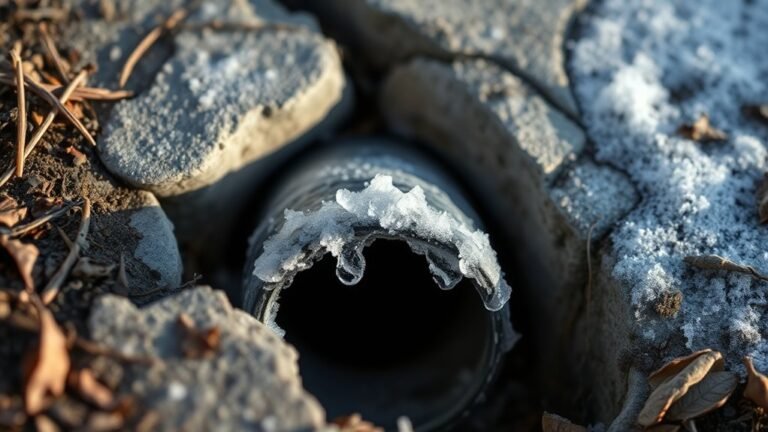
Since sewer lines must resist freezing in cold climates, you’ll often find them buried at least 3 to 5 feet deep. This depth ensures pipes stay below the frost line, which varies by location but can reach over 48 inches.
Local codes usually set a minimum depth based on this frost line to prevent costly damage from frozen pipes. It’s all about keeping those pipes safe and sound during the cold months.
In warmer climates, where frost is minimal or absent, sewer lines can be installed much shallower—typically around 18 to 24 inches. Still, you need to take into account soil conditions and local regulations, as they influence the required minimum depth.
Following these guidelines helps protect your sewer system from damage and ensures reliable performance year-round, no matter the climate where you live. It’s smart to stay on top of these rules so your system runs smoothly.
Impact of Terrain and Soil Conditions on Burial Depth
Beyond climate considerations, the terrain and soil conditions around your property play a big role in determining how deep your sewer line should be buried. Different soil conditions demand varying depths; for example, sandy soils often allow for shallower installation, while clay or compacted soils require deeper burial for stability.
The terrain slope also impacts depth—you’ll need deeper pipes on steeper slopes to maintain proper fall and prevent surface pooling. Additionally, the minimum cover over the pipe must account for factors like frost lines and groundwater levels to avoid freezing or infiltration.
Sewer Line Depth Under Roads and Driveways
When running a sewer line under roads and driveways, you need to meet minimum depth requirements to safeguard the pipe from heavy loads. The material you select and local traffic conditions play a big role in determining how deep the line should go.
Understanding these factors helps you prevent damage and ensure proper function. So, it’s not just about digging deep; it’s about digging smart. Taking the time to get it right will save you headaches down the road.
Minimum Depth Requirements
Although requirements vary by location, you’ll typically need to bury sewer lines between 3 and 5 feet deep under roads and driveways. This helps protect them from loads, frost, and accidental damage.
Sewer pipes must maintain the proper pipe slope to ensure efficient flow, so depth also depends on slope requirements. Local codes, like Lakehaven’s in Federal Way, specify minimum cover requirements—2.5 feet in traffic areas and 5 feet in public rights-of-way—to safeguard the line.
If you’re working near heavy traffic zones or overlapping utilities, additional depth may be necessary. Always check with your local building codes or utility authorities before installation to confirm minimum depth demands.
Meeting these standards helps keep your sewer system durable and functional over time. It’s definitely worth taking the time to get it right.
Material and Load Considerations
Since sewer lines under roads and driveways must endure heavy loads and varying environmental conditions, choosing the right material and determining the proper burial depth is essential. You need to select a durable sewer pipe that can handle traffic weight without cracking or deforming.
Load considerations often dictate a minimum depth between 3 to 5 feet, but this varies depending on your local frost line and the type of surface above. Driveways and parking areas usually require deeper installation, sometimes exceeding 5 feet, to prevent freezing and damage.
Balancing Depth With Installation Costs
When planning your sewer line, you’ll want to weigh how excavation depth impacts costs, since deeper trenches usually mean higher expenses.
Considering budget-friendly installation methods can help you manage expenses without sacrificing function.
Let’s explore the key cost factors and smart ways to balance depth with your project’s budget.
Cost Impact Factors
Because deeper sewer lines require more excavation and specialized labor, you’ll see a significant rise in installation costs as depth increases. The greater depth means higher excavation costs due to more extensive trenching and backfilling, plus the need for specialized equipment and longer labor hours.
Additionally, pipe materials must meet durability standards for deeper placement, which can add to expenses. While shallower lines reduce excavation and material costs, you can’t go too shallow without risking freezing or interference with existing utilities.
Balancing depth is vital—you want to guarantee proper flow and frost protection without overspending on unnecessary depth. Keep in mind that local codes and soil conditions also impact the ideal depth, influencing both excavation costs and pipe material choices during installation.
Excavation Depth Considerations
Although deeper sewer lines ensure better protection against freezing and maintain proper gravity flow, they also raise excavation costs considerably. When planning excavation depth, you need to balance pipe slope requirements and frost depth to avoid freezing risks without overspending.
Excavation depth typically ranges from 3 to 6.5 feet, depending on your local frost depth and gravity flow needs. The right depth secures functional drainage and cost-efficiency.
| Factor | Consideration |
|---|---|
| Excavation Depth | 3–6.5 feet based on conditions |
| Pipe Slope | ~1/4 inch per foot for gravity |
| Frost Depth | Must be below to prevent freeze |
| Excavation Cost | Increases with deeper trenches |
| Backfill Material | More needed as depth increases |
Budget-Friendly Installation Methods
If you want to save on excavation and labor costs, installing shallow sewer lines at depths between 18 and 36 inches can be a smart approach. This depth reduces the amount of digging needed, lowering installation costs markedly.
To keep the sewer flowing properly, you must maintain the correct slope—usually between 1/8 and 1/4 inch per foot—even with shallow sewer lines. Choosing flexible or smaller pipe materials like PVC helps meet code requirements while allowing for shallower burial.
Additionally, trenchless methods such as pipe bursting or relining can minimize excavation, balancing depth with costs effectively. Always consider local regulations and soil conditions, and consult a professional before deciding on the depth and materials to ensure your installation is both budget-friendly and compliant.
Methods to Determine Existing Sewer Line Depth
When you need to determine the depth of an existing sewer line, relying solely on property drawings or utility records can lead to inaccuracies. To get a precise measurement, a physical inspection is essential.
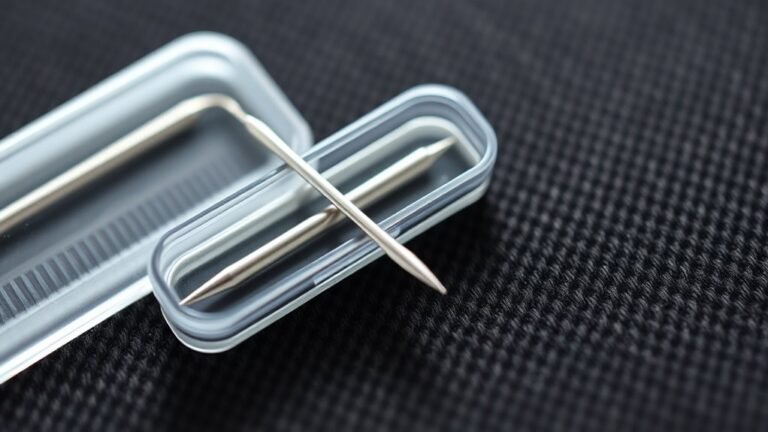
Using a sewer camera or pipe locator provides the most reliable depth information by visually confirming the pipe’s position underground. In shallow or accessible areas, a probing tool or flexible rod can help estimate depth.
A sewer camera or pipe locator offers the most accurate depth reading by visually confirming underground pipe placement.
You can also use utility marking services to identify the sewer line’s location and approximate depth based on underground maps, but always verify this data. In some cases, carefully excavating near known connection points reveals the sewer pipe’s depth directly.
Combining these methods ensures you accurately assess sewer depth before any work begins. It’s always better to double-check than to guess when it comes to underground utilities.
Effects of Sewer Line Depth on Maintenance and Repairs
Because sewer line depth directly impacts maintenance and repair efforts, understanding this relationship can save you time and money. Deeper sewer lines make maintenance more challenging since access points like manholes become harder and more expensive to install.
When pipes lie below frost lines or under structures, you’ll face higher repair costs due to extensive excavation or the need for specialized trenchless technology. Shallow sewer lines, on the other hand, allow quicker inspections, cleaning, and repairs, minimizing disruption and expenses.
Excessive depth not only increases repair costs but also raises the risk of damaging nearby utilities during maintenance. By considering sewer line depth carefully, you ensure easier maintenance access and keep repair costs manageable over your system’s lifetime.
Frequently Asked Questions
What Is the Average Depth of a Sewer Line?
You’ll find the average sewer line depth ranges between 3 and 6.5 feet underground. Depth varies depending on slope, local codes, and climate, so always check regulations to guarantee your line’s properly installed and protected.
It’s important to get this right because if the sewer line is too shallow, it can freeze in colder climates or get damaged easily. On the other hand, going too deep can make repairs more difficult and expensive.
How to Plumb a Sewer Line?
You’ll plumb a sewer line by starting at the lowest point, maintaining a consistent slope of 1/8 to 1/4 inch per foot. This ensures proper drainage and prevents clogs.
Next, connect the pipes using bell-and-spigot joints. Make sure to use PVC primer and glue to create watertight seals. This keeps everything secure and leak-free.
What Is the Standard Slope for a Sanitary Pipe?
You should slope sanitary pipes at 1/4 inch per foot for small pipes, 1/8 inch per foot for medium ones, and 1/16 inch per foot for large pipes.
This guarantees proper flow and prevents clogs effectively. It’s a simple rule that helps keep everything moving smoothly.
Does a Sewer Line Have to Be Straight?
No, your sewer line doesn’t have to be perfectly straight; gentle curves work fine.
But sharp bends can cause blockages, so you’ll want to plan gradual turns to keep everything flowing smoothly and avoid future headaches.
Conclusion
When it comes to how deep your sewer line should be, remember that “measure twice, cut once” really applies. You need to take into account climate, soil, and terrain to avoid costly repairs later.
While deeper lines protect against freezing and damage, they also raise installation costs. Balancing these factors ensures your sewer system works efficiently without breaking the bank.
So, take the time to determine the right depth—you’ll save yourself headaches down the road. Proper sewer line depth is crucial for preventing issues like freezing pipes or ground movement damage. Considering local climate conditions and soil type helps you decide how deep to bury your sewer line for durability and efficiency. By carefully planning the sewer line depth, you ensure long-lasting performance and avoid costly repairs, making the investment well worth it.