How Long Does It Take to Sew a Dress With Step-By-Step Instructions
Sewing a dress can take anywhere from 4 hours for simple designs to over 50 hours for complex, embellished gowns, depending on your experience and fabric choice. You’ll spend time preparing materials, cutting, sewing, and fitting, with adjustments adding extra hours.
Beginners should allow extra time for learning and mistakes.
Managing your workflow and scheduling fittings helps keep things on track. If you want a smooth, well-planned process, there’s plenty more to discover about each step.
Whether you’re a beginner or an experienced sewer, understanding how long it takes to sew a dress with step-by-step instructions makes the project less overwhelming.
Ready to dive in? Let’s explore how to make sewing your dream dress a manageable and rewarding experience!
Key Takeaways
- Simple casual dresses take 4–8 hours, while formal or embellished dresses may require 15–50+ hours depending on complexity and details.
- Preparation, including fabric washing, cutting, and organizing tools, typically consumes 30–50% of total sewing time.
- Sewing stages include cutting (about 30 minutes), assembly (2–4 hours), adding closures, hems, and finishing touches, all varying by design.
- Multiple fittings (2–4 sessions) add time but ensure proper fit; each fitting lasts 30–60 minutes and may require adjustments.
- Skill level greatly affects duration: beginners may need several weekends, while advanced sewists complete complex dresses more efficiently.
Factors That Influence the Time Needed to Sew a Dress
When you sew a dress, the time it takes depends heavily on several key factors. First, dress complexity plays a major role; intricate patterns with princess seams or gathered skirts demand more sewing time than simple designs.
Next, fabric type affects how quickly you can work—delicate materials like silk or lace need careful handling, slowing you down. Embellishments such as beading or embroidery add hours or even days to your project.
Your skill level also matters; if you’re a beginner, each step will take longer. Finally, the number of fittings and adjustments required during construction can extend the sewing time considerably.
Typical Timeframes for Sewing Different Dress Styles
When you’re sewing a casual dress, expect to spend around 4 to 8 hours if you’re experienced.
Formal dresses with multiple fittings can take 12 to 30 hours depending on complexity.
Adding embellishments like embroidery or beading can push your project past 20 hours.
Casual Dress Timing
Although sewing a casual dress may seem straightforward, the time it takes can vary widely based on your experience and the dress’s design.
Casual dress sewing time depends on dress complexity and the sewing process stages you follow: cutting, sewing, fitting, and finishing.
Simple designs take less time, while details like ruffles increase sewing hours.
| Dress Complexity | Casual Dress Sewing Time (Hours) |
|---|---|
| Simple | 4–8 |
| With ruffles/pleats | 10–15 |
| Beginner (any design) | 15–20 |
| Fabric/pattern effect | Varies |
Understanding these stages and complexity helps you estimate how long your casual dress project will take.
Formal Dress Duration
Sewing a formal dress demands more time than casual styles due to intricate designs and detailed embellishments. When you take on dress making for a formal dress, expect sewing time to range from 20 to 60 hours depending on the style’s complexity.
Simple formal dresses like sheath or A-line typically take 15 to 25 hours, while more elaborate designs with embroidery push sewing time beyond 50 hours. Fitting, adjustments, and finishing touches add another 5 to 15 hours to your project.
If you’re experienced and sew daily, you might complete a formal dress in about a week. Understanding these timeframes helps you plan your dress making process efficiently and set realistic goals for your formal dress sewing project.
Embellished Dress Estimates
Because embellishments add complexity, estimating the time needed to sew an embellished dress requires careful consideration of design details. Simple dresses with minimal embellishments might take you 4 to 8 hours, while more intricate embellished dress styles can push your sewing time to 15 hours or more.
If your dress features beadwork, embroidery, or lace trims, expect 10 to 20 hours depending on complexity. Extensive hand-sewn details like appliqué can extend dress construction to 30 hours or beyond.
Using pre-embroidered fabrics can cut your sewing time roughly in half. Remember, your skill level and fabric choice also affect how long it takes.
Planning your sewing time wisely will help you manage the dress construction process efficiently.
Skill Level and Its Impact on Sewing Duration
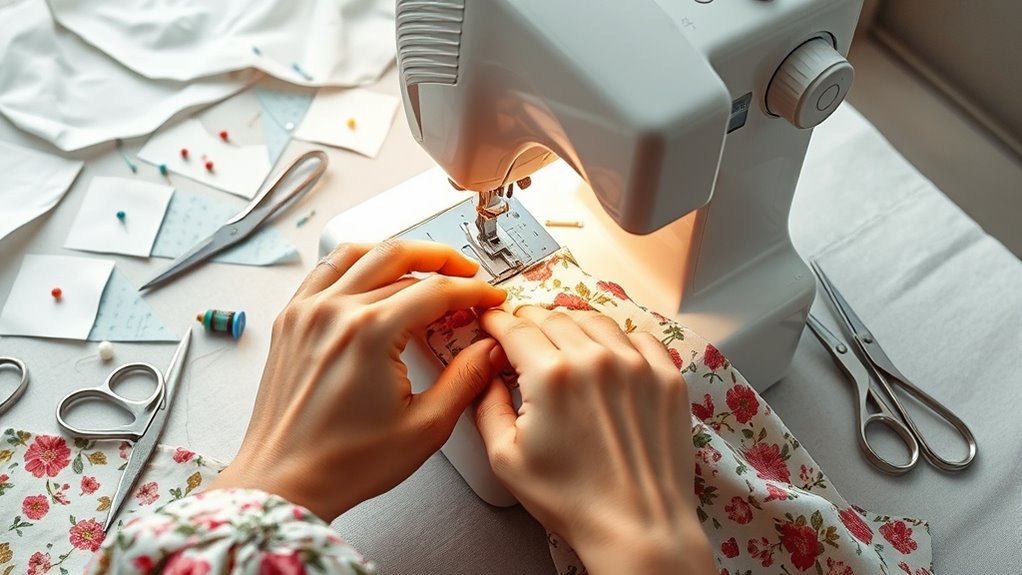
When you’re just starting out, sewing a dress can take several weekends or even weeks to finish. Your skill level plays a huge role in sewing duration.
As you gain experience, each step becomes faster and smoother. Here’s how skill impacts your sewing time:
- Beginners often spend extra time on pattern adjustments and seam finishes, which can extend the project timeline.
- With moderate experience, you’ll cut down sewing duration to around 4-8 hours for simple dresses.
- Advanced sewists handle complex designs efficiently, reducing time even on intricate details like embroidery.
Improving your skill level through practice and tutorials helps you sew dresses quicker. It turns what once felt formidable into a rewarding, manageable project.
Breaking Down the Sewing Process Step by Step
You’ll want to break your dress project into clear stages like cutting, sewing, fitting, and finishing. Allocating specific time blocks for each step helps you stay organized and avoid feeling overwhelmed.
Sequential Sewing Stages
Although sewing a dress involves several distinct steps, breaking the process down helps you manage your time and avoid errors. Understanding the sequential sewing stages lets you tackle each part confidently, ensuring smooth dress construction and a realistic timeline.
Here’s how to approach it:
- Cut your fabric carefully, setting the foundation for your dress.
- Assemble the bodice and construct the skirt, focusing on precision and fit.
- Add closures, finish hems, and complete any embellishments last.
Each stage varies in duration—cutting may take 30 minutes, while bodice sewing can last 2-4 hours. Remember, fitting sessions are essential and add time but prevent costly mistakes.
Following this sequence keeps your project organized and enjoyable. It really helps to stay on track and makes the whole process less stressful.
Time Allocation Tips
Breaking down your dress sewing into clear stages makes it easier to allocate time wisely. Start by dividing your project into steps like cutting, sewing the bodice, attaching the skirt, and finishing details.
Good time management means dedicating 30-50% of your total sewing schedule to preparation—pattern cutting and assembling fabric. Then, set aside 10-20% of your time for fitting sessions and adjustments.
Don’t forget to plan extra time for embellishments such as embroidery or beading, since these often extend the timeline. Use detailed project planning with estimated timeframes for each stage to track progress effectively.
This approach helps you stay organized and ensures every phase receives attention without rushing. It makes your sewing experience smoother and more efficient.
Preparing Your Materials and Tools Efficiently
When preparing to sew your dress, gathering all necessary tools and organizing your materials upfront saves you time and frustration later. You want to create an efficient workflow that keeps you focused and motivated.
Gathering tools and organizing materials upfront saves time and keeps your sewing workflow efficient and enjoyable.
Start by collecting essential tools like measuring tape, scissors, rulers, and pencils. Next, organize your fabric by washing, ironing, and cutting it to the right size. Finally, set up your workspace by clearing clutter, arranging good lighting, and ensuring a large flat surface for cutting.
- Check off a complete list of tools and materials before you start.
- Keep spare pins, needles, and thread nearby to avoid interruptions.
- Organize your space for smooth, uninterrupted workflow.
This tool and material organization makes sewing feel effortless and enjoyable.
Managing Pattern Complexity and Design Details
How much time your dress takes to sew largely depends on the pattern’s complexity and design details. Simple patterns with basic shapes can be completed in 4-6 hours, but as pattern complexity rises, so does sewing time.
Intricate design details like embroidery, beading, or lace trim often add several hours each. Patterns featuring multiple fitted components—such as princess seams or gathered skirts—require extra time for careful pinning and adjustments.
Decorative details like ruffles or pleats can increase sewing time by 10-15%, depending on their intricacy. To manage sewing time effectively, balance your chosen pattern complexity with your skill level.
This helps you set realistic timelines and avoid frustration as you work through the design details.
The Role of Fittings and Adjustments in Timing
When sewing a dress, you’ll need multiple fittings to make certain the perfect fit. Each one adds extra time to your schedule.
Common adjustments like altering seams or adjusting darts can take hours or even days, depending on complexity. So, planning your fittings carefully helps you manage time effectively.
You definitely want to avoid rushed fixes later. Taking your time with each fitting makes all the difference.
Importance of Multiple Fittings
Although sewing a dress involves many steps, multiple fittings play an essential role in achieving a perfect fit. You’ll need 2-4 fittings, each lasting 30 minutes to an hour, which impacts your sewing timeline considerably.
These sessions let you catch issues early—like gaping necklines or tight seams—so you can make timely adjustments. Skipping or rushing fittings often leads to major rework later, costing more time.
Here’s why multiple fittings matter to you:
- They ensure your dress fits flawlessly, boosting your confidence.
- They catch and fix problems early, avoiding costly mistakes.
- They help you stay on track, preventing timeline overruns.
Embrace fittings—they’re crucial for a polished, well-fitted dress.
Common Adjustment Types
Multiple fittings not only help you spot issues early but also guide the specific adjustments your dress will need. Common alteration types include taking in or letting out seams, reshaping darts, and modifying hem lengths.
These changes directly affect your sewing time since each adjustment requires careful measuring, pinning, and sewing. For instance, fixing a gaping neckline or tight sleeves usually demands precise sewing and sometimes multiple tries during fittings.
By addressing these alterations early, you minimize extensive rework later, ensuring your dress fits comfortably. Keep in mind, each fitting session adds 1-2 hours, extending the overall timeline.
Still, incorporating fittings into your process helps you manage sewing time more effectively and results in a polished final garment that fits just right.
Scheduling and Time Management
Since fittings play a crucial role in achieving the perfect fit, you need to schedule enough time for them in your sewing timeline. Proper time management means planning for 2-3 fittings, typically after the initial assembly and before finishing touches.
Scheduling extra time helps you avoid last-minute stress and allows for necessary adjustments, such as seam taking or letting out. Remember, fittings can reveal issues like uneven hemlines or gaping necklines, which extend your project duration.
To stay on track:
- Allocate 1-2 weeks specifically for fittings and adjustments.
- Factor in additional sewing time after each fitting.
- Adjust your timeline based on the dress’s complexity and your skill level.
Tips for Staying on Schedule While Sewing
When you create a detailed sewing schedule that breaks your project into specific time blocks—like cutting, sewing, fitting, and finishing—you’ll find it easier to stay on track and avoid last-minute stress. Effective schedule and time management rely on careful project planning, so break complex steps into smaller, manageable tasks with clear deadlines.
This approach guarantees steady progress and helps you avoid rushing important stages like fitting and finishing, which are vital for dress quality. Always build in buffer time for unexpected issues such as fabric mishaps or fitting adjustments.
Track your sewing hours weekly to see if you’re sticking to your schedule and make adjustments as needed. By following these tips, you’ll maintain control over your project timeline and complete your dress smoothly.
How Fabric Choice Affects Sewing Time
Although fabric choice might seem like a simple decision, it plays a major role in how long your sewing project takes. Different fabrics demand different approaches to fabric handling, directly impacting your sewing time.
Think about it like this: heavier fabrics like denim slow you down because their stiffness requires careful cutting and sewing.
Lightweight fabrics such as chiffon need delicate handling and extra seam finishing, which adds to your sewing time.
On the other hand, stretch fabrics often speed up sewing since they’re easier to manage and require less stabilizing.
Also, keep in mind that patterned fabrics need extra care during cutting to align designs. This can extend your preparation time.
Balancing Quality and Speed in Dressmaking
Striking the right balance between quality and speed can make or break your dressmaking project. Prioritizing quality guarantees your dress fits well and lasts, even if it takes more time.
Rushing increases errors like uneven seams or poor fitting, causing delays from corrections. To maintain efficiency without sacrificing quality, allocate enough time for each stage—cutting, sewing, fitting, and finishing.
Preparing materials in advance and following an organized workflow help you sew faster while keeping precision. Skilled sewists use efficient techniques, minimizing rework and enhancing the dress’s professional look.
Frequently Asked Questions
Can I Get a Dress Altered in 2 Days?
You can get a dress altered in 2 days if the changes are minor and the tailor is experienced. For major adjustments, it usually takes longer.
Just make sure to communicate clearly to make certain they can meet your deadline without rushing.
How Long Does It Take to Sew a Jacket?
You’ll spend 8 to 20 hours sewing a jacket, depending on its complexity. Simple designs take less time, while tailored ones demand more.
Break it down into steps to stay organized and finish efficiently. This way, you won’t feel overwhelmed, and the process goes smoother.
Is It Actually Cheaper to Sew Your Own Clothes?
It can be cheaper to sew your own clothes, especially if you reuse patterns and fabrics.
But remember, investing in tools and high-quality materials upfront might cost more than buying ready-made garments initially.
How Long Does It Take to Custom Make a Dress?
It usually takes you about 2 to 8 weeks to custom make a dress, depending on its complexity and your experience. Simple designs might take 2-3 weeks, while intricate ones can need up to 8 weeks.
Conclusion
Did you know that even experienced sewists can spend up to 10 hours on a detailed dress? While that might sound long, breaking the process into manageable steps keeps you on track and makes sewing enjoyable.
Remember, your skill level and fabric choice play huge roles in timing. By preparing well and staying organized, you’ll balance speed and quality perfectly.
So, take your time—you’re creating something truly special! With step-by-step instructions, sewing a dress becomes less daunting and more fun. Whether you’re a beginner or pro, understanding how long it takes helps you plan better and enjoy the creative journey.