How to Get Rid of Roots in Sewer Lines Step by Step
If you suspect roots are invading your sewer lines, start by looking for signs like slow drainage or foul odors.
These symptoms often mean roots have found their way inside your pipes, causing blockages and damage. To pinpoint the problem, use a video inspection—it’s the best way to see exactly where the roots are growing.
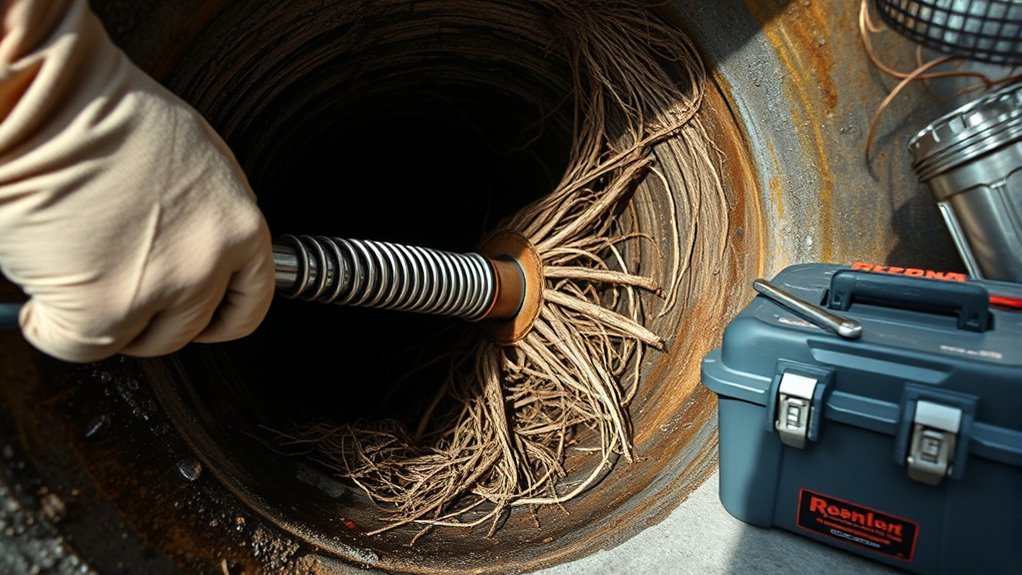
Next, you’ll want to tackle the roots directly. A mechanical auger can cut through the roots, clearing the way for better flow.
After that, hydro jetting comes in handy for a thorough clean, blasting away debris and remaining root fragments.
Finally, consider chemical treatments to prevent the roots from growing back.
Keeping up with regular sewer system inspections can help catch issues early before they become serious.
Follow these steps, and you’ll find more effective solutions to keep your pipes clear and your sewer lines flowing smoothly.
Key Takeaways
- Inspect sewer lines using a camera to locate root intrusions and assess pipe conditions. This helps you see exactly where the problem is.
- Utilize a mechanical auger to cut through roots and clear blockages effectively. It’s a reliable way to get the roots out of the way.
- Follow up with hydro jetting to thoroughly clean pipes and remove remaining debris. This step makes sure everything is flushed out well.
- Apply chemical root removers periodically to inhibit future root growth. It’s a good preventative measure to keep roots from coming back.
- Schedule regular inspections every 12 to 18 months to monitor and maintain sewer system health. Staying on top of this keeps your system running smoothly.
How to Identify Signs of Root Intrusion?
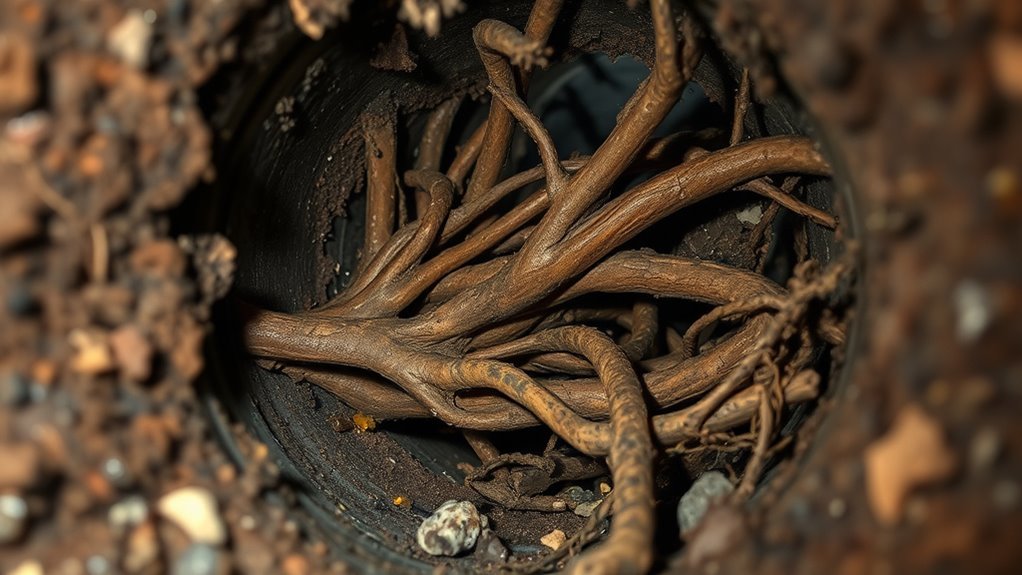
Identifying signs of root intrusion in your sewer lines can save you from costly repairs. Pay attention to slow drainage or frequent clogs in your sinks, toilets, and bathtubs; these are often early indicators of root issues.
You should also look for gurgling noises in your pipes, which can signal air trapped by root blockages. If you notice any foul odors coming from your drains, it might mean roots are obstructing waste flow and causing backups.
Additionally, keep an eye out for wet spots or unusually lush vegetation in your yard. These could suggest roots are accessing moisture from your sewer system.
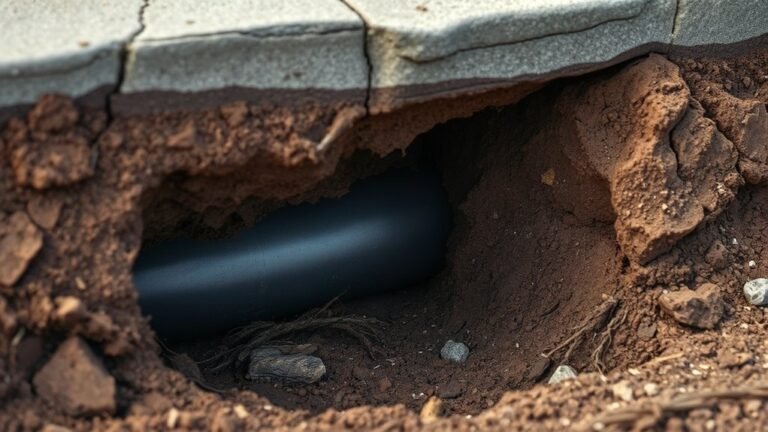
Finally, check for visible cracks or shifts in the ground above your sewer lines. Catching these signs early can really save you a headache down the road!
Inspect Your Sewer Line Thoroughly
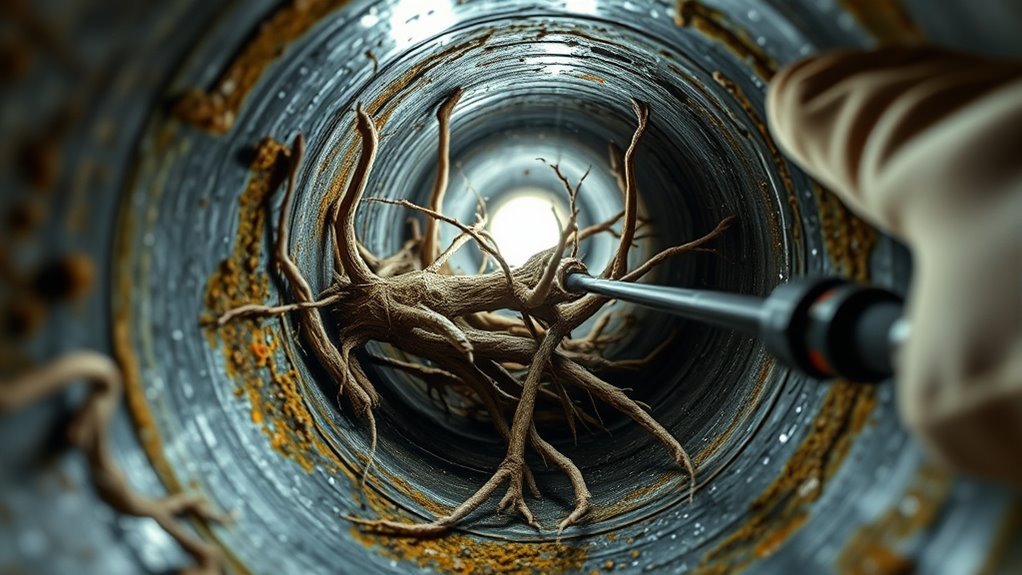
Once you’ve spotted the signs of root intrusion, it’s time to inspect your sewer line thoroughly. Start by using a video inspection camera to pinpoint the exact location and extent of the roots.
Make sure to look for root balls that could obstruct flow, especially at connection points or pipe joints. It’s also essential to assess the pipe material; clay pipes are quite a long way more vulnerable than PVC or cast iron.
Check for any cracks or damages that might allow roots to enter. Document your findings with video evidence to maintain transparency.
| Inspection Aspect | Details |
|---|---|
| Camera Inspection | Use a video inspection camera |
| Root Ball Detection | Look for blockages at joints |
| Pipe Material | Clay, PVC, or cast iron |
| Condition Assessment | Check for cracks or damages |
Best Tools for Effective Root Removal
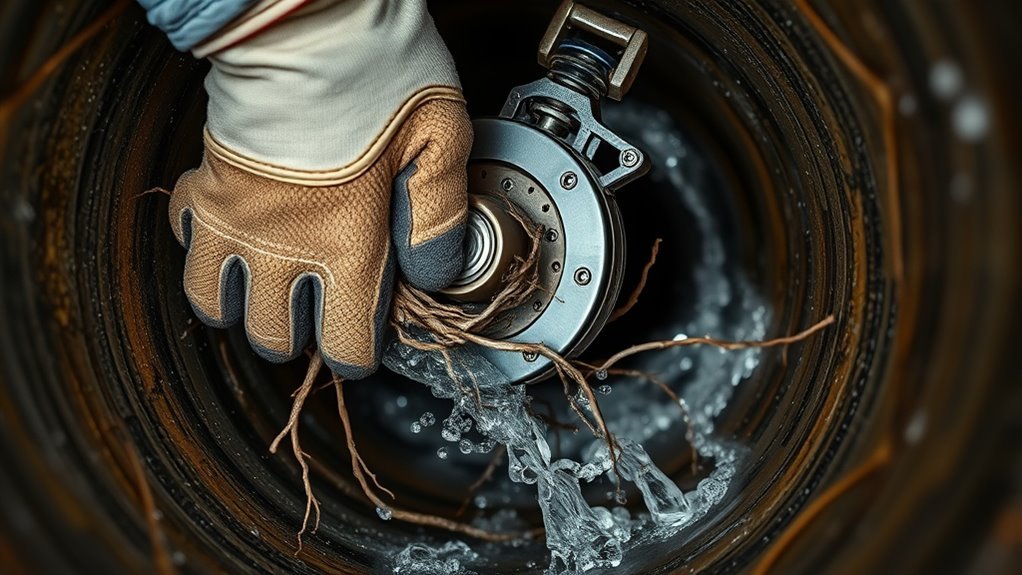
When tackling root issues in your sewer lines, having the right tools makes all the difference. You’ll want to explore mechanical removal methods, like hydraulic cutters and drain snakes, as well as chemical treatments that can effectively manage root growth.
Let’s break down the essential tools you need for effective root removal. It’s easier than it sounds once you know what to use!
Essential Tools Overview
To effectively tackle root problems in sewer lines, having the right tools at your disposal can make all the difference. A motorized root cutter is essential for removing large root balls, allowing for efficient cutting and clearing.
Hydro jetting equipment uses high-pressure water streams to dislodge and flush out roots, ensuring thorough cleaning and preventing future growth. It’s pretty powerful and gets the job done well.
A sewer inspection camera helps you visually assess the extent of root intrusion and the condition of your pipes. This way, you know exactly what you’re dealing with before you start.
Chemical root removers, like copper sulfate, effectively kill roots without harming your pipes. They’re great as a preventative measure to keep roots from coming back.
Finally, cable augers are versatile tools that can break up and remove smaller root obstructions. They’re a valuable addition to your toolkit, especially for those tricky spots.
Mechanical Root Removal Methods
Tackling root issues in sewer lines requires the right mechanical methods to guarantee effective removal. Here are some top tools you can use:
| Method | Description | Best For |
|---|---|---|
| Cable Augers | Rotating blades cut through roots | Obstructions up to several inches |
| Root Cutters | Attachments for drain snakes to slice roots | Thick root balls |
| Hydro Jetting | High-pressure water jets dislodge roots | Thorough cleaning |
| Power Rodding | Motorized rod with cutting head | Deep penetration |
| Video Inspection | Camera assessment of pipes | Verifying removal effectiveness |
Using these tools will assure you effectively remove roots and maintain your sewer system’s integrity.
Just pick the method that best fits your situation, and you’ll get peak results. It’s all about matching the tool to the job!
Chemical Root Treatment Options
Chemical root treatment options can be a powerful ally in managing root intrusion in sewer lines, especially when used alongside mechanical methods. Common herbicides like copper sulfate and dichlobenil effectively kill roots without harming the surrounding soil.
To maximize effectiveness, follow the manufacturer’s guidelines for application. This often involves flushing the product into the sewer system to reach root zones.
While these treatments can reduce root intrusion, they aren’t a permanent fix. So, include them in your regular maintenance plan.
Pairing chemical treatments with mechanical methods, like rooter machines, enhances their effectiveness. The machines remove existing roots while the chemicals work to prevent regrowth.
Regular inspections help you assess how well your treatment strategy is working. That way, you can keep your sewer lines clear and trouble-free.
Step-By-Step Guide to Removing Roots From Your Sewer Line
Before you plunge into removing roots from your sewer line, it’s essential to assess the situation carefully. Start with a camera inspection to identify root intrusion.
| Step | Action |
|---|---|
| 1 | Inspect the sewer line with a camera. |
| 2 | Use a mechanical auger to cut roots. |
| 3 | Follow up with high-pressure water jetting. |
| 4 | Regularly inspect the sewer system. |
| 5 | Consider root-inhibiting chemicals. |
After you’ve cleared the roots, make sure to keep up with regular inspections, especially at connection points. This way, you can catch any new problems early.
Being proactive like this will help you manage future issues and keep your sewer line flowing smoothly. It’s all about staying ahead of the game!
Effective Cleaning Techniques to Prevent Future Root Growth
To keep roots at bay in your sewer lines, you should establish a regular maintenance schedule that includes professional inspections. After clearing any blockages, using chemical root killers can create a protective barrier against future growth.
Regular Maintenance Schedule
Establishing a regular maintenance schedule can greatly reduce the risk of roots invading your sewer lines. Aim for inspections and cleanings every 12 to 18 months to keep your pipes in check.
Here are three effective steps to include:
- Hydro-Jetting: Use this powerful technique to thoroughly clean your pipes, removing roots and debris that can cause blockages.
- Monitor Pipe Condition: Keep an eye on older materials like clay and Orangeburg, as they’re more prone to root infiltration. Frequent inspections may be necessary.
- Document Maintenance: Record all activities, including video evidence, to track changes in pipe condition over time. This practice reinforces accountability and helps identify issues early.
Stay proactive to prevent costly repairs later! It’s definitely worth the effort to keep things running smoothly.
Chemical Root Killers
Chemical root killers are a powerful ally in keeping your sewer lines clear of invasive roots. Products like copper sulfate and foaming root killers effectively break down roots while protecting the surrounding soil.
To get the best results, apply these chemicals during the growing season, usually in spring or early summer. That’s when roots are most vulnerable and the treatment works wonders.
Always follow the manufacturer’s instructions for dosage and how often to apply the product. Doing this helps avoid harming beneficial plants and soil organisms around your pipes.
Using chemical root killers regularly can really cut down on root blockages. This saves you from costly plumbing repairs down the line.
For even better results, try combining chemical treatments with mechanical root removal methods. This way, you make sure to clear out any leftover roots completely.
This integrated approach keeps your sewer lines flowing smoothly and helps prevent future problems.
Keep an Eye on Your Sewer System’s Health
Since your sewer system plays an essential role in your home’s health, keeping an eye on its condition is important. Regular inspections can help you catch issues before they escalate.
Here are some key steps to follow:
- Inspect for Signs: Look out for slow drainage or frequent backups, as these can indicate root intrusion.
- Use Video Inspections: Employ video technology to visually assess your pipes for root problems and other damage.
- Monitor Clay Pipes: If you have clay pipes, perform routine checks since they’re more prone to root infiltration.
Also, keep an eye on feeder roots that can grow larger over time, leading to blockages. It’s a good idea to schedule professional root removal services as needed to keep your pipes clear.
Doing this can help extend your sewer system’s lifespan and save you from costly repairs down the road.
Frequently Asked Questions
What Kills Roots Permanently?
Chemical herbicides like copper sulfate can kill roots permanently, but use them sparingly. They’re effective, but you don’t want to overdo it.
Mechanical methods, such as hydro jetting, also work well to remove roots. Plus, they minimize environmental impact, which is a big bonus.
Regular maintenance is key, too. It helps prevent roots from growing back in the future.
How Do Roots Get Into Pipes?
Roots sneak into pipes like thieves in the night, exploiting tiny cracks or joints. They’re drawn by moisture and nutrients, especially in porous clay pipes.
This causes clogs that disrupt your sewer system’s flow. It’s a sneaky problem that can lead to big headaches if not caught early.
How Fast Does Foaming Root Killer Work?
Foaming root killer works within 24 to 48 hours after application. It expands to coat pipe walls, effectively targeting roots while preserving surrounding soil.
Regular use can keep your sewer lines clear for months. So, if you want to avoid blockages, it’s a handy solution to consider.
How Much Does It Cost to Remove Roots From a Sewer Line?
When it comes to costs, you’re looking at $100 to $500 for root removal in your sewer line. Depending on severity, methods like hydro jetting or rooter services can drive that price up considerably.
It really depends on how bad the root problem is. Sometimes you might get lucky with a simple fix, but other times, it can get a bit pricey if the roots are deeply embedded.
Conclusion
To sum up, tackling root intrusion in your sewer lines can save you from costly repairs and disruptions. Did you know that about 25% of all sewer backups are caused by tree roots? It’s a surprisingly common problem that many homeowners face.
By staying vigilant and following the steps outlined, you can effectively manage and prevent root issues. Regular inspections and maintenance not only keep your sewer lines running smoothly but also help catch problems early.
Taking care of root intrusion in your sewer lines extends the lifespan of your plumbing system. Plus, it ensures peace of mind for you and your home. So, don’t wait until a backup happens—stay proactive with your sewer line care!