How to Hand Sew Binding on a Quilt in 3 Easy Steps
To hand sew binding on your quilt, start by gathering quality supplies like strong threads and sharp needles. These essentials make the process smoother and your stitches durable.
Next, secure the binding by folding it over the quilt edges and using clips to hold it in place.
Then, execute the ladder stitch by taking small bites of the fabric for an invisible finish. This stitch is key to making your binding look neat and professional.
Don’t forget to regularly check your corners for sharpness and make adjustments as needed.
Perfecting your binding technique takes practice, but don’t worry—it gets easier with time. Keep going to uncover additional tips that will help you achieve that flawless finish every time!
Key Takeaways
- Gather essential supplies like quality threads, sharp needles, a thimble, and binding clips for efficient hand sewing. These tools really make the process smoother and more enjoyable.
- Secure binding by folding it over quilt edges and using Wonder Clips to hold it in place. This keeps everything neat and ready for stitching without slipping around.
- Use the ladder stitch technique for invisible stitching, ensuring a snug fit to the backing fabric. It might take a bit of practice, but the results are totally worth it.
- Maintain consistent stitch spacing for an even appearance and check mitered corners for sharpness. Those little details really make your quilt look professionally finished.
- Inspect the finished binding for loose threads, make adjustments, and store leftover supplies for future projects. That way, you’re all set next time you want to sew!
Gather Your Hand Sewing Binding Supplies
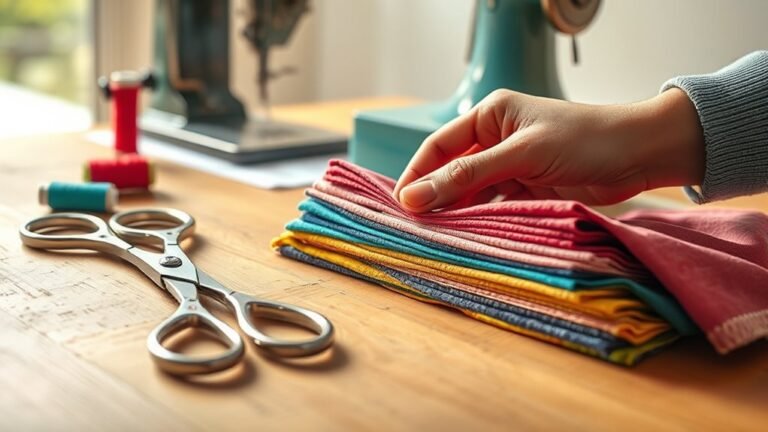
Before you plunge into hand sewing the binding on your quilt, it’s essential to gather all the necessary supplies. Start with quality hand quilting threads like DMC Perle 8. These threads ensure strength and durability for your quilt binding.
Gather quality hand quilting threads like DMC Perle 8 for strong and durable quilt binding before you start sewing.
Choose a sharp hand quilting needle to make stitching easier and to protect your backing fabric. A thimble is vital too—it safeguards your fingers and helps you apply pressure through multiple layers.
Consider using binding clips to hold the binding in place, especially if you have hand issues. They’re a great alternative to pins and can make your sewing less fiddly.
Finally, organize your supplies in an easy-to-reach container, like an empty quart yogurt container. That way, everything stays right at your fingertips when you’re ready to sew along the stitch line.
Secure the Binding on Your Quilt
Securing the binding on your quilt is essential for a polished finish. Here’s how to do it effectively:
First, fold the binding over the quilt edges and use Wonder Clips to hold everything in place. This way, the binding won’t shift around while you work.
Next, knot one end of your thread and insert the needle into the folded edge of the binding. Then, stitch into the backing fabric to get a snug fit.
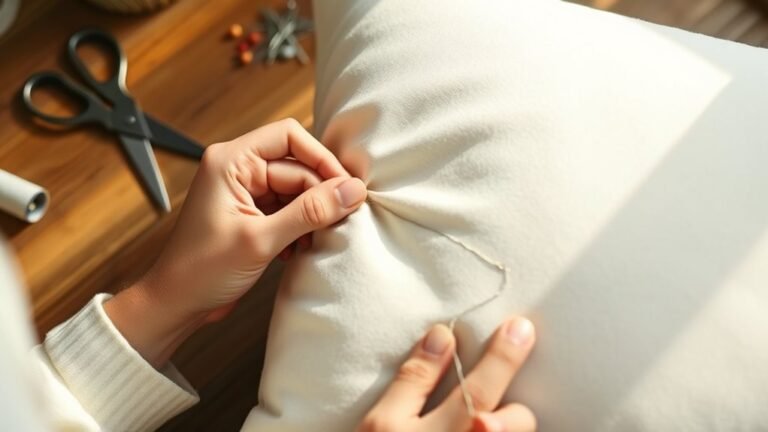
You’ll want to use the ladder stitch technique here. Just insert the needle into the binding crease and the backing fabric. This makes your stitches nearly invisible.
When you get to each corner, fold the binding to form a mitered corner. Secure it with stitches so it looks sharp and clean.
Finally, finish by tying off the thread securely. Make sure the knot is hidden within the binding for a neat appearance.
Execute the Ladder Stitch for Seamless Binding
As you plunge into executing the ladder stitch, you’ll find that this technique is essential for achieving a seamless finish on your quilt’s binding. Start by threading a comfortable length of thread and position your needle parallel to the project.
Take a small bite of the quilt backing fabric, then pull your needle through the binding crease to create a secure stitch. Maintain consistent stitch spacing for an even look.
When you reach the corners, fold the binding to form a mitered corner and use clips to hold it in place. Keep going with the ladder stitch around all edges.
Make sure to tie off the thread securely and hide the ends for a neat finish. That way, your quilt will look professionally bound!
Frequently Asked Questions
What Type of Fabric Is Best for Quilt Binding?
Cotton fabric’s your best bet for quilt binding. It’s durable, easy to work with, and provides a smooth finish.
You’ll want to avoid heavy or stretchy materials; they can complicate the process and affect your quilt’s overall appearance.
Sticking with cotton just makes things simpler and keeps your quilt looking great.
How Long Should My Binding Strips Be?
Your binding strips should typically be about 2.5 inches wide and long enough to cover the quilt’s perimeter, plus an extra 10-12 inches for seams.
Measure your quilt’s edges for precise lengths. This way, you won’t run short when it’s time to sew everything together.
Can I Use Machine-Made Binding Instead?
Yes, you can use machine-made binding instead. It often saves time and guarantees a consistent look.
Just make certain it matches your quilt’s style and colors. That way, your finished piece looks polished and cohesive.
What Needle and Thread Are Recommended for Binding?
For binding, you’ll want a sharp hand-sewing needle and quality cotton thread. This combo makes your stitches neat and durable, ensuring your quilt gets the loving attention it deserves.
Plus, it’ll look fabulous for years to come. Trust me, the right tools make all the difference!
How Do I Fix Mistakes in My Binding?
To fix mistakes in your binding, gently unpick the stitches with a seam ripper. Then, reposition the binding and re-stitch it.
Don’t worry; everyone makes mistakes. Just take your time, and you’ll get it right!
Conclusion
Now that you’ve mastered the art of hand sewing binding, picture yourself curling up with your quilt. The soft fabric wraps around you like a warm hug.
Each stitch you’ve lovingly crafted not only secures the binding but also tells a story of patience and creativity. It’s those little details that make your quilt truly special.
As you admire your handiwork, you’ll feel a sense of pride. Knowing that your quilt is not just a project, but a cozy companion crafted with care, makes all the effort worth it.
Enjoy every moment with your quilt and the satisfaction that comes from hand sewing binding by yourself. This skill adds a personal touch, making your quilt a unique treasure you’ll cherish for years.