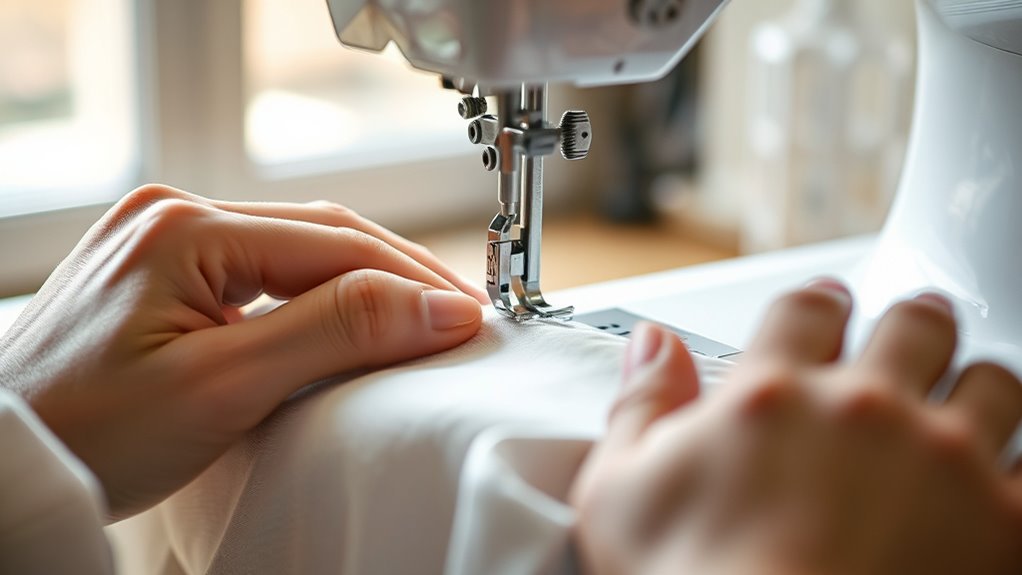
How to Hem With a Sewing Machine in 5 Simple Steps
To hem with a sewing machine in five simple steps, start by choosing the right technique for your fabric. For example, a rolled hem works great for lightweight materials, while a double-fold hem suits heavier fabrics. Picking the right hem style sets you up for success.
Next, prepare your fabric by washing and pressing it. This helps prevent shrinkage and makes the fabric easier to work with.
Then, mark your desired hem length clearly so you know exactly where to fold.
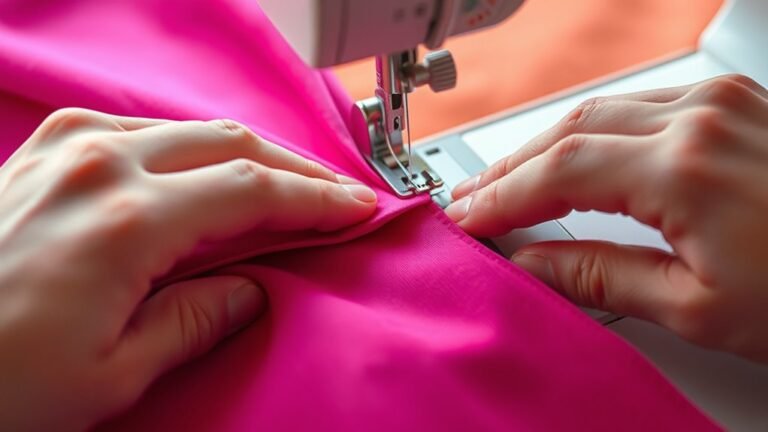
Pin the hem in place to keep it secure while you sew. This step keeps everything neat and prevents shifting.
Before you start sewing, get familiar with your machine’s settings for tension and stitch types. Adjusting these correctly helps you achieve a smooth, professional finish.
Finally, finish by trimming any excess fabric for a clean look. Taking this extra step makes your hem look polished and durable.
There’s always more to learn to perfect your hemming technique, so keep practicing and experimenting!
Key Takeaways
– Wash, press, and measure your fabric before marking the desired hem length with tailor’s chalk or a fabric marker.
It’s important to get your measurements right so the hem looks neat and even.
– Fold the raw edge inward (1/4 to 1 inch) and pin it in place. Space the pins about 3-4 inches apart to hold everything steady.
This way, your fabric won’t shift while you’re sewing.
– Choose the right hemming technique for your fabric. Use a narrow or rolled hem for lightweight fabrics, and a double-fold hem for heavier ones.
Picking the right method makes your hem stronger and cleaner-looking.
– Sew using either a straight or zigzag stitch. Adjust the tension settings depending on your fabric to avoid puckering.
Taking a little time here prevents any unwanted bunching.
– Press the hem after sewing for a crisp finish. Don’t forget to trim any excess fabric to stop it from fraying.
A little pressing goes a long way in making your hem look professional.
How to Choose the Right Hemming Technique for Your Sewing Machine?
When choosing the right hemming technique for your sewing machine, what fabric are you working with? For lightweight fabrics, a narrow or rolled hem is ideal, while heavier fabrics benefit from a double-fold hem for durability.
If you’re working with knits, a zigzag stitch hem provides the necessary stretch without breaking the thread. The straight stitch hem is versatile, offering a clean finish perfect for garments and home décor alike.
If you want an invisible finish on pants or skirts, the blind hem stitch is your best bet. Always test your chosen technique on a fabric scrap first to verify it’s compatible.
That way, you’ll know exactly what to expect when you’re going into your final project. It just makes the whole process smoother!
Prepare Your Fabric for Successful Hemming
Preparing your fabric properly sets the stage for successful hemming. Start by washing and pressing your fabric to pre-shrink it and eliminate any wrinkles. This guarantees a smooth hemming process.
Next, measure the desired hem length with a ruler or measuring tape. Mark it with tailor’s chalk or a fabric marker for precision.
Measure the desired hem length carefully, marking it with tailor’s chalk or a fabric marker for accuracy.
Fold the raw edge inward to create a clean edge, typically between 1/4 to 1 inch, depending on your chosen hem style. Pin the hem in place, spacing the pins about 3-4 inches apart for stability while sewing.
Finally, double-check your measurements and adjustments to avoid mistakes that could require rework later on. Taking these steps will make your hemming project easier and more successful.
Get the Most Out of Your Sewing Machine
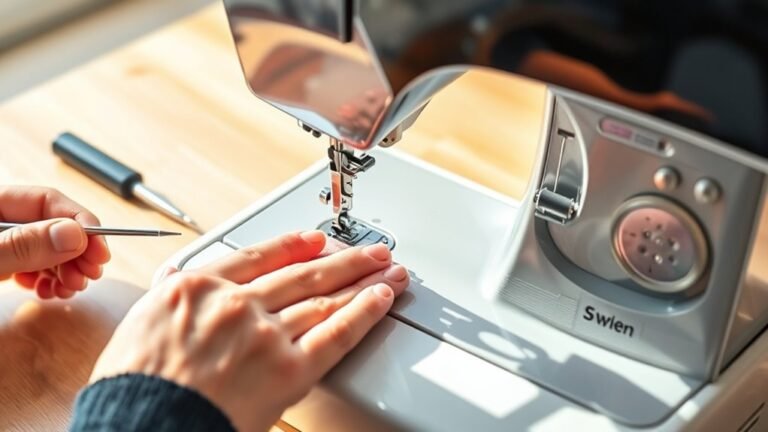
To get the most out of your sewing machine, you’ll want to familiarize yourself with its various parts, like the presser foot and stitch selector.
Regularly cleaning and oiling your machine according to the manufacturer’s guidelines keeps it running smoothly and prevents issues.
Adjust the tension settings based on the fabric you’re using; different materials need different tension for ideal stitching.
Practice various stitch types, such as straight, zigzag, and blind hem, to find what works best for your projects.
Finally, always keep safety in mind. Utilize the machine’s safety features, like the foot pedal control, to avoid accidents while sewing.
Avoid These Common Hemming Errors for Success
Avoiding common hemming errors can make a significant difference in your sewing projects. First, verify your fabric is properly aligned before starting; uneven hems can result in a crooked appearance.
Choose the right stitch length for your fabric type—longer stitches work best for lightweight materials, while shorter stitches suit heavier fabrics. Always press your hem before sewing to create a crisp edge, making it easier to follow the line accurately.
Remember not to stretch the fabric as you sew, as this can cause puckering and distort the hem’s shape. Finally, double-check your needle type and thread tension to prevent skipped stitches or breakage, which are frequent issues during hemming.
Following these tips will set you up for success!
Achieve a Professional Hemming Finish
Elevate your sewing projects by mastering the art of achieving a professional hemming finish. Start by selecting the right technique for your fabric, like a double-fold hem for lightweight materials or a blind hem for tailored garments.
Always press the hem before sewing to guarantee crisp edges and precision. Choose a straight stitch for woven fabrics, and opt for a zigzag stitch if you’re working with knits.
For durability, trim excess fabric after your initial stitching and finish raw edges with a serger or zigzag stitch to prevent fraying. Don’t forget to maintain your sewing machine for smooth operation; a well-functioning machine can greatly enhance your final result.
| Fabric Type | Recommended Stitch |
|---|---|
| Lightweight | Double-fold hem |
| Tailored | Blind hem |
| Woven | Straight stitch |
| Knits | Zigzag stitch |
| General Care | Regular machine cleaning |
Frequently Asked Questions
What Is the Best Stitch for Hemming a Dress?
The best stitch for hemming a dress is a straight stitch. It gives a clean finish.
For stretchy fabrics, use a zigzag stitch. It helps keep the hem flexible and neat.
If you want an invisible look on formal dresses, consider a blind hem. It’s perfect for that polished, subtle finish.
What Are the 5 Basic Tools of Sewing?
Imagine sewing like a wizard! You’ll need a sewing machine, fabric scissors, measuring tape, pins or clips, and an iron with an ironing board.
These five essentials make your sewing projects easier and more enjoyable. Trust me, having the right tools really changes the game.
How Do I Use a Sewing Machine Step-By-Step?
To use a sewing machine, start by familiarizing yourself with its components. Make sure you know where everything is and what it does.
Next, thread it correctly—this part can be a bit tricky at first, but you’ll get the hang of it quickly. Adjust the stitch settings to fit your project’s needs.
Give the foot pedal a try to get comfortable with controlling the speed. And don’t forget to perform regular maintenance checks to keep your machine running smoothly.
Before you know it, you’ll be sewing like a pro!
Is Hemming Tape Better Than Sewing?
Hemming tape’s quick and convenient, but it might not be as durable as sewing.
If you need immediate results for lightweight fabrics, use tape.
For longevity and sturdiness, sewing’s your best bet.
Choose wisely!
Conclusion
In just five simple steps, you can transform your sewing skills and achieve that polished look you’ve always wanted. Remember, hemming isn’t just a task; it’s the cherry on top of your garment-making journey.
With the right technique and a little practice, you’ll sew with confidence and finesse. So, roll up those sleeves, embrace the process, and let your creativity shine through every stitch.
Happy hemming! Mastering how to hem with a sewing machine not only improves your garment’s finish but also boosts your overall sewing ability. Keep practicing these easy steps, and soon hemming will feel like second nature. Your clothes will look professional, and you’ll enjoy every part of your sewing projects even more.