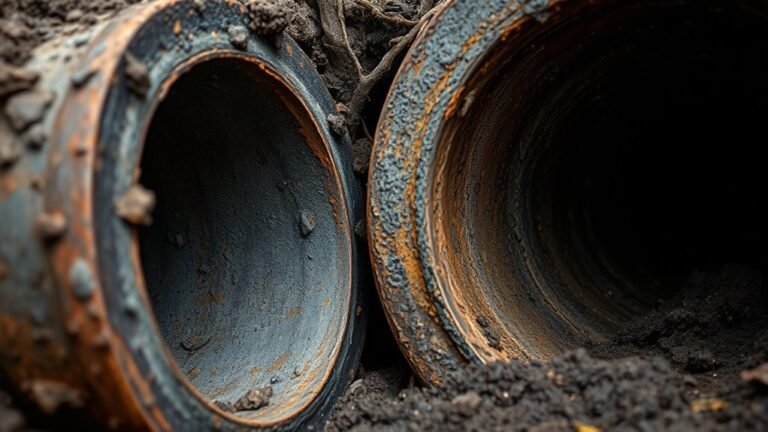

How to Locate Sewer Cleanout in 5 Simple Steps
To locate your sewer cleanout, start by identifying the main sewer line that exits your home. This pipe is key to accessing your sewer system for maintenance and repairs.
Look around the perimeter of your foundation or near the curb for a capped pipe, usually 3-4 inches in diameter.
If you have an older home, don’t forget to check garages or utility rooms, as the cleanout might be indoors.
Keep an eye out for slow drains or foul odors—these are common signs that your sewer line might be blocked or in need of attention.
Want to know more about maintenance tips and signs of trouble? Keep exploring!
It’s important to stay on top of sewer cleanout care to avoid costly plumbing issues down the road.
Key Takeaways
- Check the perimeter of your foundation for a capped pipe. It’s usually about 3-4 inches in diameter.
- Trace the large sewer pipe exiting your home to find where the cleanout might be located.
- Look near the curb or property line if you have a modern home. Cleanouts are often placed there.
- For older homes, inspect garages, utility rooms, or landscaped areas. Cleanouts could be hidden in these spots.
- Use markers to identify the cleanout. This makes it easier to find during emergencies.
Identify Your Home’s Main Sewer Line Cleanout
Identifying your home’s main sewer line cleanout can save you time and hassle during plumbing issues. This access point is usually a capped pipe, 3-4 inches in diameter, providing direct entry to your main sewer line for maintenance.
In homes built after 1980, you’ll typically find the cleanout near the foundation’s perimeter or close to the curb. However, if you live in an older home, your cleanout might be hidden in a garage, utility room, or even under landscaping like bushes or mulch.
To locate the main sewer line, trace the large pipe exiting your house—white PVC for modern homes or black cast iron in older ones. It’s a good idea to regularly mark this access point so you don’t waste time during emergencies.
Where to Look for Your Sewer Cleanout

When searching for your sewer cleanout, focus on the perimeter of your foundation, as this is where you’re most likely to find it. In modern homes, cleanouts are typically 3-4 inches in diameter and often located near the curb or property line, indicating responsibility for any blockages.
If you live in an older home or a unique layout, check inside the garage or utility room for less common access points. Don’t overlook landscaping features; cleanouts can be buried under bushes or mulch, so you might need to probe a bit.
It’s a good idea to familiarize yourself with local building styles, as they can influence where your home’s sewer cleanout is placed. And hey, if you’re unsure, just consult a professional plumber for assistance.
How to Spot a Blocked Sewer Line?
How can you tell if your sewer line’s blocked? Look for signs like slow drains in multiple fixtures; this usually indicates a blocked sewer line affecting overall flow.
If you hear gurgling sounds from your drains, it’s a warning sign that trapped air could mean a blockage. Pay attention to any foul odors coming from your drains or cleanouts, as these often signal a sewage backup.
Additionally, standing water around the cleanout or in your yard can be a clear indication of improper drainage due to a blockage in the sewer system.
Standing water near the cleanout or in your yard often signals a sewer blockage and improper drainage.
If you notice multiple toilets or sinks backing up at once, it’s likely a mainline issue rather than isolated problems in individual fixtures.
Top Maintenance Tips for Your Sewer Cleanout
Maintaining your sewer cleanout is essential for preventing major plumbing issues down the line.
Here are some tips to help you keep it in top shape:
| Task | Frequency | Purpose |
|---|---|---|
| Inspect surrounding area | Monthly | Guarantee access and clear obstructions |
| Check cleanout cap | Every 3 months | Prevent debris entry |
| Use visible markers | As needed | Identify cleanout location |
| Schedule professional inspection | Annually | Identify potential issues early |
When to Call a Professional for Sewer Issues
If you notice unusual signs like standing water in the cleanout or persistent clogs, it’s time to call a professional. These often indicate major blockages in your home’s sewer lines that require specialized equipment.
If you’re facing ongoing clogs despite regular maintenance, a plumber can help assess deeper issues within the sewer system. Avoid using DIY chemicals, as they can damage your pipes and may not resolve the problem.
Also, if you detect foul odors or hear gurgling sounds from your drains, these are clear signs that professional assistance is needed.
In emergency situations, such as sewage backups or flooding, immediate help is essential to prevent extensive damage and potential health hazards. Don’t hesitate to reach out!
Frequently Asked Questions
Where Are Sewer Cleanouts Usually Located?
Sewer cleanouts are usually located near your home’s foundation, often around 3-4 inches in diameter.
They might be close to the curb or property line, sometimes hidden under landscaping, so keep an eye out!
How Much Does Roto Rooter Charge for Main Line Cleaning?
Ever felt the frustration of a clogged line? Roto-Rooter charges between $200 to $500 for main line cleaning, depending on the issue’s severity.
You can always request an estimate to avoid surprises!
What Does My Sewer Cleanout Look Like?
Your sewer cleanout looks like a capped pipe, usually 3-4 inches wide. It’s often round, marked “cleanout,” or has a square or hexagonal shape.
You’ll usually find it near your foundation, the curb, or even inside garages. Keep an eye out in those spots!
Do All Houses Have an Outdoor Sewer Cleanout?
Not all houses have an outdoor sewer cleanout. Many older homes lack this feature.
If you don’t find one, consider consulting a plumber. They can help install a cleanout for easier maintenance.
Conclusion
Finding your sewer cleanout doesn’t have to feel like searching for a needle in a haystack. By following these steps, you’ll be well-equipped to locate it and keep your plumbing flowing smoothly.
Regular maintenance can prevent bigger headaches down the line, saving you both time and money. Remember, when in doubt, don’t hesitate to call a professional; sometimes it’s best to let the experts handle the mess.
Keep your pipes happy, and they’ll keep you happy! Locating your sewer cleanout is a key step in maintaining a healthy plumbing system. Taking care of this simple task can save you from costly repairs and plumbing emergencies. So, stay proactive and keep your sewer cleanout accessible for easy maintenance and quick fixes.