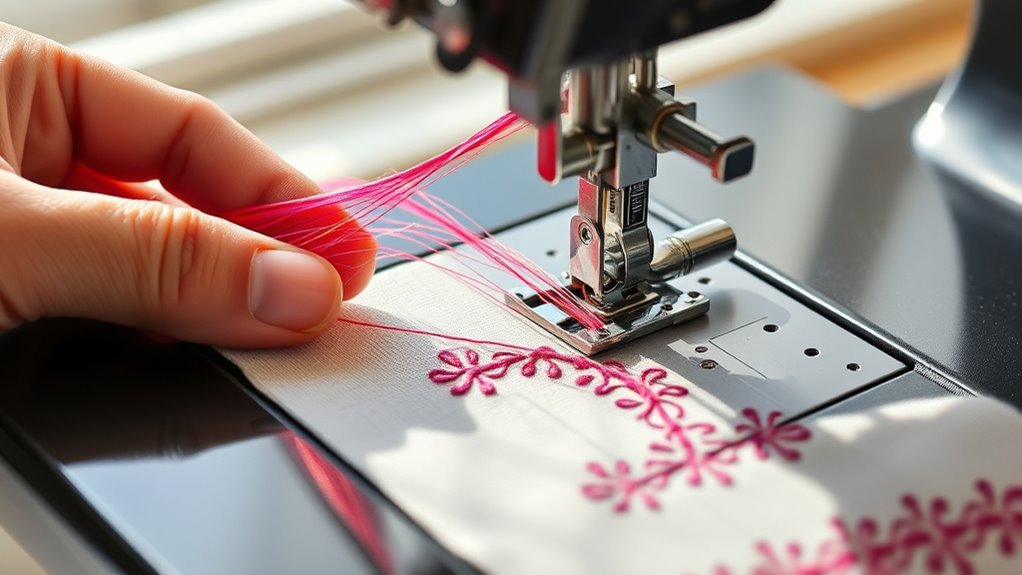
How You Can Use Embroidery Thread on a Sewing Machine
You can use embroidery thread on your sewing machine by first selecting a suitable needle, like a size 75/11 embroidery needle. This helps the thread glide smoothly and reduces breakage.
Next, lower your machine’s tension to prevent the embroidery thread from snapping. Work slowly to avoid tangles and test your settings on scrap fabric for smooth stitching.
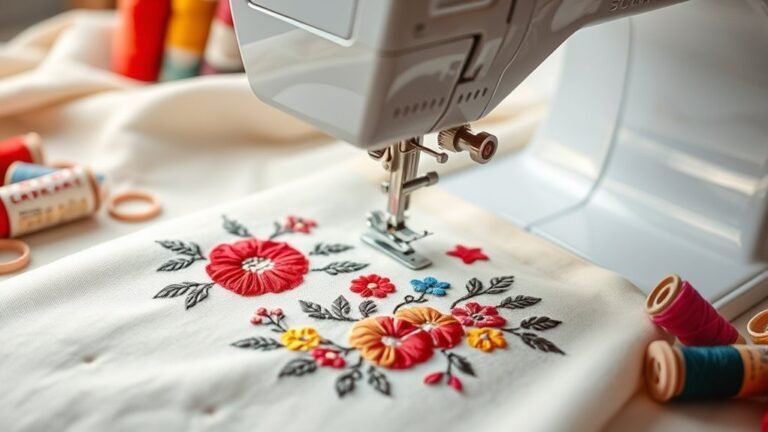
Embroidery thread adds vibrant, glossy accents perfect for decorative topstitching or quilting. With a few simple adjustments, your projects will gain beautiful detail and texture.
Keep experimenting to find even more creative ways to use embroidery thread on your sewing machine. It’s a fun way to make your sewing projects truly stand out!
Key Takeaways
- Use a size 75/11 embroidery or topstitch needle to accommodate the delicate embroidery thread smoothly. This helps the thread glide through without snagging.
- Lower the machine tension slightly to prevent thread breakage and ensure consistent stitching. It’s a small tweak that makes a big difference.
- Test stitch settings on scrap fabric before starting your main project to fine-tune tension and stitch length. Trust me, this saves a lot of headaches later on.
- Slow down the sewing machine speed to protect the embroidery thread fibers during stitching. Going too fast can cause the thread to fray or snap.
- Apply embroidery thread for decorative topstitching, free-motion quilting, and vibrant accents on fabric. It adds a beautiful, colorful touch to your projects!
Understanding Machine Embroidery Thread and Its Characteristics
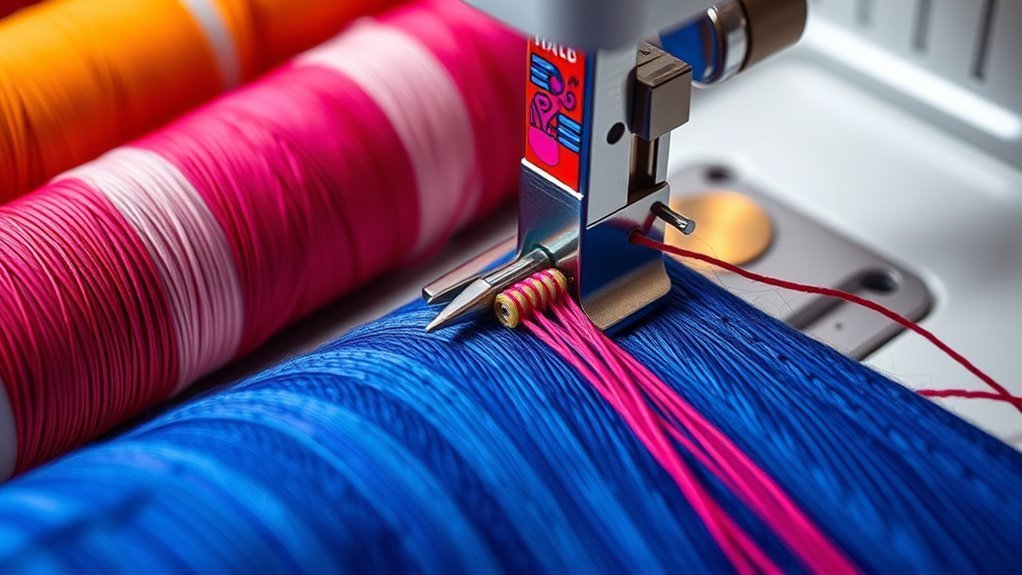
Although machine embroidery thread looks similar to regular sewing thread, it’s specially made from rayon or polyester to handle the demands of high-speed embroidery machines. When you use embroidery thread on your sewing machine, you’ll notice its high sheen and smooth texture, which make your decorative stitching really stand out.
Keep in mind, though, embroidery thread is more delicate than standard thread and may require tension adjustments on your sewing machine to prevent breakage. Unlike regular sewing thread meant for seams, embroidery thread is designed primarily for embellishment and detailed designs.
If you want vibrant, eye-catching results, using embroidery thread can transform your projects with its vivid colors and fine finish that standard thread just can’t match. It really adds that extra pop to your work.
Preparing Your Sewing Machine for Embroidery Thread
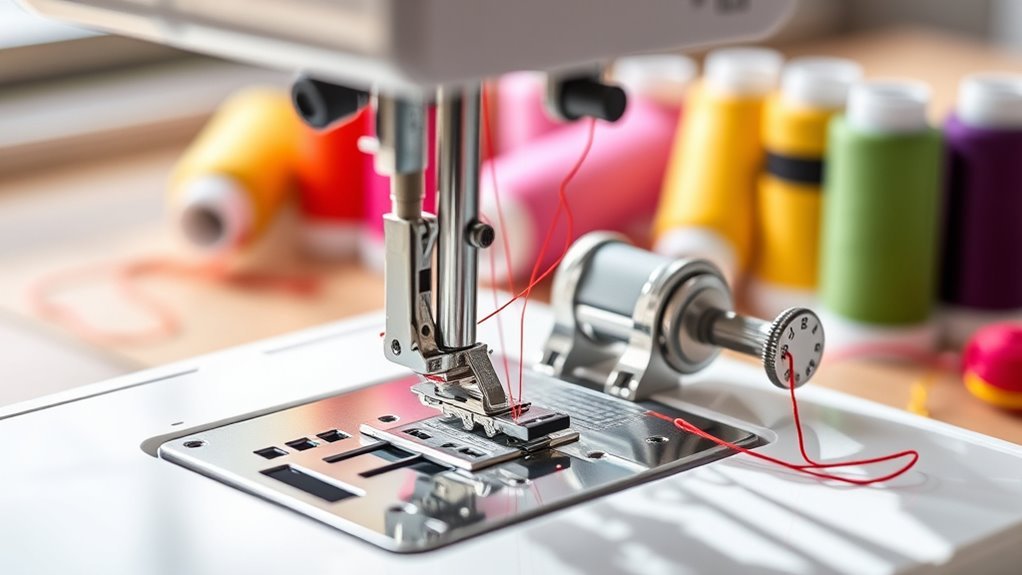
Using embroidery thread means making a few adjustments to your sewing machine to get the best results. Before you start, verify your sewing machine is compatible with embroidery thread by checking the manufacturer’s guidelines.
Before using embroidery thread, ensure your sewing machine supports it by consulting the manufacturer’s guidelines.
Then, focus on these key areas:
- Use a needle designed for embroidery or topstitching, like a size 75/11 denim needle, to handle the thread properly.
- Adjust your machine tension downward to avoid thread breakage. Be sure to test on scrap fabric first to find the ideal setting.
- Double-check the thread path is clear and correctly threaded to prevent tangles or misfeeds during sewing.
Taking these steps helps your embroidery thread glide smoothly through the sewing machine for cleaner, more durable stitches. It’s worth the little extra effort!
Techniques for Sewing With Embroidery Thread
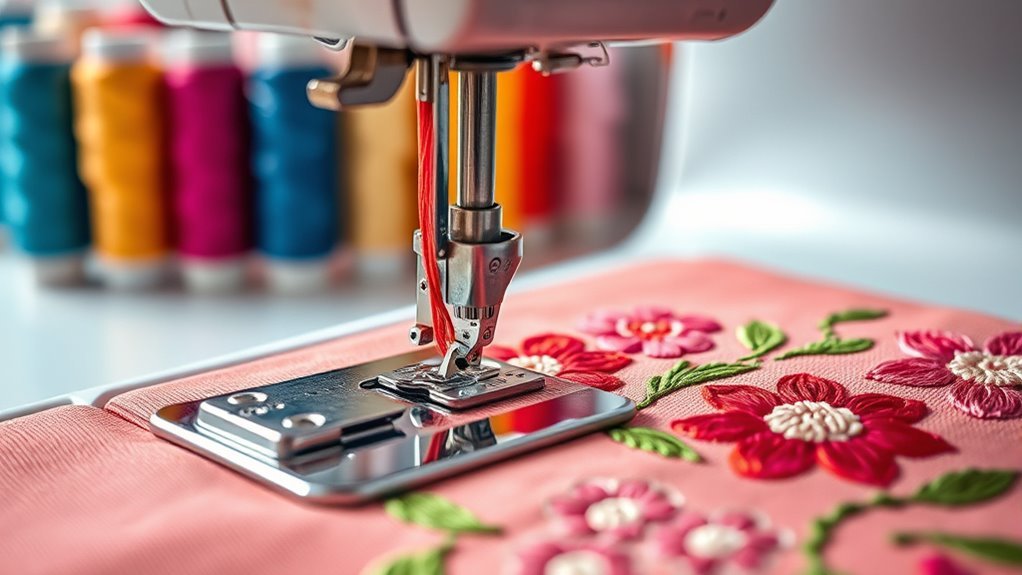
When you sew with embroidery thread, you’ll want to decelerate your machine down to reduce stress on the delicate fibers and prevent breakage.
Adjust tension downward and use a compatible needle—size 75/11 embroidery or denim—to allow smooth thread flow. Test on scrap fabric to fine-tune stitch length and thread tension before your main project.
Handle the thread gently to avoid tangles.
| Technique | Purpose | Tip |
|---|---|---|
| Slow stitching | Protects delicate thread | Reduce machine speed |
| Adjust tension | Prevents thread breakage | Lower than usual thread tension |
| Compatible needle | Smooth thread passage | Use size 75/11 embroidery needle |
| Test stitching | Ensures ideal settings | Use scrap fabric before sewing |
Managing Tension and Needle Selection for Optimal Results
Slowing down your machine and selecting the right needle sets the stage for better embroidery thread performance, but fine-tuning tension is what really guarantees smooth stitching. Use a smaller needle, like a 75/11 embroidery or microtex needle, to accommodate the delicate embroidery thread without damage.
Slow your machine and choose a fine 75/11 needle to protect delicate embroidery thread and ensure smooth stitching.
Then, modify your machine’s tension downward by one or two numbers to prevent thread breakage and ensure even stitches.
To manage tension and needle selection effectively:
- Test tension on scrap fabric before your project.
- Sew slowly to reduce thread stress and tangling.
- Monitor stitch quality and make small tension adjustments as needed.
Creative Applications and Community Tips for Embroidery Thread Usage
Although embroidery thread requires careful handling, it opens up exciting possibilities for adding vibrant accents and textured designs to your sewing projects. When using machine embroidery, community tips suggest you always test on scrap fabric first to adjust the tension and select the right needle, like a denim needle, to avoid thread breakage.
Creative applications include decorative topstitching and free-motion quilting for eye-catching textures. Online forums are goldmines for shared experiences and inspiration.
| Tip | Application | Needle Recommendation |
|---|---|---|
| Adjust the tension | Decorative topstitch | Denim needle |
| Test on scrap fabric | Free-motion quilting | Embroidery needle |
| Join sewing groups | Color accents | Universal needle |
Following these community tips guarantees your embroidery thread work shines.
Frequently Asked Questions
Can I Use Embroidery Thread in a Regular Sewing Machine?
Yes, you can use embroidery thread in a regular sewing machine, but you’ll need to adjust tension, use the right needle, sew slowly, and test on scrap fabric to avoid breakage and get the best decorative stitching results.
It’s a good idea to take it slow at first. Give your machine a chance to handle the thread without any hiccups. Trying out your settings on some scrap fabric can save you a lot of frustration later.
Can I Use Embroidery Floss in My Sewing Machine?
You can use embroidery floss in your sewing machine, but you’ll want to separate strands for thinner thread and use an embroidery needle.
Test on scrap fabric first, adjusting tension and speed to avoid breakage and tangling. It might take a few tries to get it just right, but it’s definitely doable!
Can I Use Embroidery Thread for Sewing?
Yes, you can use embroidery thread for sewing, but you’ll want to adjust your machine’s tension and use a suitable needle. Sewing slowly helps, too.
Also, make sure to test on scrap fabric first. This way, you avoid breakage and get smooth, decorative stitches every time.
Can I Stitch Embroidery on a Regular Sewing Machine?
You absolutely can stitch embroidery on a regular sewing machine—it’s like turning your machine into a magical art creator! Just use the right needle, slow down, adjust tension, and test on scrap fabric first for perfect results.
Give it a try, and you’ll be amazed at what you can create right at home! It’s all about patience and a little practice.
Conclusion
Now that you’ve woven embroidery thread through your sewing machine’s heart, you’re ready to stitch stories with every glide and twirl. Like a painter’s brush on fabric’s canvas, your thread will dance, shimmer, and sing.
Keep your tension tight, your needle sharp, and let creativity guide your hands. With each stitch, you’re not just sewing—you’re crafting vibrant dreams, one colorful loop at a time.
So, thread up and let your imagination soar! Using embroidery thread on a sewing machine opens up endless possibilities for unique designs and personalized projects. Remember, the right tension and needle are key to making your embroidery thread shine beautifully in every stitch. Happy sewing and enjoy the magic of embroidery!