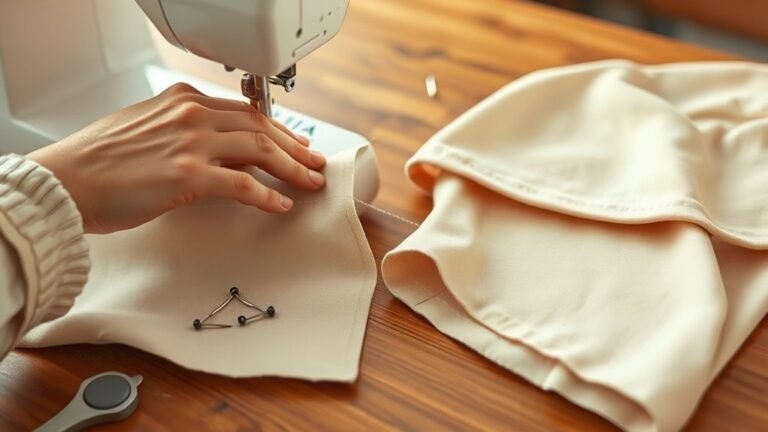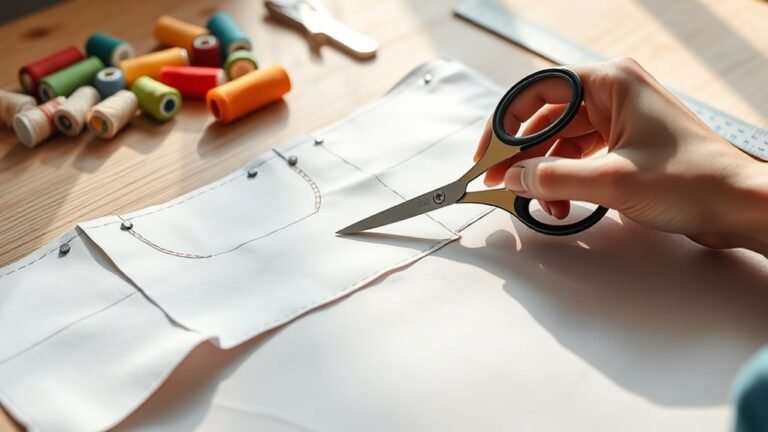
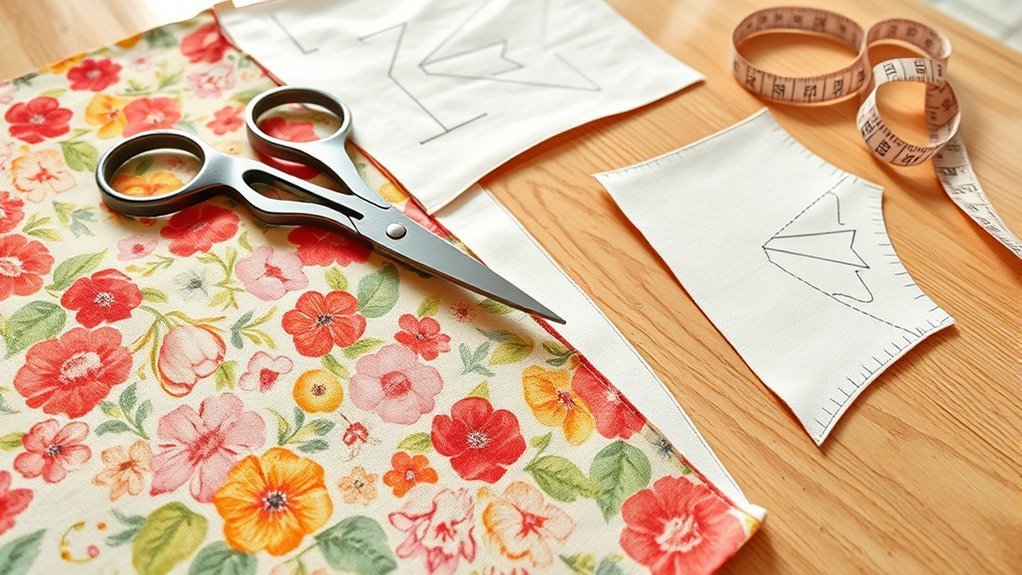
How to Cut Fabric for Sewing Pattern in 5 Easy Steps
To cut fabric for your sewing pattern in five easy steps, start by gathering essential tools like a rotary cutter, sharp scissors, and a cutting mat. These tools help you achieve clean, precise cuts, which are key to sewing success.
Washing and pressing your fabric beforehand is super important to prevent shrinkage and unwanted creases.
Next, lay your fabric out right side up, making sure to align the selvage edges properly. Use pattern weights to keep everything in place so your fabric doesn’t shift while you cut.
Cutting accurately with your chosen tool is crucial—take your time here!
Before moving on, double-check that each piece matches the pattern perfectly. This attention to detail can save you a lot of headaches later.
Want to make your cutting even better? Keep learning new techniques to improve your accuracy and create a flawless sewing project!
Key Takeaways
- Wash and press your fabric to eliminate creases and prevent shrinkage before cutting.
- Lay the fabric right side up, aligning the selvage edges for a straight grainline.
- Secure the pattern with weights or pins, making sure it’s lined up with the fabric grainline.
- Use a rotary cutter or sharp fabric scissors for clean, accurate cuts along the edges.
- Double-check your cut pieces against the pattern to confirm size and shape before you start sewing.
Essential Tools for Cutting Fabric
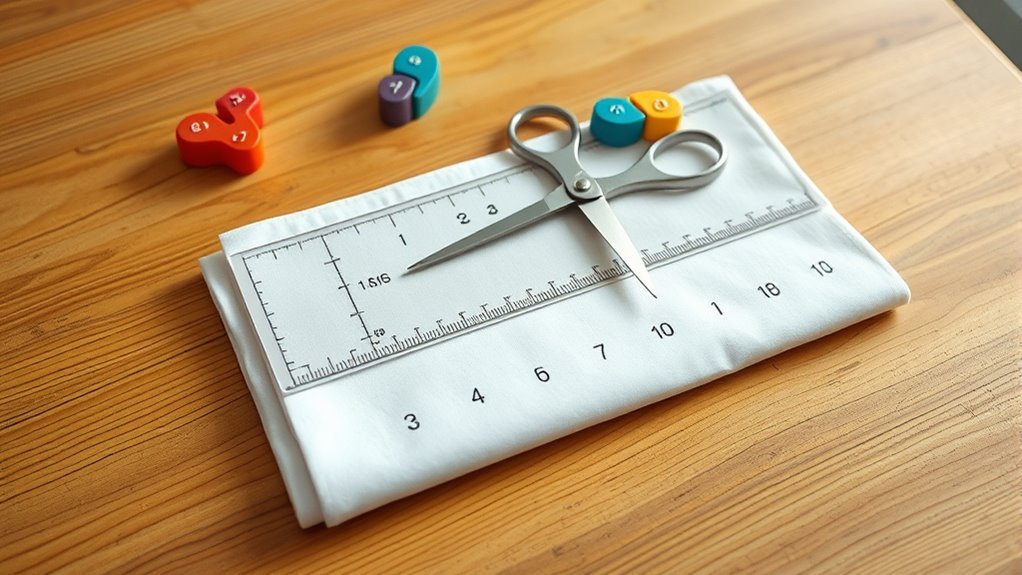
Cutting fabric effectively requires the right tools to guarantee precision and ease. Start with a rotary cutter for smooth, accurate cuts and sharp fabric scissors for any delicate details.
Effective fabric cutting hinges on having the right tools, like a rotary cutter for precision and sharp scissors for detail.
Use a self-healing cutting mat to protect your surfaces and keep your blades sharp. A clear, straight ruler is essential for guiding your rotary cutter along the fabric grainline, ensuring straight cuts.
Don’t forget pattern weights or pins to secure your pattern pieces and prevent slipping, which enhances accuracy. A pressing iron is key to removing creases, and using spray starch can add that extra crispness to your fabric.
Finally, set up a comfortable cutting surface at waist height to make your cutting process efficient and strain-free. It really makes a difference when you’re working for longer periods.
Preparing Your Fabric for Accurate Cutting
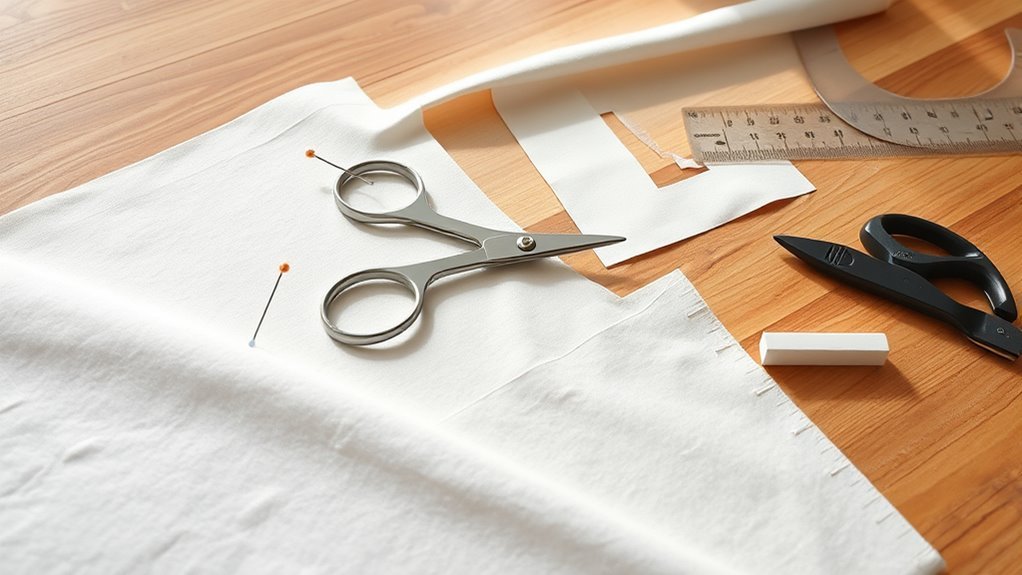
Before diving into your cutting process, it’s essential to prepare your fabric properly. Prepping your fabric guarantees accurate cutting and a smoother sewing experience.
Here are four key steps to follow:
- Wash your fabric according to the care instructions to prevent shrinkage. This step helps avoid surprises later on.
- Press the fabric with an iron to eliminate creases that can hinder precise cuts. A smooth surface makes all the difference.
- Consider using spray starch to enhance the fabric structure, making it easier to cut clean lines. It’s a handy little trick!
- Always identify the right side and wrong side of your fabric, and familiarize yourself with the pattern pieces to avoid missing any components.
Taking these steps will set you up for success in your sewing project! You’ll thank yourself later.
Laying Out Your Pattern for Precision
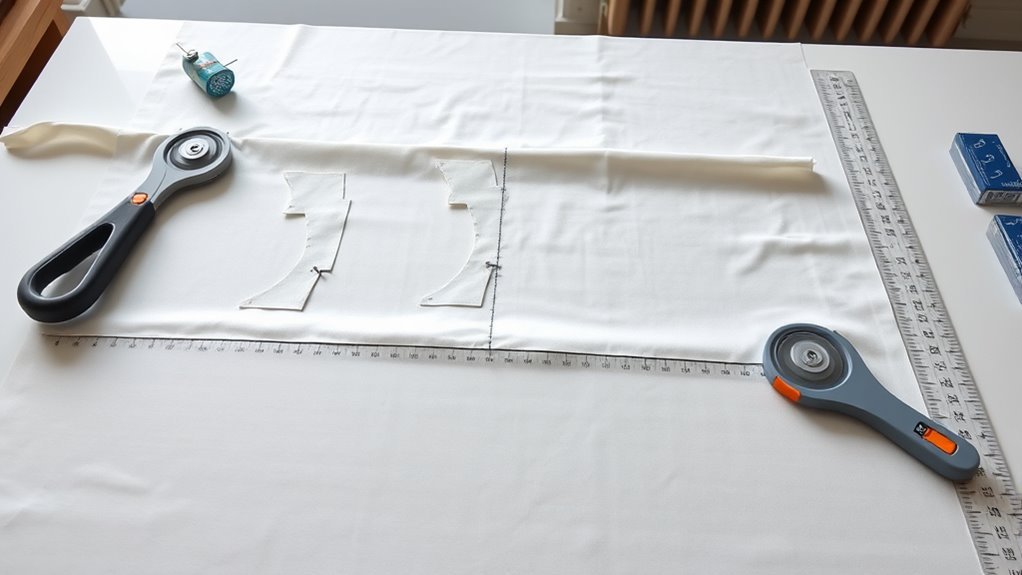
Laying out your pattern correctly is vital for achieving precise cuts and a well-fitted garment. Start by laying a single layer of fabric right side up on a smooth, flat cutting surface, making sure it’s free of wrinkles.
Align the selvage edges to establish a straight grainline, which is essential for structure. Check that the arrows printed on your pattern pieces are parallel to the selvage.
Aligning the selvage edges is crucial for establishing a straight grainline, ensuring your garment has the necessary structure.
Use pattern weights or pins to secure pattern pieces, which helps prevent shifting during cutting and maintains precision. As you cut, remember to cut one layer at a time and avoid folding the fabric.
Finally, mark the outer edges of each piece for accurate stitching later on. This little extra step makes a big difference down the line.
Cutting Techniques for Various Tools
Mastering the right cutting techniques can really boost your sewing projects. Here are four essential techniques you should know:
- Rotary Cutter: Always cut on a self-healing mat. Roll the cutter from bottom to top along a secured ruler for clean edges.
- Fabric Shears: Use sharp fabric shears for long, smooth cuts. Pinking shears are perfect for edges that may fray.
- Templates: For high accuracy, cut directly with a rotary cutter or trace the edges before using scissors.
- Pattern Weights: Secure your pattern pieces with weights to prevent shifting. This helps keep the grainline running parallel to the fabric selvage.
Remember to cut fabric in a single layer. This way, you maintain precision and avoid distortion in your pattern pieces.
How to Double-Check Your Fabric Cuts?
Double-checking your fabric cuts is essential to guarantee your sewing project turns out as planned. After cutting each piece, compare it against the pattern pieces to verify they match in size and shape.
Use a measuring tape to confirm that the dimensions correspond accurately to the measurements in the pattern instructions. Check for alignment by placing the cut pieces on a flat surface, ensuring that grainlines and markings align as indicated.
Make sure you’ve cut all necessary pieces by cross-referencing with the pattern’s piece list and marking off each piece as you complete it. Finally, lay the pieces right sides together to confirm they fit together correctly. This way, you can catch any necessary adjustments before sewing.
Frequently Asked Questions
What Is the Best Way to Cut Fabric for Sewing Patterns?
The best way to cut fabric for sewing patterns is to use a rotary cutter or sharp scissors. Always align the fabric properly, secure with weights or pins, and cut along the inside edge of marked lines.
It really helps to take your time with this part. Making sure everything is lined up just right means your pieces will come out looking great. Plus, using the right tools makes a big difference!
How to Cut Fabrics for Beginners?
To cut fabrics as a beginner, wash and press your material first. This helps to remove any shrinkage and makes the fabric easier to handle.
Then, use sharp scissors or a rotary cutter. Make sure to align your pattern pieces carefully to get the best results.
Don’t forget to mark essential details on your fabric. This will help you make accurate cuts and keep everything in place.
What Type of Cutting Tool Is Best for Cutting Fabrics?
For cutting fabrics, rotary cutters are great for multiple layers, while fabric scissors guarantee clean edges.
If you’re working with woven fabrics, use pinking shears to reduce fraying. Always choose tools that suit your fabric type.
What Are the 5 Steps in Sewing?
You’ll start by preparing your materials, then lay out your fabric. Next, you cut the pieces, followed by assembling them.
Finally, you finish by sewing and pressing everything for a polished look. It’s pretty straightforward once you get the hang of it!
Conclusion
By following these steps, you’ll cut fabric with confidence and create patterns with precision. This will help you enjoy a smoother sewing experience every time.
Remember to gather your tools and prepare your fabric carefully. Then, lay out your pattern and choose the right cutting technique for your project. Don’t forget to double-check your cuts before moving on!
With practice, you’ll not only improve your skills but also enhance your creativity. So, grab your fabric and start cutting. Watch your sewing projects come to life with ease and style!
Cutting fabric for sewing patterns doesn’t have to be tricky. Just follow these simple steps, and you’ll see how much more enjoyable and successful your sewing projects can be. Happy sewing!