How to Get Rid of Sewer Smell in Basement Step by Step
To get rid of sewer smell in your basement, the first step is to identify the source of that unpleasant odor. Sewer smells often come from plumbing issues, so inspect all plumbing fixtures carefully for leaks or damage.
Don’t forget to check unused drains, as they can dry out and let sewer gases escape into your basement. Running water down these drains regularly helps keep the traps filled, which is key to blocking those smells.
Also, look for any leaks in pipes and make the necessary repairs to stop odors at their source.
Improving ventilation can make a big difference too. Open windows when you can and use exhaust fans to get fresh air circulating in your basement.
If the smell still lingers after these steps, it might be time to call a professional plumber to dig deeper and uncover hidden issues.
There’s plenty more you can do, but this is a solid place to start tackling sewer smells effectively.
Key Takeaways
- Inspect plumbing fixtures for leaks, dry P-traps, and clogged drains to identify the source of sewer smells.
- Run water in unused drains and flush toilets regularly to keep traps filled and prevent odors.
- Repair any damaged pipes or plumbing fixtures to eliminate leaks that allow sewer gases to escape.
- Improve basement ventilation by opening windows and using exhaust fans to circulate fresh air and dissipate odors.
- Consult a qualified plumber for persistent smells, as they may indicate deeper plumbing issues requiring professional inspection.
Sometimes, these smells can be tricky to get rid of on your own. So, don’t hesitate to call in a pro if things don’t improve!
Start by Identifying the Source of Sewer Smells
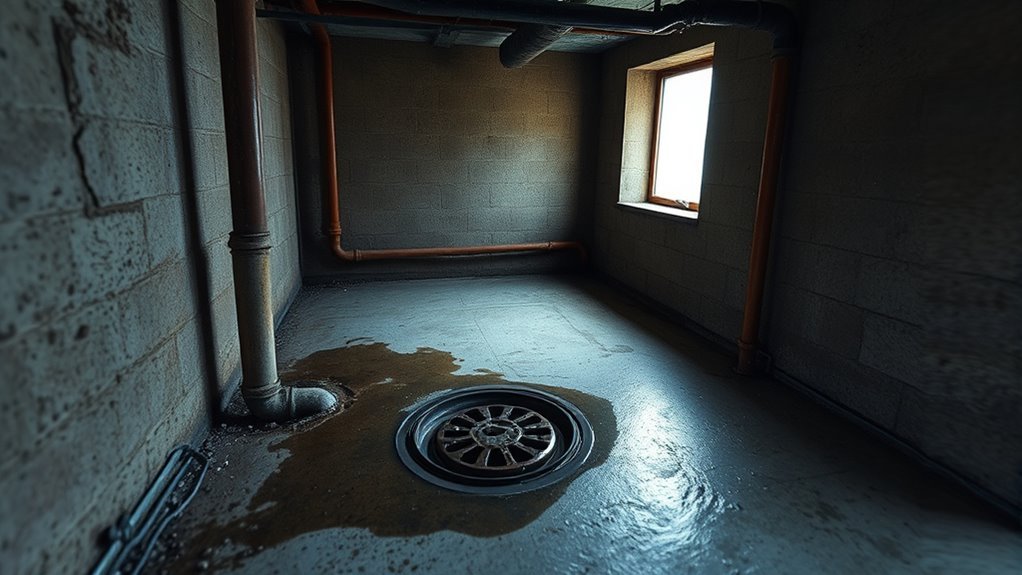
To tackle the sewer smell in your basement, you should first identify its source. Start by inspecting all plumbing fixtures, like sinks and toilets, for leaks or damage that could let sewer gas odor escape.
Identify the source of the sewer smell in your basement by inspecting plumbing fixtures for leaks or damage.
Don’t forget to check seldom-used sinks or bathtubs for dry P-traps. When there’s no water in them, odors can easily seep out.
Look for clogged drains, which can encourage bacterial growth and contribute to foul smells. Also, examine the area for missing or damaged clean-out plugs, as these can permit sewer gases to leak into your space.
If you want to be thorough, consider conducting a video drain inspection. It can help pinpoint the exact cause of the odor and uncover hidden plumbing issues.
Inspect and Clean Plumbing Fixtures
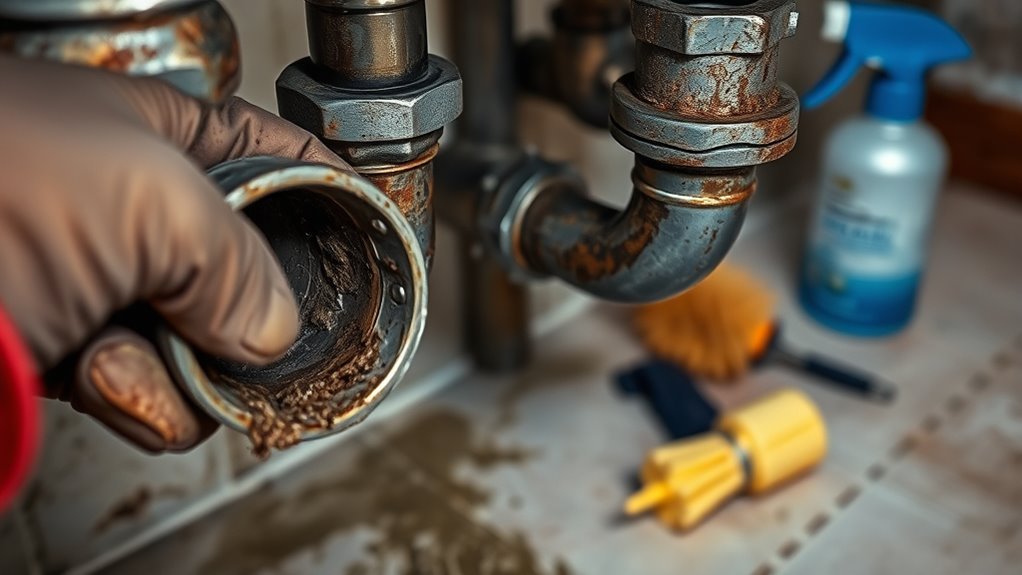
To tackle sewer smells, start by inspecting all plumbing fixtures for leaks or damage. Don’t forget to clean sink overflow holes and check toilet seals regularly to keep everything functioning properly.
A little maintenance goes a long way in preventing unpleasant odors from creeping into your basement. So, staying on top of these small tasks can really make a big difference!
Inspect Plumbing Fixtures Thoroughly
When you notice a sewer smell in your basement, inspecting plumbing fixtures thoroughly is essential. Start by checking all visible spots for leaks or damage, especially around sinks, toilets, and drains. These areas can be the source of sewer gas smells if not properly sealed.
Pay special attention to the toilet wax ring; a damaged seal may need replacing to eliminate odors. For fixtures you rarely use, run water down the drains at least twice a month. This keeps P-traps from drying out, which lets sewer gases enter your home.
Finally, regularly clean your drains with a mix of baking soda and vinegar. This helps prevent organic matter buildup that can contribute to unpleasant smells. It’s a simple step that can make a big difference!
Clean Sink Overflow Holes
Cleaning sink overflow holes is an important step in maintaining a fresh-smelling basement. These often-overlooked areas can accumulate bacteria, soap scum, and hair, leading to unpleasant odors if not cleaned regularly.
Here’s how to keep them fresh:
- Inspect the overflow holes monthly for any debris.
- Use a small bottle brush with a mixture of half chlorine bleach and half water.
- Scrub the overflow holes thoroughly to eliminate odor buildup.
- Rinse well to guarantee no cleaning solution lingers.
Regularly cleaning sink overflow holes is crucial to prevent odor buildup and potential plumbing issues. By making this part of your routine, you can keep your sinks odor-free and functioning properly. It’s easier than you might think!
Check Toilet Seals Regularly
Regularly checking your toilet seals is essential for keeping sewer smells at bay in your basement. A compromised toilet seal, or wax ring, can allow sewer gases to escape, creating unpleasant odors.
Here’s a quick guide to help you maintain your toilet:
| Task | Frequency |
|---|---|
| Inspect the toilet seal | Every 6 months |
| Clean the toilet base | Monthly |
| Check caulking | Every 3 months |
| Replace wax ring | As needed |
Cleaning the toilet base thoroughly prevents bacteria buildup, which can contribute to odors. If you notice persistent smells, consider replacing the wax ring.
Regular maintenance checks can catch issues early, making sure your basement stays fresh and odor-free. It’s a small effort that goes a long way!
Run Water in Unused Drains and Toilets
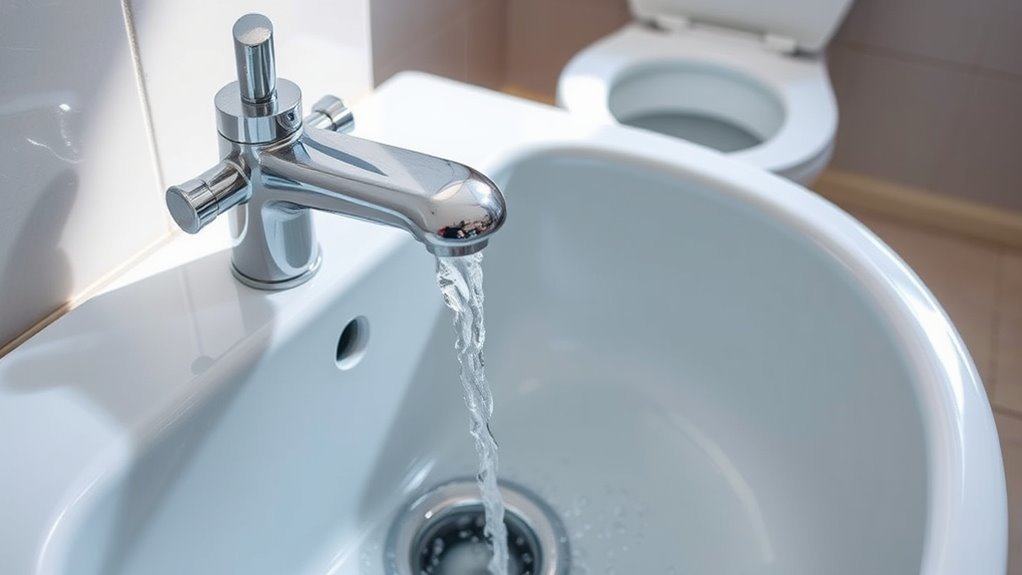
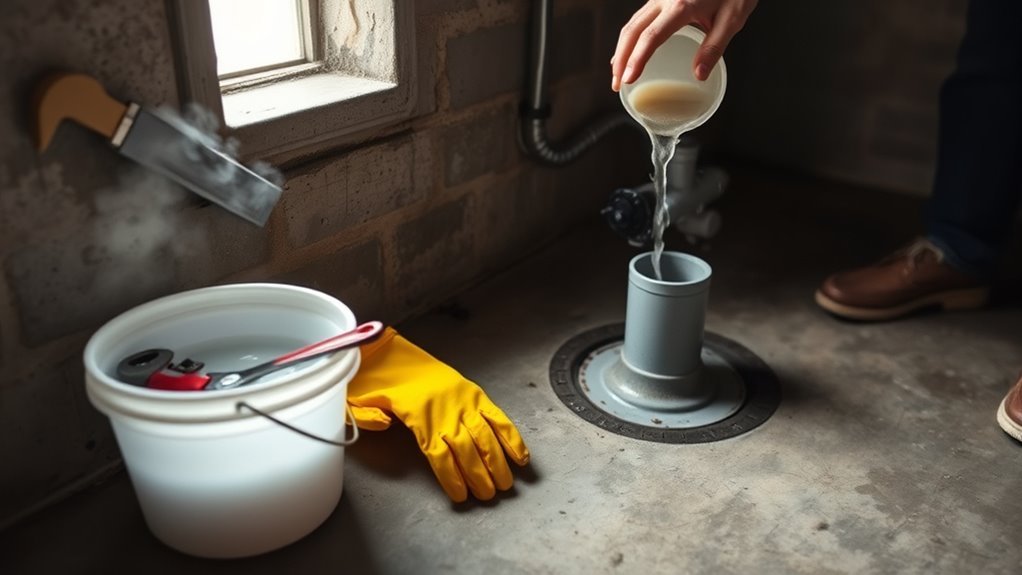
To prevent sewer smells from invading your basement, make sure you run water in unused drains and toilets. This simple step refills the P-trap, keeping unpleasant odors at bay.
To keep your basement odor-free, regularly run water in unused drains and toilets to refill the P-trap.
Here’s how to effectively manage running water in your home:
- Pour at least half a bucket of water down each unused drain twice a month.
- Flush unused toilets occasionally to keep the trap filled and minimize bacteria buildup.
- Set a reminder on your phone or calendar to run water regularly—it’s a small action with big benefits.
- Monitor the smell after running water; if it persists, you may need to investigate further.
Check for Leaks and Damaged Pipes
Inspecting for leaks and damaged pipes is essential in eliminating sewer smells from your basement. Start by checking all visible pipes for signs of leaks, like water stains, dampness, or corrosion.
Focus on joints and connections, where leaks are more likely to occur. If you suspect hidden issues, use a moisture meter to detect leaks behind walls or under floors—these can greatly contribute to unpleasant odors.
Additionally, look for any broken or damaged pipes that might let sewer gases escape into your space. If you find leaks, prioritize repairs immediately to prevent further damage and effectively eliminate odors.
Taking these steps will help guarantee a fresher and more pleasant basement environment. It’s worth the effort to keep your basement smelling clean and fresh!
Utilize Effective DIY Solutions to Eliminate Odors
Once you’ve addressed leaks and damaged pipes, it’s time to tackle the odors that linger in your basement. Here are some effective DIY solutions to eliminate that pesky sewer smell caused by organic matter:
- Pour water into unused toilets and sinks at least once a month to keep water traps full and block sewer gases.
- Clean your drains with a baking soda and vinegar mix, letting it sit before flushing with hot water to kill odor-causing bacteria.
- Inspect toilet wax rings and replace any damaged ones to guarantee a tight seal against sewer gases.
- Run water through seldom-used fixtures regularly to keep P-traps filled and prevent odor buildup.
Implement these steps, and you’ll breathe easier in no time!
Improve Basement Ventilation for Odor Control
To tackle sewer smells in your basement, improving ventilation is key. Open windows regularly to let in fresh air, and consider installing exhaust fans to remove moisture and odors.
Also, adding air vents can really boost airflow. This helps keep your space smelling clean and fresh. Give it a try!
Open Windows Regularly
Open those basement windows regularly to boost ventilation and tackle that pesky sewer smell. Fresh air can work wonders, creating airflow that dilutes odors and improves your basement’s air quality.
Plus, it helps reduce moisture levels, keeping bacteria at bay. It’s a simple step but super effective.
Here are some easy tips to enhance your ventilation:
- Cross-Ventilation: Open windows on opposite sides to push out stale air.
- Timing: Choose times when the outdoor air is fresh, like early morning or late evening.
- Consistency: Make it a habit to open windows daily.
- Monitor: Keep an eye on humidity levels to know when to ventilate more.
Just a little effort goes a long way in keeping your basement fresh and healthy!
2. Use Exhaust Fans
While managing odors in your basement, utilizing exhaust fans can make a noticeable difference. These fans enhance air circulation, effectively dissipating unpleasant smells and preventing the buildup of sewer gases.
Placing them strategically helps remove stagnant air and improve ventilation. Keeping exhaust fans running during peak odor times, like after heavy rainfall, is particularly effective.
| Action | Benefit | Maintenance Tip |
|---|---|---|
| Install exhaust fans | Improve air circulation | Clean filters regularly |
| Run during humidity | Reduce sewer gas concentration | Check operation often |
| Combine with windows | Enhance cross-ventilation | Confirm proper placement |
With regular maintenance, exhaust fans can notably minimize lingering odors, creating a fresher environment in your basement. Just keep them clean and running smoothly to get the best results.
3. Install Air Vents
Exhaust fans play an essential role in managing odors, but installing air vents can take your basement’s air quality to the next level. By enhancing airflow, air vents can greatly reduce the concentration of sewer gases and keep unpleasant smells at bay.
Here’s how to maximize their effectiveness:
- Strategically place air vents for ideal cross-ventilation, allowing fresh air to circulate.
- Combine air vents with exhaust fans to actively draw out odors and improve air quality.
- Regularly clean air vents to prevent dust buildup, which can hinder airflow.
- Consider an air exchange system to continuously replace stale air with fresh outdoor air, minimizing sewer gas odors.
With these steps, you’ll enjoy a fresher, odor-free basement!
Know When to Call a Professional Plumber
If sewer smells linger despite your efforts to clear them, it’s time to contemplate calling a professional plumber. Persistent odors might signal deeper plumbing issues, like damaged pipes or dry traps, that require expert attention.
A qualified plumber can conduct a thorough inspection and identify the root cause of the sewer gas escaping into your home. They use specialized equipment, such as video drain inspections, to locate problems that aren’t visible to the naked eye.
If you experience symptoms of sewer gas exposure—like headaches, nausea, or respiratory issues—don’t wait. It’s vital to call a plumber immediately for your safety.
Regular maintenance from a licensed plumber can also help prevent future sewer gas issues and keep your plumbing system in top shape. So, it’s definitely worth scheduling check-ups even when things seem fine.
Frequently Asked Questions
Why Does My Floor Drain Smell Like Sewage?
Your floor drain smells like sewage due to dry P-traps, clogged drains, or damaged plumbing.
Regularly running water through the drain and maintaining clean-out plugs can help prevent these unpleasant odors from developing.
It’s a simple fix if you stay on top of it. Just make sure to check your drains often!
Will Caulking a Toilet Stop Sewer Smell?
Yes, caulking a toilet can help stop sewer smells by sealing gaps that let odors escape. However, make sure to address any underlying plumbing issues for a complete solution.
It’s also a good idea to regularly check the caulk for wear. That way, you’ll catch any problems early and keep the smells at bay.
How to Get Rid of Bad Basement Smell?
Your basement’s like a forgotten book, collecting dust and odors. To get rid of that bad smell, inspect for leaks, clean drains, run water in unused fixtures, and guarantee proper ventilation to refresh the air.
It might seem like a lot, but tackling these steps will make a big difference. Just think of it as giving your basement a fresh start!
How to Get Rid of Sewer Gas Smell Fast?
To get rid of that sewer gas smell fast, pour water down unused drains, check for leaks, and clean your drains.
Also, try to increase ventilation by opening windows and using fans to circulate fresh air.
These simple steps usually do the trick pretty quickly. If the smell sticks around, you might want to call a professional to take a closer look.
Conclusion
By tackling the sewer smell in your basement, you’re not just clearing the air; you’re reclaiming your home’s sanctuary. Like a gardener pruning away weeds to let flowers bloom, addressing these odors can revive your space and spirit.
Remember, while DIY efforts can work wonders, don’t hesitate to call a professional if the problem lingers. With a little effort, you can transform your basement from a musty cave into a fresh, welcoming haven.
Getting rid of sewer smell in your basement takes some patience and the right steps, but it’s totally doable. Whether it’s fixing leaks, cleaning drains, or checking your plumbing vents, each action helps eliminate that stubborn odor. So roll up your sleeves and breathe easier knowing you’re making your home healthier and more comfortable.