How to Machine Quilt With a Regular Sewing Machine in 5 Easy Steps
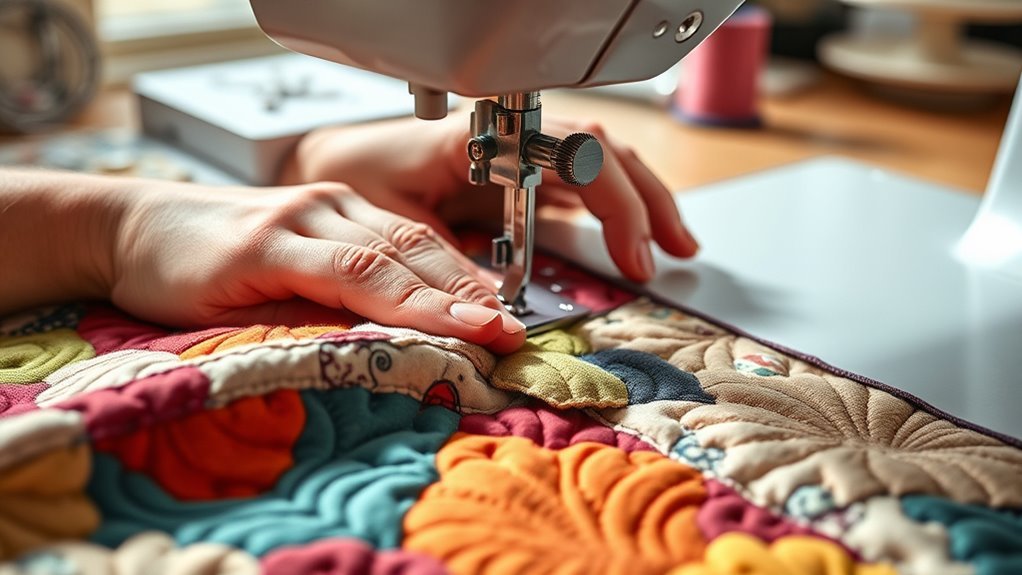
To machine quilt with a regular sewing machine, start by gathering essential materials like a reliable machine, quality thread, and the right fabrics. You’ll want to have everything ready before you begin to make the process smooth and enjoyable.
Having good tools really makes a difference when you’re quilting.
Next, prepare your quilt sandwich by layering the backing, batting, and quilt top. This is the foundation of your quilt, so take your time to get it just right.
Once that’s done, choose stitches that suit your design, and attach a walking foot to ensure even feeding.
Begin quilting from the center and work outward to prevent puckering. This little trick helps keep your quilt looking neat and professional.
Finally, care for your quilt by cleaning your machine and storing it properly. You’ll discover more tips to enhance your quilting journey!
Key Takeaways
– Gather essential materials: a reliable sewing machine, high-quality thread, fabric for quilt top and backing, batting, and appropriate quilting needles.
Make sure you have everything ready before you start to avoid interruptions.
– Prepare the quilt sandwich by layering backing fabric, batting, and quilt top. Secure everything with safety pins or use basting spray to keep it in place.
This step is key to keeping your layers from shifting while you quilt.
– Choose suitable stitches, starting with straight stitches and experimenting with lengths for desired effects. It’s a good idea to practice on scrap fabric first.
This way, you get comfortable with your machine and find the look you like best.
– Quilt step-by-step, starting from the center and working outward. Using a walking foot helps feed all the layers evenly.
Take your time here to make sure your quilting lines stay smooth and consistent.
– Care for the finished quilt by cleaning your sewing machine, storing the quilt properly, and washing it gently.
This will help maintain your quilt’s fabric integrity and keep it looking beautiful for years.
Gather Your Materials for Machine Quilting
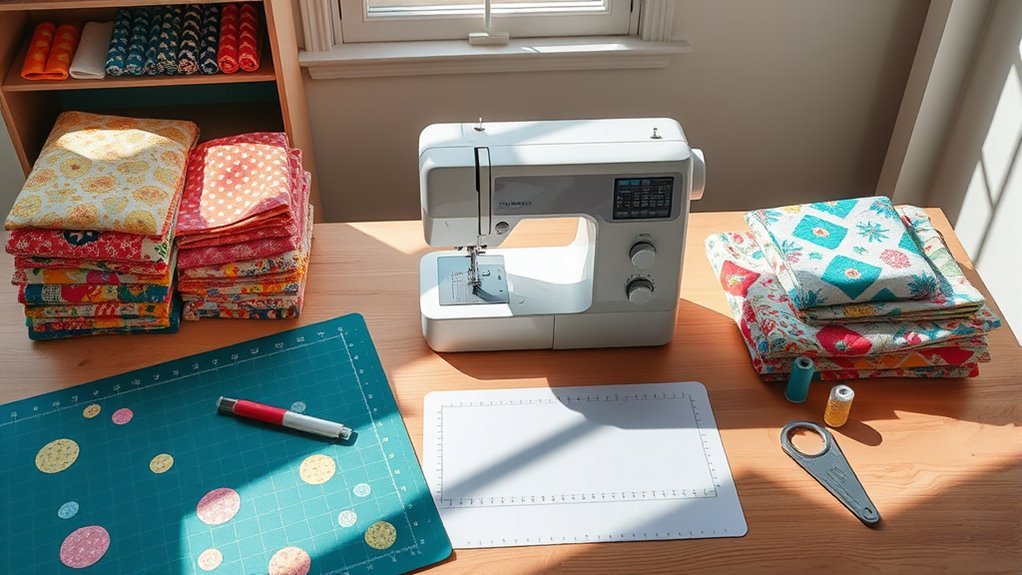
To kick off your machine quilting journey, gather the essential materials you’ll need. Start with a reliable home sewing machine and choose high-quality quilting thread.
Begin your machine quilting adventure by gathering a dependable sewing machine and high-quality quilting thread.
Collect a variety of fabric for your quilt top, backing, and batting. You’ll also want a walking foot or a free-motion quilting foot to help manage the fabric layers and prevent shifting while you sew.
Don’t forget to include sharp, quilting needles, like size 90/14 or 80/12, to tackle multiple layers effectively. Finally, grab some marking tools, such as fabric pens or chalk, to outline your quilting designs without leaving permanent marks.
Prepare your workspace with a large, flat surface to accommodate the quilt’s bulk. This way, you’ll have plenty of room to maneuver comfortably.
Get Your Quilt Sandwich Ready
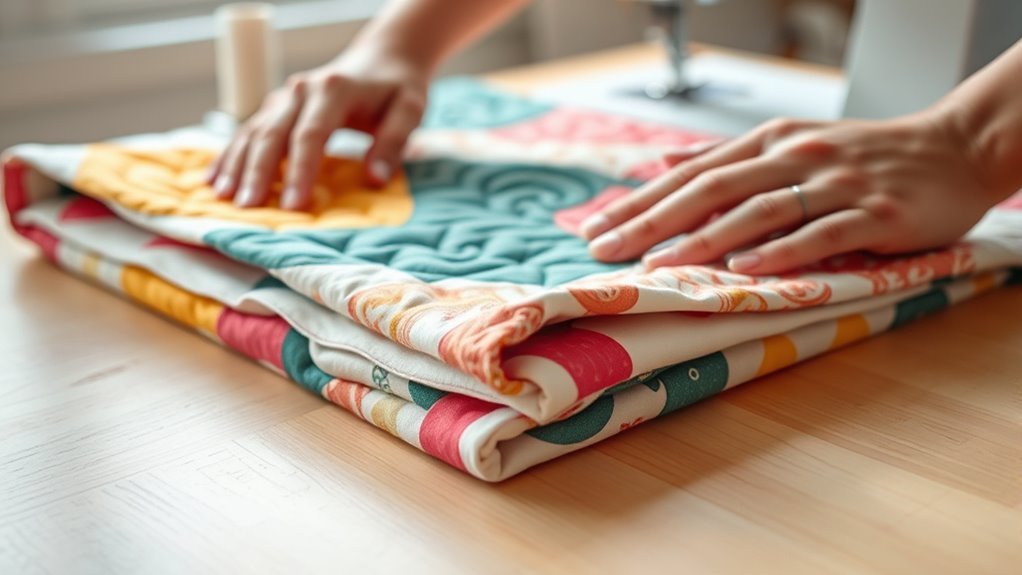
Creating your quilt sandwich is an essential step in the machine quilting process. To get it ready, follow these simple steps:
First, lay out your backing fabric, right side down. Make sure it’s larger than your quilt top to prevent shifting.
Next, place the batting on top of the backing. Smooth out any wrinkles so you have a nice, flat surface.
Now, position your quilt top, right side up, on the batting. Align all the layers carefully to keep them centered.
Secure the layers together with safety pins or basting spray. Start from the center and work outward to avoid any shifting.
Finally, trim any excess backing and batting around the edges. This will give you a neat finish and make handling easier during quilting.
You’re all set to start quilting!
Pick the Right Stitches
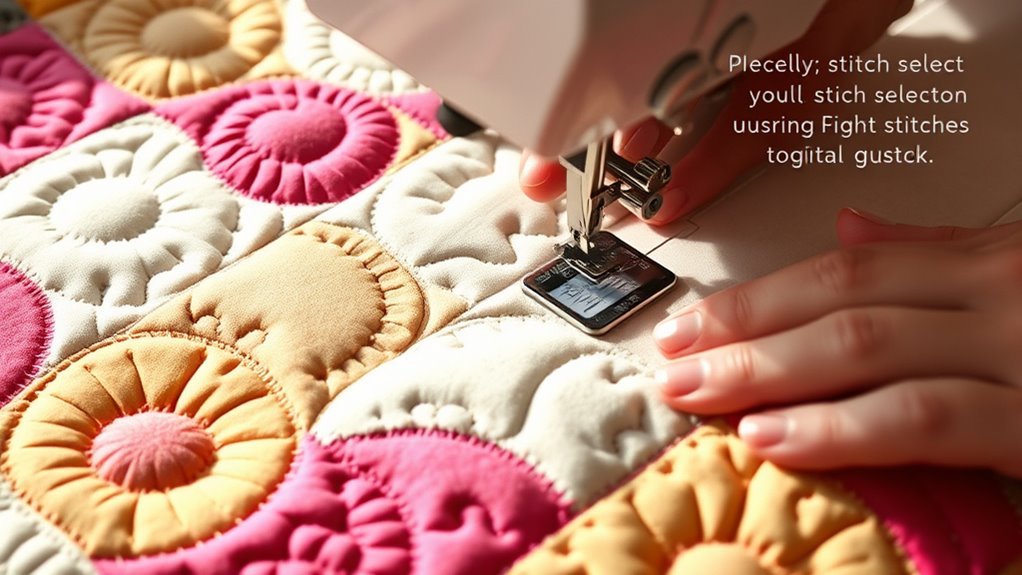
Choosing the right stitches is essential for successful machine quilting. For basic quilting, stick with straight stitches; they offer a clean, secure seam that’s manageable on your domestic quilting machine.
If you want to add decorative edges or prevent fabric fraying, a zigzag stitch is a great choice. It enhances both stability and visual appeal.
Experiment with stitch lengths too. A shorter stitch, around 2.0-2.5 mm, guarantees secure quilting, while longer stitches can create a bolder design.
Using a walking foot or quilting foot is also beneficial. It helps evenly feed multiple fabric layers and reduces puckering.
Be sure to practice on scrap fabric to find the best stitches for your quilt’s design and fabric types before diving into your project. It really makes a difference!
Quilt Your Project Step-by-Step
Start by preparing your quilt sandwich, which includes the quilt top, batting, and backing. Make sure everything is smooth and wrinkle-free.
Follow these steps for successful machine quilting:
- Attach a walking foot to your sewing machine. This helps feed the layers evenly.
- Begin quilting in the center of the quilt and work your way outward. This way, you avoid puckering.
- Use a simple technique, like “stitch in the ditch,” to secure seams neatly.
- Keep the quilt manageable by rolling the edges or using a quilt clip. This prevents bulk from getting caught.
Care for Your Machine Quilted Masterpiece
Once you’ve completed your machine quilted masterpiece, it’s essential to give it the proper care to guarantee its longevity and beauty. Taking a little time now will pay off in the long run.
Here are some key tips to remember:
| Task | Recommendation | Purpose |
|---|---|---|
| Clean Your Machine | Regularly remove lint and dust | Maintains peak performance |
| Use Quality Needles | Choose needles suitable for quilting | Reduces fabric snagging |
| Store Properly | Keep in a cool, dry place | Prevents fading and damage |
| Wash Gently | Opt for a gentle detergent | Preserves fabric integrity |
| Maintain Shape | Use fabric spray or starch | Enhances appearance |
Following these simple steps will help keep your quilt looking its best for years to come. Trust me, your hard work deserves that!
Frequently Asked Questions
What Type of Batting Is Best for Machine Quilting?
Cotton batting’s your best bet for machine quilting; it’s durable, breathable, and provides great stitch definition. You might also consider a blend for added loft and warmth.
Give different types a try to see what works best for your project! It’s all about finding the right feel and look for what you’re making.
How Do I Choose the Right Needle Size for Quilting?
Picture threading your sewing machine, excitement bubbling. For quilting, choose a needle size 75/11 for lightweight fabrics or 90/14 for thicker layers.
It’ll glide smoothly, creating perfect stitches that transform your quilt into a masterpiece. Easy, right? Just the right needle can make all the difference!
Can I Use a Walking Foot for Free-Motion Quilting?
Yes, you can use a walking foot for free-motion quilting, but it’s not ideal.
A darning foot is better suited for this technique, allowing more freedom and control over your stitching patterns.
It really helps you move the fabric around more smoothly. So, if you want the best results, go with a darning foot.
How Do I Fix Puckering in My Quilt?
To fix puckering in your quilt, try gently steaming the area, adjusting your stitching tension, or redoing the seams. Make certain your fabric layers are smooth and securely pinned before quilting to prevent future puckering.
Also, don’t rush through the quilting process. Taking your time to sew carefully really helps keep everything flat and neat. If you notice puckers starting to form, stop and smooth them out before moving on.
What Should I Do if My Thread Keeps Breaking?
If your thread keeps breaking, check the tension first. You might be surprised how often that’s the culprit.
Also, make sure you’re using the right needle and good-quality thread. Those small changes can make a huge difference!
Conclusion
Now that you’ve mastered machine quilting in just five easy steps, you can create beautiful quilts with confidence. Just think about the joy you’ll bring to friends and family with your handmade creations!
Remember to care for your machine quilted masterpiece, ensuring it lasts for years to come. Taking good care of your quilt helps preserve all the time and effort you put into it.
So, what’s stopping you from diving into your next quilting project? Grab your materials and let your creativity flow—your next masterpiece awaits!
With these simple machine quilting tips, you’ll be able to tackle any quilt with ease. Keep practicing your machine quilting skills, and soon you’ll be designing stunning quilts that showcase your unique style. Happy quilting!