Learn to Sew Clothes With This Step-By-Step Guide
Learning to sew clothes is easier than you think! Sewing your own clothes lets you create unique styles that fit perfectly.
Start by gathering your essential tools, like a good sewing machine, fabric scissors, and measuring tape.
Take accurate body measurements to guarantee a perfect fit. Choose beginner-friendly patterns to build your skills and boost your confidence.
Prepare your fabric through washing and cutting, then begin your first project with clear steps.
You’ll discover essential finishing techniques and how to troubleshoot common issues that arise along the way.
With these simple steps, you’ll be sewing your own clothes in no time! Just take it one stitch at a time and enjoy the process.
Key Takeaways
– Gather essential supplies like a sewing machine, fabric scissors, and measuring tape for a successful start.
These tools will make your sewing journey much easier and more enjoyable.
– Take accurate body measurements to ensure a perfect fit for your clothing.
It’s a simple step that saves you from a lot of hassle later on.
– Choose beginner-friendly patterns with clear instructions to build confidence and skills.
Starting with easy projects helps you learn without feeling overwhelmed.
– Prewash and iron fabric to prevent issues like shrinkage and ensure precise cutting.
This little extra step means your clothes will fit just right after washing.
– Practice finishing techniques and troubleshoot common sewing problems to enhance your skills.
Don’t worry if you make mistakes—that’s how you learn and improve!
Gather Your Sewing Essentials for Success
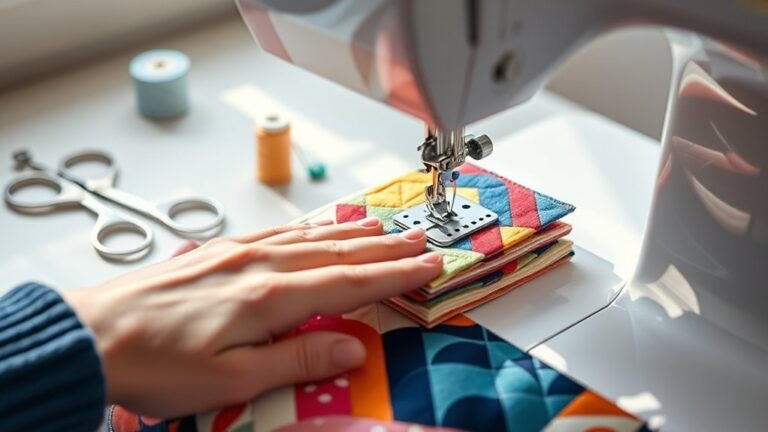
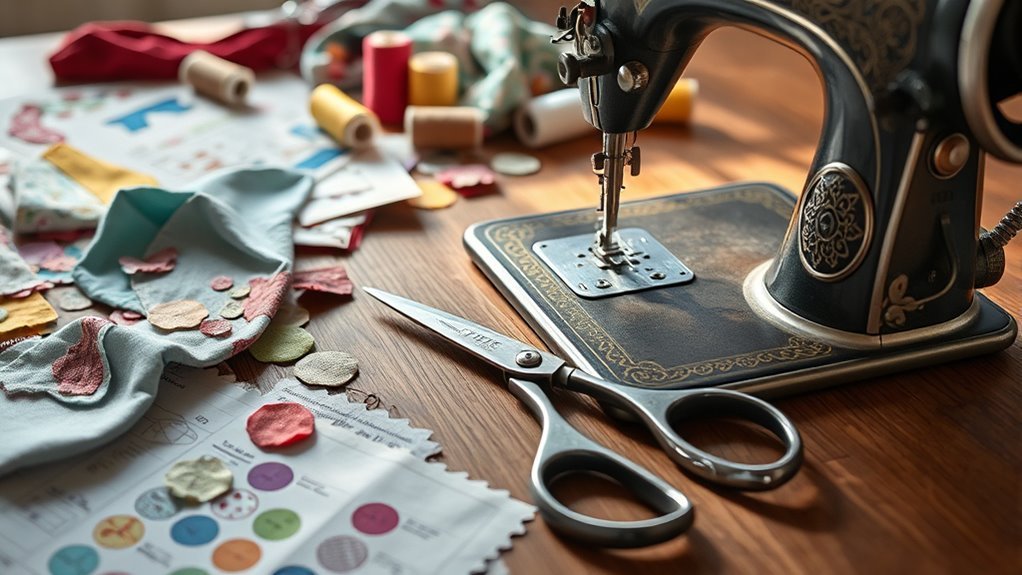
To kick off your sewing journey, gather the essential tools that’ll set you up for success. Start with a reliable sewing machine, which is your main tool for stitching fabric together. Don’t forget fabric scissors; they’ll provide clean cuts, ensuring your pieces fit well.
Kickstart your sewing adventure with a dependable sewing machine and sharp fabric scissors for precise cuts and perfect fitting pieces.
You’ll also need a measuring tape to get the right dimensions for your projects. Stock up on sewing essentials like pins and a seam ripper for those little mistakes.
Create an organized workspace to keep everything accessible and enjoyable. Before you embark on sewing, make sure to prewash your fabric to prevent shrinkage and color bleeding. This way, your finished garment will look sharp and fit perfectly.
Happy sewing!
How to Take Accurate Measurements for a Perfect Fit
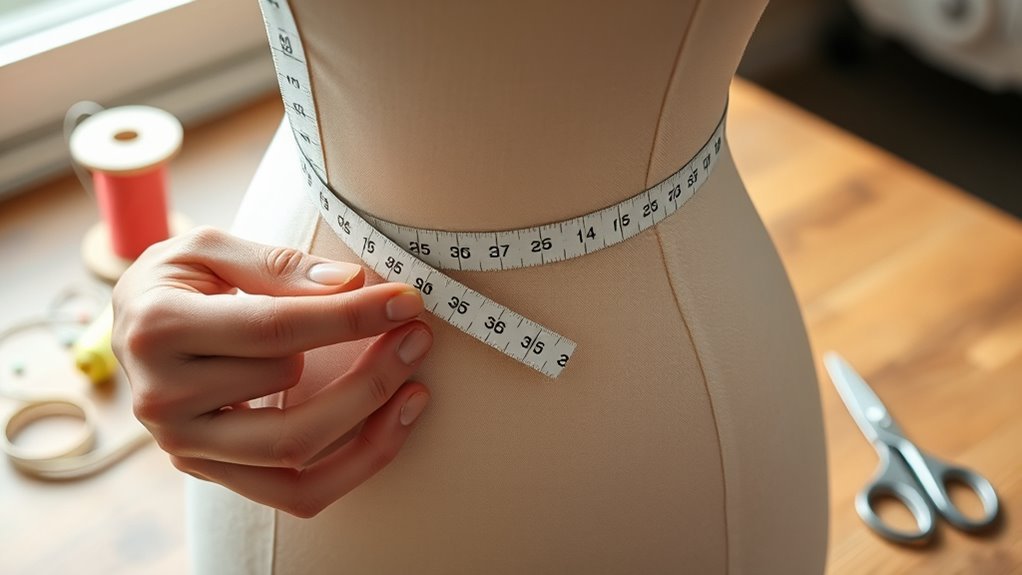
To get the perfect fit for your clothes, you’ll need the right tools and a clear understanding of key body measurements. Start with a flexible measuring tape and focus on your bust, waist, and hips.
Accurate measurements are essential, so let’s explore some tips to guarantee you get them just right. It’s easier than you might think once you know what to do!
Essential Measuring Tools Needed
Accurate measurements are essential for achieving a perfect fit in your sewing projects. Start with a flexible measuring tape to measure your bust, waist, and hips. Make certain the tape is snug but not tight for precise readings.
For the most accurate body shape during pattern fitting, wear fitted undergarments or yoga tights. Record each measurement in inches and take them multiple times to confirm accuracy. This way, you can account for any body changes.
Don’t forget to measure shoulder width and sleeve length for tops. Also, include rise, inseam, and outseam for bottoms.
Always compare your measurements against the pattern size chart to select the size that aligns most closely with your actual measurements. This little step guarantees a better fit for your creations.
Key Body Measurements Explained
Taking the right body measurements is essential for achieving a perfect fit in your sewing projects. Start with your bust; measure at the fullest part while keeping the tape parallel to the ground.
For your waist, wrap the tape around your natural waist, which is above the belly button and below the rib cage. When measuring your hips, focus on the widest part, typically around the hip bones, to guarantee a good fit for bottoms.
Finally, for shoulder width, measure from the outer edge of one shoulder to the other. Always take these key body measurements in undergarments or fitted clothing to ensure accuracy, setting you up for sewing success!
Tips For Accurate Measurements
Getting the right measurements can make all the difference in your sewing projects. It helps ensure a perfect fit every time.
Use a flexible measuring tape to accurately measure your bust, waistline, and hips. Make sure to measure while wearing form-fitting undergarments so you don’t add any bulk.
For bust measurements, position the tape around the fullest part. Keep it parallel to the floor to get the best result.
When measuring your waist, find your natural waistline just above your belly button. Keep the tape level all the way around.
| Measurement | How to Measure | Tips |
|---|---|---|
| Bust | Around the fullest part | Keep tape parallel |
| Waist | Above the belly button | Level all around |
| Hips | Around the widest part | Stand relaxed |
If you’re between sizes, think about making some pattern adjustments. That way, you can get a fit that’s just right for you.
Select Beginner-Friendly Patterns for Sewing Success
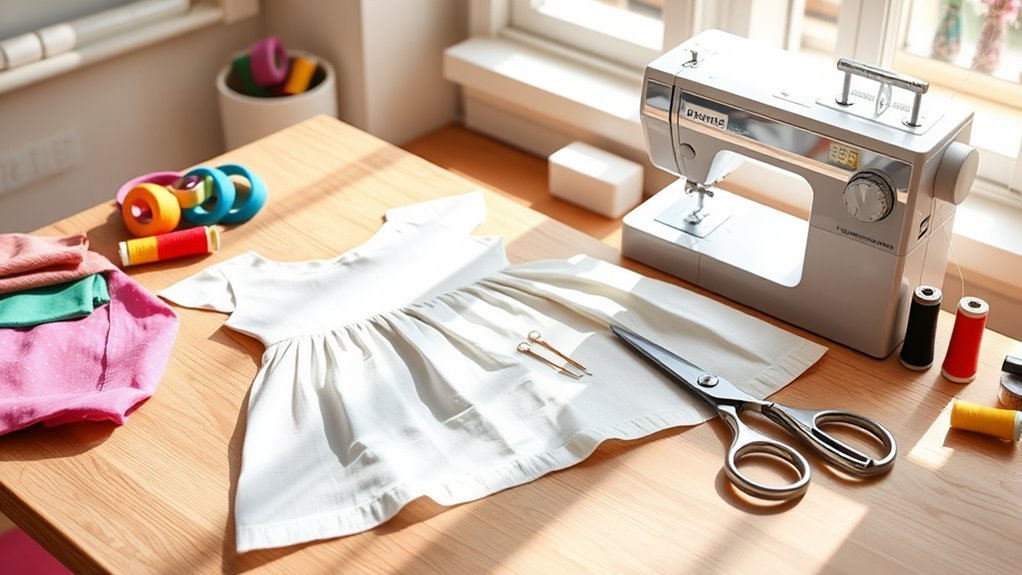
When you’re starting out, choosing simple patterns is key to building your sewing skills. Look for options that allow for easy customization.
Also, explore various fabric choices to make your projects uniquely yours. Let’s discuss how these elements can set you up for sewing success!
Simple Pattern Choices
Choosing the right patterns can make all the difference in your sewing journey, especially if you’re just starting out. Look for simple patterns like the Eureka Top or eSkirt, which feature straightforward shapes and minimal details.
These designs often come with clear, step-by-step instructions, perfect for building your confidence while learning to sew. Focus on sewing patterns that require basic techniques, such as straight stitching and simple hems, to master foundational skills.
Don’t overlook indie pattern designers; they offer trendy, beginner-friendly options with helpful resources and community support. Plus, they can add a fresh twist to your projects.
Finally, select patterns that allow for customization—experimenting with different fabric types or colors can make your sewing experience more enjoyable and personal. And don’t forget to use pattern weights for accuracy!
2. Exploring Fabric Options
Fabric can make or break your sewing experience, especially for beginners. Choosing the right fabric and patterns is really important for a smooth sewing process.
Here are some beginner-friendly fabric options and tips to get you started:
- Cotton or quilting cotton: These are easy to handle and pretty forgiving.
- Woven cotton or linen: These fabrics are stable and hold their shape well.
When it comes to patterns, go for simple ones. Look for designs with minimal pieces, like tops or skirts.
Also, digital patterns can be a great help! They often include detailed instructions and you can print them right at home.
3. Customization Techniques Available
Customization techniques can elevate your sewing projects, making them uniquely yours. For beginner sewing, start with simple patterns that feature basic shapes and minimal details, which are easier to modify.
Try pattern hacking by altering an existing design—add pockets or change the neckline to suit your style. Use forgiving fabrics like cotton and jersey, as they allow for easy alterations without fraying.
To further enhance your garment, incorporate embellishments like embroidery, appliqué, or fabric paint. These techniques not only make your sewing project stand out but also provide helpful sewing experiences, allowing you to learn essential skills while expressing your creativity.
Enjoy the process of making something truly special!
Print and Assemble Your Sewing Pattern
Before you immerse yourself in your sewing project, it’s important to print and assemble your sewing pattern accurately. Follow these steps to guarantee a smooth process:
Set your printer scale to 100% for accurate measurements. It’s a small step that makes a big difference.
Set your printer to 100% for precise measurements—it’s a crucial step for success in your sewing project.
Next, conduct a test print on a small section to verify dimensions. This way, you can be sure everything lines up before you print the whole pattern.
Trim the margins of each pattern piece for easier assembly. It helps keep things neat and manageable.
Use clear tape to join pieces, aligning indicators and notches carefully. Take your time here, so everything fits together just right.
Once you’ve completed the assembly, mark any necessary notations or cutting lines directly on the pattern. This will provide clearer guidance during cutting.
Prepare Your Fabric: Washing and Cutting Essentials
To guarantee your sewing project turns out as planned, washing your fabric before cutting is essential. Always prewash to prevent shrinkage and color bleeding, so your garment keeps its intended size and look.
Once it’s dry, use a measuring tape to check the fabric’s dimensions. This way, you can be sure you have enough material for your project.
Lay your fabric flat on a cutting surface and smooth out any wrinkles for precise measurements. It really helps to get those cuts just right.
Get familiar with the grainline too. Cutting patterns along the grain will make your final piece drape better and fit perfectly.
Finally, grab your sharp fabric scissors for clean cuts. Try not to cut through multiple layers at once—that keeps things accurate and prevents fraying.
Happy sewing!
How to Begin Your First Sewing Project?
Starting your first sewing project can feel challenging, but with the right preparation, it becomes an exciting journey. Here are some essential tips and tricks to kickstart your sewing adventure:
- Gather tools: Make sure you have a sewing machine, fabric scissors, pins, and a measuring tape ready.
- Choose a beginner-friendly pattern: Consider something simple, like the Eureka Top or Provence Bag, to master basic sewing techniques.
- Take accurate measurements: Measure your bust, waist, and hips to select the right pattern size for a proper fit.
- Prewash and iron your fabric: This prevents shrinkage and helps with accurate cutting, ensuring your first garment looks great.
Sewing Finishing Techniques to Enhance Your Garment
Once you’ve tackled your first sewing project and mastered the basics, enhancing your garment with finishing techniques can really elevate your work to a professional level. Start by finishing seams with a zig-zag or overlock stitch to prevent fraying.
Regularly press seams open or to one side for crisp lines. This little step can improve the overall look a lot.
For hems, try hemming techniques like blind hems or double-fold hems to create a polished edge. You might also consider bias tape application to finish raw edges stylishly, which adds stability to curves.
Finally, incorporate topstitching along seam lines or hems. This not only reinforces these areas but also enhances the garment’s design.
These techniques don’t just improve durability—they give your creations a refined, professional touch. Easy changes, big difference!
Troubleshooting Common Sewing Challenges
Sewing can be a rewarding hobby, but it often comes with its own set of challenges that can frustrate even the most enthusiastic beginner. Here’s how to troubleshoot some common issues:
- Fabric Puckering: Adjust the upper thread tension for even stitches.
- Thread Breakage: Use the correct needle size and type for your fabric.
- Misaligned Seams: Unpick the seam and resew, aligning edges with pins.
- Skipped Stitches: Check your needle; replace it if it’s dull or improperly inserted.
For tension issues, consult your sewing machine manual to adjust the tension dial. Always test on scrap fabric first to avoid complications during your project.
With practice, you’ll overcome these challenges and enjoy your sewing journey!
Frequently Asked Questions
What Type of Sewing Machine Is Best for Beginners?
A basic mechanical sewing machine is best for beginners. It’s user-friendly, affordable, and versatile.
Look for features like a straight stitch, zigzag stitch, and easy threading. You’ll enjoy learning with a reliable, straightforward machine.
It makes getting started less intimidating, and you can focus on mastering the basics without any fuss. Give it a try—you’ll be surprised how quickly you pick things up!
How Do I Choose the Right Fabric for My Project?
When choosing fabric, consider that 60% of sewing success comes from selecting the right material. Think about your project’s purpose, feel, and drape.
Don’t forget to check the care instructions for maintenance ease! It really makes a difference when you know how to take care of your fabric.
Can I Sew Without a Sewing Machine?
Yes, you can sew without a sewing machine! Hand sewing is a great alternative.
Just grab a needle, thread, and fabric, then use basic stitches to create your project.
It’s a rewarding and satisfying experience! Give it a try—you might really enjoy it.
What Are the Best Sewing Tools for Beginners?
The best sewing tools for beginners include sharp scissors, measuring tape, pins, a seam ripper, and needles.
Don’t forget a good fabric marker and a sturdy sewing box to keep everything organized and accessible.
These basics will make your sewing projects so much easier to manage. Plus, having the right tools on hand keeps things fun and frustration-free!
How Do I Maintain My Sewing Machine?
To maintain your sewing machine, clean it regularly, oil moving parts, and replace needles as needed. Check tension settings and keep the machine covered when not in use to prevent dust buildup.
It’s a good idea to get into the habit of doing these things often. That way, your machine will run smoothly and last longer. Plus, it helps avoid any unexpected problems when you’re in the middle of a project!
Conclusion
Now that you’ve got the basics down, it’s time to let your creativity shine. Remember, every stitch tells a story—yours is just beginning.
Embrace the learning process, and don’t be afraid to make mistakes; they’re the stepping stones to mastery. As you sew, you’ll not only create garments but also weave confidence into your journey.
So grab your fabric, and let your imagination run wild. The world of sewing awaits your unique touch! Learning to sew clothes is a rewarding adventure that builds skills and self-expression. With each project, you’ll grow more comfortable and inspired, turning simple fabrics into stylish outfits. Keep practicing, stay curious, and enjoy every step of your sewing journey!