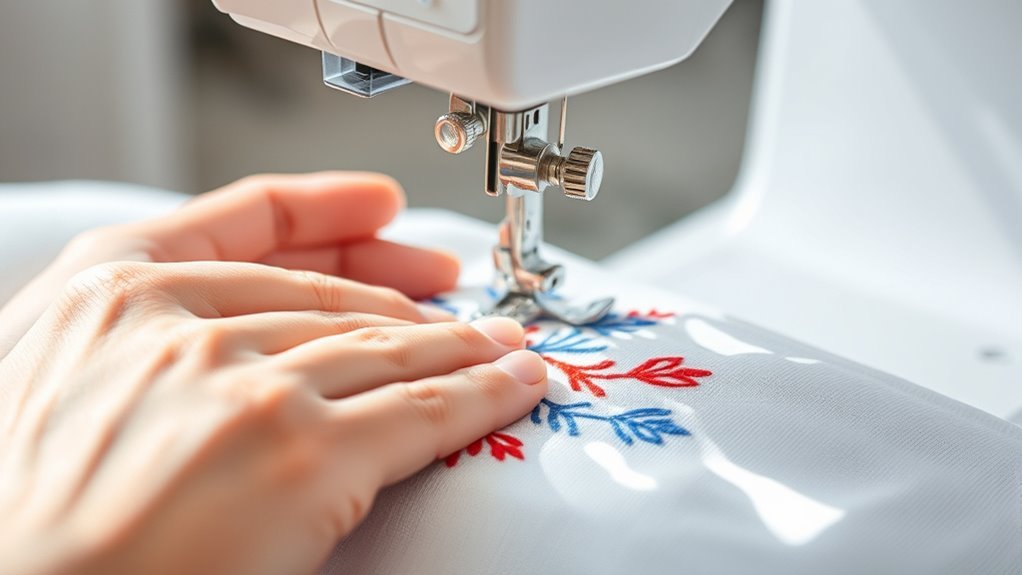
How to Embroider With a Sewing Machine in 3 Easy Steps
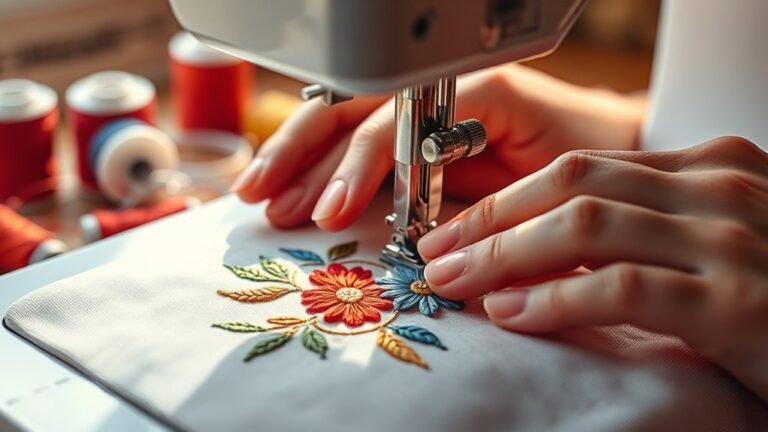
To embroider with a sewing machine, start by equipping it with the right foot and a ballpoint needle. Set the stitch length to zero to keep your stitches tight and neat.
Next, turn off the machine and thread it carefully. Hoop your fabric snugly to ensure it stays in place while you work.
Finally, adjust the tension settings and practice controlling stitches. With steady hands and a bit of creativity, you can elevate your embroidery projects.
If you’re curious about tips and techniques to boost your embroidery skills, there’s plenty more to explore!
Key Takeaways
- Equip your sewing machine with an open toe presser foot and a ballpoint needle suitable for knit fabrics.
- Prepare the fabric in the embroidery hoop, making sure it’s taut but not overstretched.
- Adjust the stitch length to zero for free motion. Also, set the thread tension around three to get quality results.
- Try a test stitch on some scrap fabric first. This way, you can double-check your settings before you start your embroidery project.
- Keep a steady hand and move the fabric smoothly under the needle. This helps you place your stitches precisely throughout the embroidery process.
How to Prepare Your Sewing Machine for Embroidery?
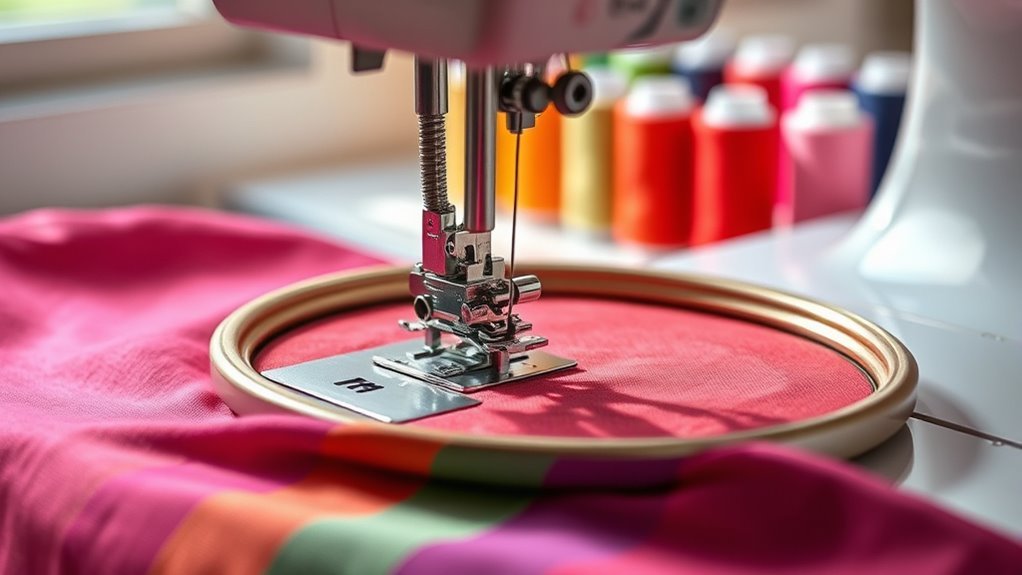
Preparing your sewing machine for embroidery is essential for achieving beautiful results. Start by equipping your machine with an open toe quilting and embroidery presser foot. This improves visibility while you stitch.
Use a ballpoint needle to protect knit fabrics and prevent damage during the process. Next, set your machine’s stitch length to zero or as close as possible for smooth, consistent stitches.
Using a ballpoint needle ensures your knit fabrics remain safe, while a stitch length of zero guarantees smooth, consistent results.
Don’t forget to adjust the top thread tension, typically around three, to guarantee quality results. Finally, drop the feed dogs or cover them with a plate to allow free movement of the fabric during embroidery.
With these adjustments, you’ll be ready to create stunning designs effortlessly. It’s easier than you think once you get the hang of it!
How to Thread Your Machine and Get Your Fabric Ready?
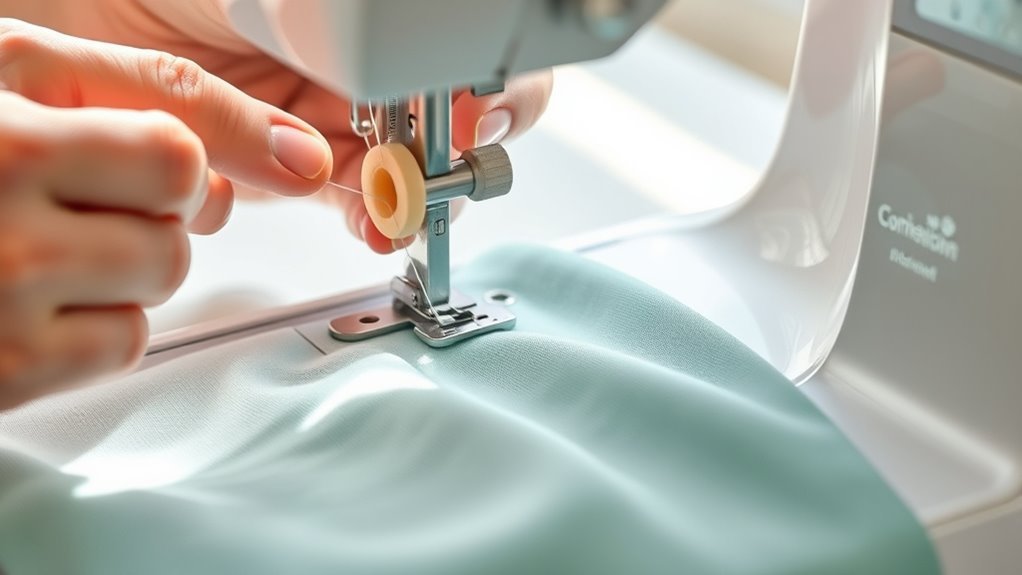
Threading your sewing machine and getting your fabric ready is an essential step in achieving great embroidery results. Follow these steps to prepare:
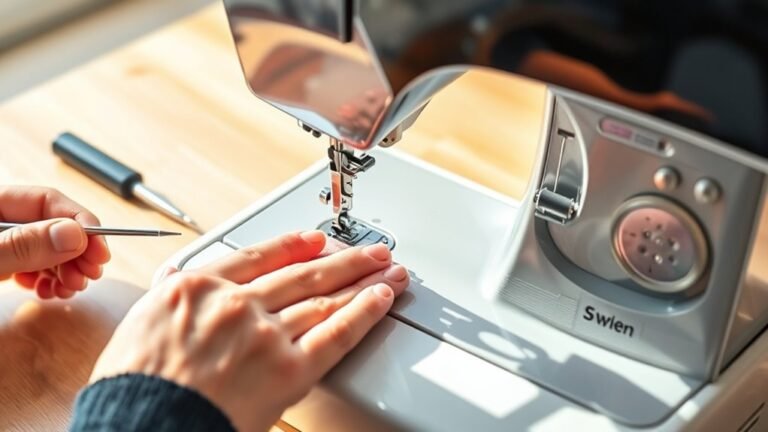
First, turn off and unplug your machine before threading. Always check your machine’s manual for threading diagrams and bobbin thread instructions.
Use a ballpoint needle for knit fabrics and make sure to install it securely. Then, place your fabric in the embroidery hoop, making sure it’s taut but not overly stretched.
Adjust the machine’s tension settings, typically starting at three for most projects.
Once you’ve got everything set up, you’re ready to start embroidering. With these preparations, you’ll guarantee smooth operation and beautiful results on your fabric in any direction!
Control Stitches and Explore Designs
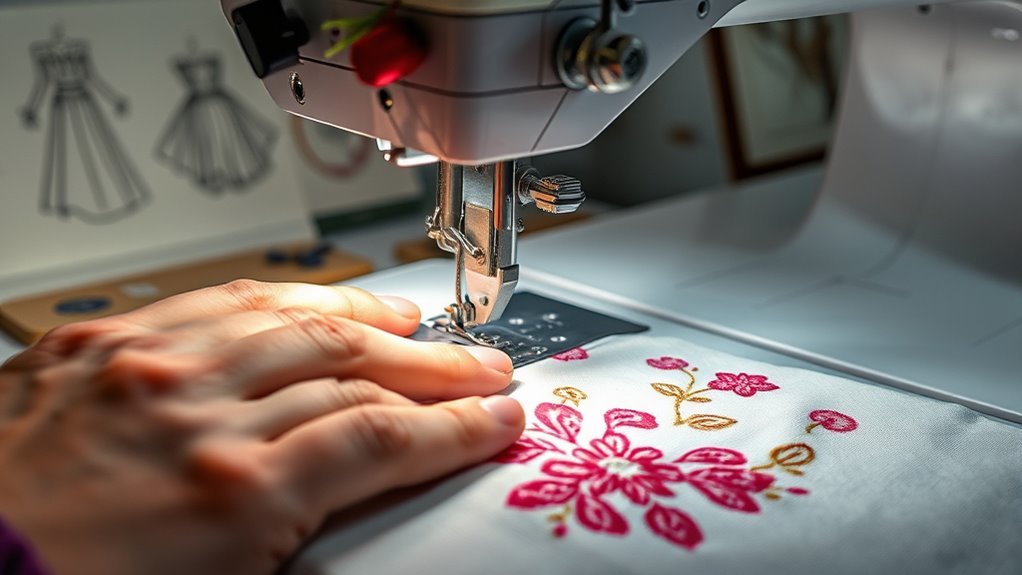
As you plunge into the world of embroidery, mastering stitch control and exploring diverse designs are key to releasing your creativity. Start by adjusting your machine’s stitch length and width settings to achieve different effects, especially setting it close to zero for free motion work.
Experiment with various stitch types like satin, tatami, and zig-zag to reveal unique design possibilities. Tweak your top thread tension through trial and error for consistent, smooth stitches.
Practice moving the fabric steadily under the needle to guarantee precision in stitch placement. By incorporating decorative elements and combining different stitch techniques, you’ll enhance your projects, adding a personal touch that showcases your individuality in machine embroidery.
Frequently Asked Questions
What Type of Thread Is Best for Machine Embroidery?
For machine embroidery, use polyester thread. It’s strong, colorfast, and resists fading.
Cotton can work too, but it’s less durable. Always match your thread weight to your fabric for the best results.
This way, your embroidery will look great and last longer!
Can I Use Any Fabric for Embroidery?
Using any fabric for embroidery is like choosing a canvas for painting; some work better than others. You can experiment, but fabrics like cotton and linen generally yield the best results for machine embroidery.
Honestly, it’s all about what you want to achieve. Some fabrics might be tricky to work with, but don’t let that stop you from trying new things!
How Do I Clean My Machine After Embroidery?
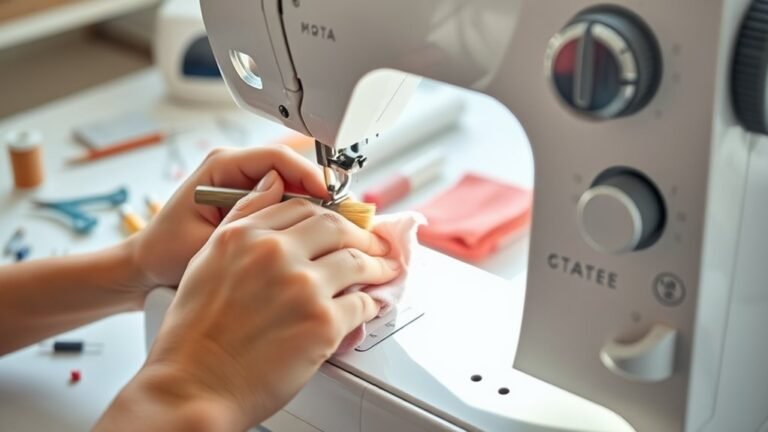
After embroidery, you should unplug your machine. Then, remove the needle and presser foot.
Next, clean the bobbin area and feed dogs with a brush. This helps get rid of any lint or thread bits.
Finally, wipe the exterior with a soft cloth. This keeps your machine looking spotless and well-maintained.
What Should I Do if the Thread Keeps Breaking?
If the thread keeps breaking, check your needle for damage, verify it’s the right type, and rethread the machine.
Also, adjust the tension and use high-quality thread for smoother stitching.
Don’t forget to clean your machine! It really helps keep everything running smoothly.
How Can I Fix Uneven Stitches in My Embroidery?
To fix uneven stitches, check your tension settings and verify the thread is properly threaded. Adjust the stitch length if needed, and make sure you’re using the right needle for your fabric type.
If the stitches still look off, try rethreading your machine or changing the thread. Sometimes, a simple tweak can make a big difference! Don’t forget to test on a scrap piece of fabric before starting your project.
Conclusion
Now that you’ve opened up the art of machine embroidery, think of your sewing machine as a canvas and your thread as vibrant paint. Each stitch is a brushstroke, weaving together your creativity and skill.
With practice, you’ll transform simple fabric into a tapestry of self-expression, just like a garden blooming with colors. Embrace the journey, let your imagination guide you, and watch your ideas blossom into beautiful, embroidered creations that tell your unique story.
Machine embroidery is a fantastic way to personalize your projects and add a professional touch. Keep experimenting with different threads, fabrics, and designs, and soon you’ll master the craft. Remember, every stitch you sew with your sewing machine brings your creativity to life, making your embroidery truly one-of-a-kind.