What Can a Sewing Machine Do for Embroidery?
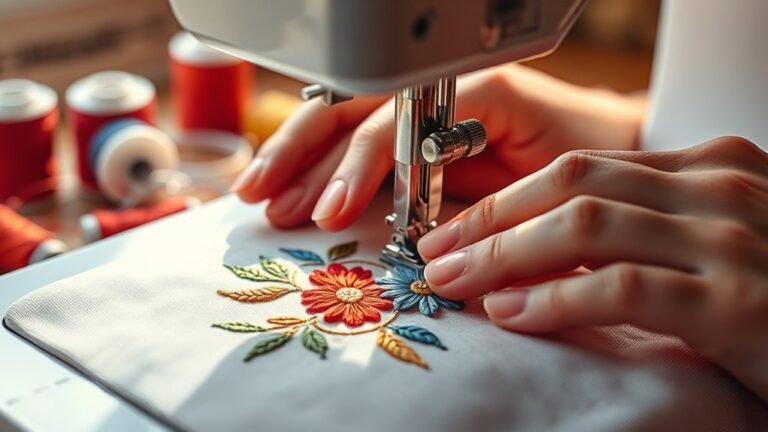
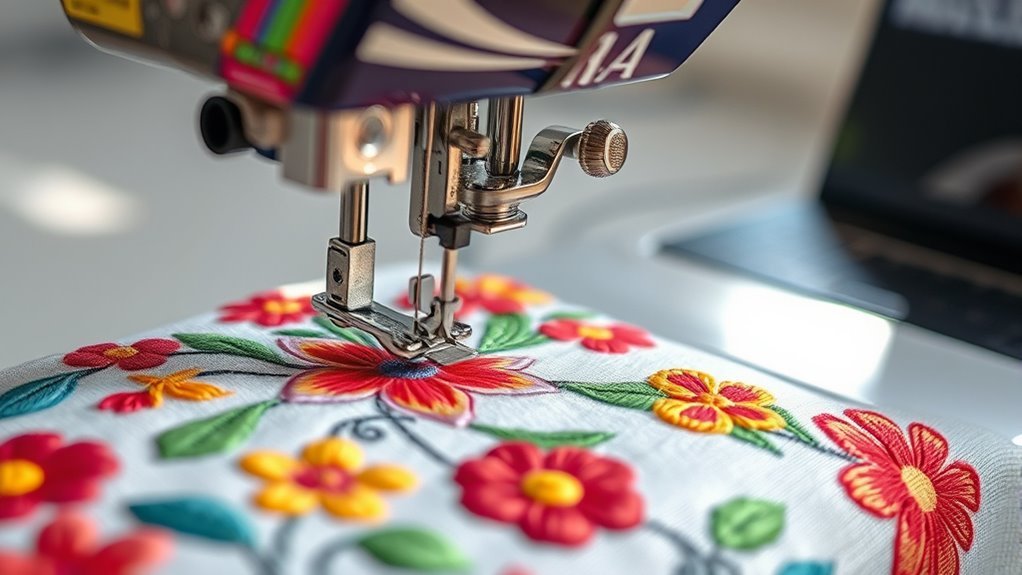
You can use a sewing machine to create basic embroidery by adding decorative stitches like zigzag, scallops, and floral motifs to your fabric projects. These machines are perfect for adding a personal touch with simple textures and unique details. They allow you to manually apply appliqué pieces and combine stitching for personalized embellishments.
While a sewing machine won’t handle complex, multi-color designs like dedicated embroidery machines, it’s still a great tool for beginners or crafters looking to enhance their projects. If you want to discover tips and tricks to improve your sewing embroidery skills, keep exploring what these machines can do.
You’ll find plenty of ways to make your fabric projects stand out with just a little creativity!
Key Takeaways
– Sewing machines offer various built-in decorative stitches that are perfect for adding simple embroidery embellishments.
They let you get creative without needing extra tools.
– You can also do appliqué by manually sewing fabric pieces with decorative stitches.
This is great for personalized designs that really stand out.
– The adjustable stitch width and length give you control to customize texture and detail.
So, you can create embroidery-like effects that suit your style.
– However, sewing machines don’t support digital embroidery files.
That means they can’t make complex multi-color designs like specialized embroidery machines.
– To get the best results, use quality thread and stabilize your fabric properly.
This helps your embroidery stitches last longer and look nicer.
Understanding the Embroidery Capabilities of Sewing Machines
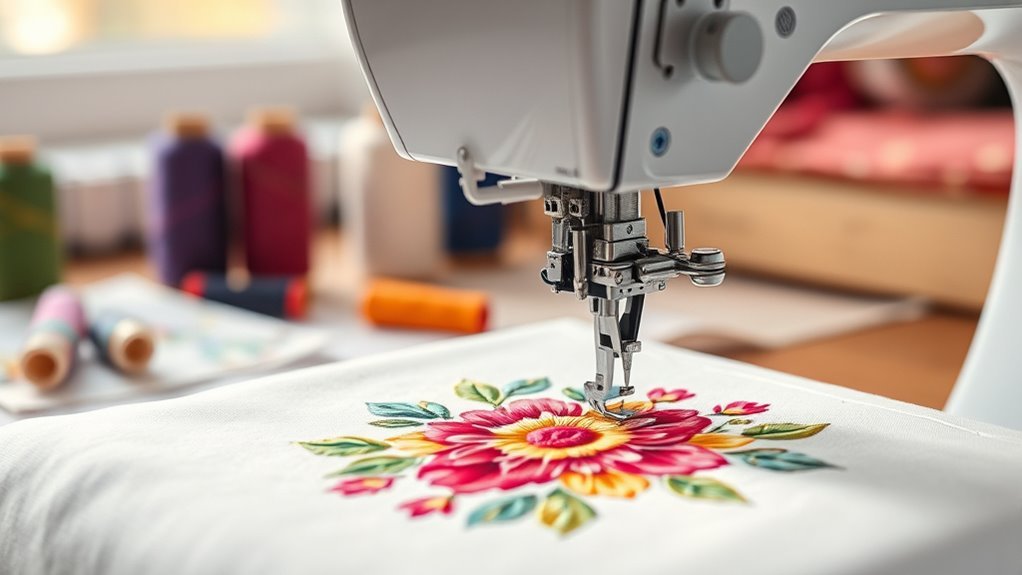
Although most basic sewing machines don’t support intricate embroidery, you can still use some advanced models to add simple decorative motifs. These sewing machines often include built-in embroidery functions that let you enhance your projects without needing a separate embroidery machine.
However, their embroidery design options remain limited to straightforward patterns and single-color stitching. If you want to create complex logos or multi-color designs, a traditional sewing machine won’t cut it—you’ll need one with specialized embroidery modules or a combination model.
While sewing machines handle appliqué and decorative stitches well, they primarily focus on basic sewing tasks rather than automated embroidery. Understanding these capabilities helps you choose the right machine for your embroidery needs.
Types of Decorative Stitches Available on Sewing Machines
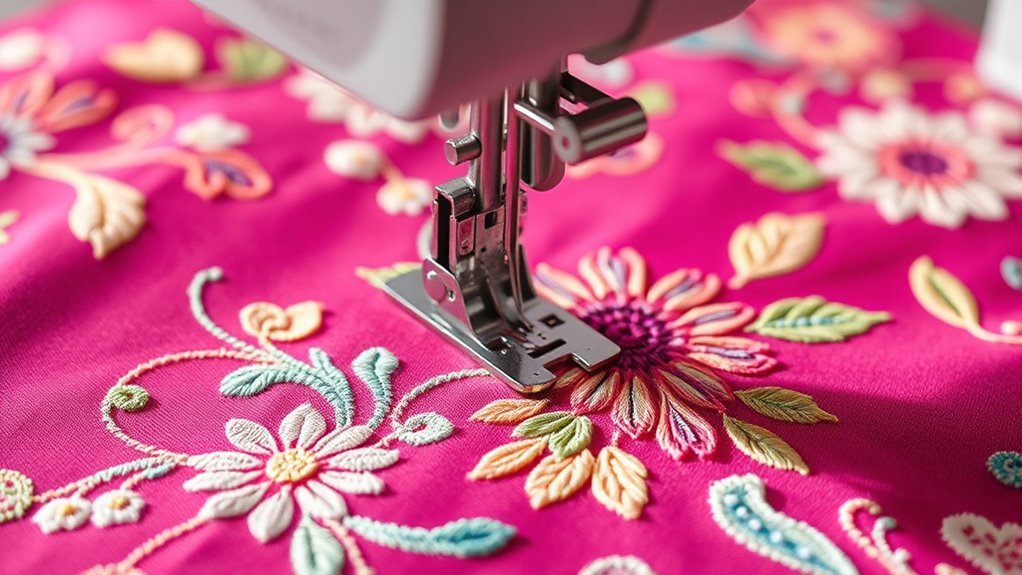
When you explore the decorative stitches available on sewing machines, you’ll find a wide range of patterns designed to enhance your fabric projects. Many machines come with numerous built-in decorative stitches, offering extensive design options that let you personalize your work effortlessly.
You can adjust stitch width and length to add texture and detail, making each design unique. Some advanced models even let you create custom stitches via software or onboard controls.
Common decorative stitches include:
- Zigzag, for flexible, bold accents
- Serpentine, adding flowing curves
- Floral motifs, perfect for delicate embellishments
- Scallop edges, giving a classic finish
These built-in stitches mimic embroidery effects, expanding your creative toolkit beyond basic sewing. Pretty neat, right?
Using Sewing Machines for Appliqué and Basic Embellishments
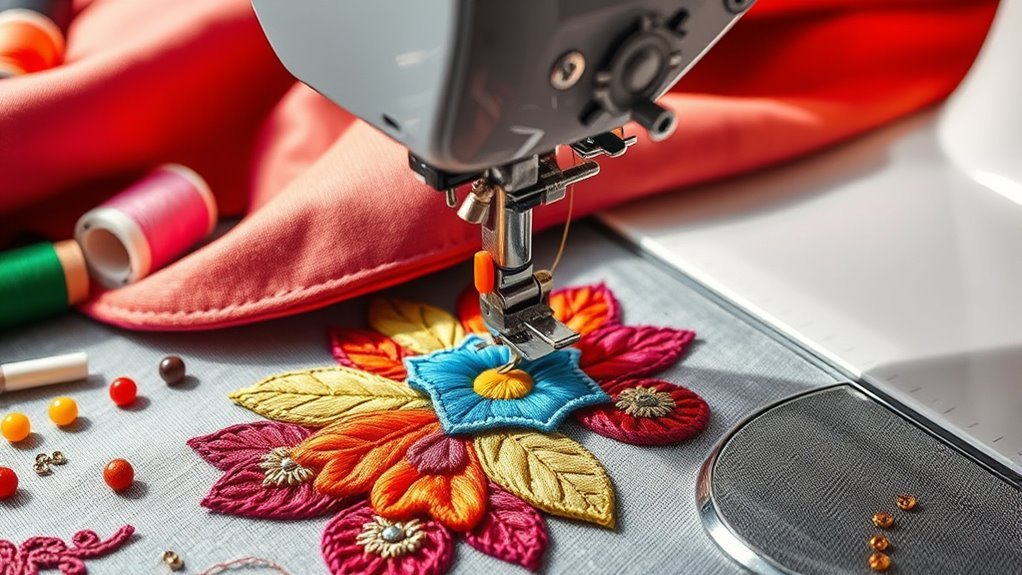
If you want to add personalized flair to your fabric projects, sewing machines let you create appliqué and basic embellishments with ease. You’ll manually place and pin appliqué fabric pieces, then stitch around them to secure and highlight your design.
While slower than embroidery machines, your sewing machine offers precise control for custom appliqué shapes. Plus, you can easily add decorative stitches like zigzags and satin stitches to enhance your work.
| Feeling | Result |
|---|---|
| Satisfaction | Mastering appliqué |
| Creativity | Unique embellishments |
| Pride | Personalized projects |
| Confidence | Precise control with your sewing machine |
Combining Sewing and Embroidery for Personalized Projects
You can take full advantage of sewing-embroidery machines that switch easily between modes to create personalized projects with unique designs and professional finishes. Whether you’re making monogrammed apparel or custom home décor, knowing which fabrics work best will help your creations stand out.
Let’s explore how combining these skills and tools opens up endless possibilities for your projects. It’s pretty exciting to see what you can make when you mix sewing and embroidery together!
Sewing-Embroidery Machine Benefits
Although traditional sewing machines handle fabric joining and edge finishing well, combining sewing and embroidery functions in one machine enables new creative possibilities.
When you use dual-purpose sewing-embroidery machines, you get the best of both worlds. You can easily switch between sewing and embroidery modes to create your own designs that really stand out.
These machines let you personalize projects with seamless fabric joining and intricate embroidery details.
With sewing and embroidery combined, you can add appliqué designs with precision and speed, stitch decorative motifs alongside functional seams, and effortlessly layer fabrics for complex patterns.
Plus, you can customize clothing and accessories with unique embellishments.
This versatility makes your creative process faster and more enjoyable, turning your ideas into personalized masterpieces.
Personalized Project Ideas
Combining sewing and embroidery opens up countless opportunities to create personalized projects that truly reflect your style. You can use your sewing machine to attach embroidered patches or appliqué pieces onto clothing, turning simple garments into unique statements.
By adding decorative stitches around embroidery designs, you enhance their visual appeal and give your projects a professional finish. Whether you’re monogramming towels, crafting custom bags, or designing home décor, sewing machines help you assemble and finish your personalized projects with precision.
You can also sew backing and stabilizers before stitching, ensuring your fabric stays supported for crisp embroidery. This blend of sewing and embroidery lets you bring intricate, tailored creations to life, making every project uniquely yours.
Fabric Compatibility Tips
When selecting fabrics for projects that blend sewing and embroidery, understanding their compatibility is key to achieving professional results. Choose fabrics that support both stitching and embellishment without puckering or damage.
Keep these tips in mind:
- Use lightweight, stable fabrics like cotton or linen for smooth embroidery and sewing.
- Match needles and stabilizers to your fabric type—ballpoint needles and stretch stabilizers work best on stretchy or delicate fabrics.
- For heavy fabrics such as denim or leather, pick stronger needles and reinforced stabilizers to handle thickness and tension.
- Always hoop fabric properly and adjust machine tension to ensure clean, secure stitches.
Limitations of Sewing Machines Compared to Dedicated Embroidery Machines
You’ll notice sewing machines can’t match the intricate stitch complexity that dedicated embroidery machines handle with ease. They don’t support digital design files, which limits your ability to customize and automate patterns.
This means you’ll face constraints if you want detailed, multi-color embroidery. So, if you’re aiming for really elaborate designs, a dedicated embroidery machine might be the way to go.
Stitching Complexity Limits
Although sewing machines can handle basic stitching tasks, they fall short when it comes to reproducing intricate, multi-color embroidery designs. When you rely on a standard sewing machine for machine embroidery, you’ll notice several stitching complexity limits that affect the final look of your designs.
For example, sewing machines offer limited stitch options, which restricts detailed and colorful patterns. They also require manual guidance, which reduces precision on complex digitized designs.
Plus, sewing machines struggle with multi-directional or continuous stitches needed for elaborate embroidery. Their hooping systems tend to be less stable, causing alignment issues on intricate work.
All these factors mean that while sewing machines work well for simple stitching, they can’t match the sophistication and accuracy needed for advanced embroidery designs. So, if you want detailed, professional-quality machine embroidery, a dedicated embroidery machine is the better choice.
Lack of Digital Integration
Since most sewing machines lack digital interfaces, they can’t import or execute complex embroidery designs automatically. You won’t be able to load files like .DST or .PES, which means your machine can’t handle design digitization or sophisticated stitching patterns on its own.
Unlike dedicated embroidery machines, sewing machines don’t support multi-color, multi-directional stitching or intricate details needed for professional embroidery. Without specialized hoops and stabilization systems, achieving precision is tough.
Additionally, sewing machines don’t come with dedicated digitizing software, so you can’t create or modify embroidery designs directly on them. If you want seamless digital integration and advanced embroidery capabilities, a dedicated embroidery machine will serve you better than a standard sewing machine.
Tips for Maximizing Embroidery Results With a Sewing Machine
When aiming to maximize your embroidery results with a sewing machine, choosing the right thread and properly stabilizing your fabric make a significant difference in stitch quality and durability. To get the best from your embroidery machine, pay attention to these key practices:
- Use high-quality, compatible threads to ensure smooth, lasting stitches.
- Practice consistent fabric hooping to keep your material taut and prevent puckering.
- Experiment with decorative stitches by adjusting stitch length and width for unique patterns.
- Incorporate sewing machine embroidery templates or free-motion techniques to create detailed designs.
Additionally, adjusting tension settings and combining zigzag or satin stitches with fabric manipulation can elevate your custom embellishments.
Following these tips helps you achieve professional-looking embroidery with your sewing machine every time.
Frequently Asked Questions
Can a Sewing Machine Also Do Embroidery?
You can do embroidery with some advanced sewing machines that have built-in embroidery features or removable units.
However, most basic machines don’t support detailed embroidery since they lack multi-color and digitized stitching capabilities.
What Are Five Types of Embroidery?
Imagine stitching stories with threads—five types shine: surface embroidery paints fabric directly, cutwork carves lace-like designs, appliqué layers fabric pieces.
3D foam adds height, and free-standing lace weaves standalone masterpieces you can proudly display. Each style brings its own unique charm to your fabric canvas.
How Much Does an Embroidery Machine Cost?
Embroidery machines cost anywhere from $300 for basic models to over $10,000 for commercial-grade ones.
You’ll find combo sewing and embroidery machines between $500 and $2,000, depending on features and brand reputation.
How to Use an Embroidery Machine for Beginners?
Using an embroidery machine is like learning to ride a bike—you start slow. Read your manual carefully to understand the basics, and make sure to hoop your fabric tightly.
Next, load your design into the machine, then attach the embroidery foot. When you start stitching, keep an eye on the thread tension.
Don’t worry if it feels tricky at first—you’ll get the hang of it quickly! Just take your time and enjoy the process.
Conclusion
You might be surprised to learn that over 70% of sewing machine users incorporate embroidery into their projects, showing just how versatile these machines can be. While they may not match the precision of dedicated embroidery machines, sewing machines offer plenty of creative possibilities—from decorative stitches to appliqué.
By experimenting with your machine’s features and combining techniques, you can add unique, personalized touches that make your handiwork truly stand out. Keep exploring, and your embroidery skills will only grow!
Whether you’re a beginner or more advanced, using a sewing machine for embroidery opens up a world of creative opportunities. It’s a fantastic way to add texture, color, and personality to your fabric projects without needing specialized equipment. So grab your sewing machine, have fun with embroidery, and watch your projects come alive with beautiful, customized designs!