How Do You Sew Knit Fabric Step by Step
To sew knit fabric, first choose a suitable knit with the right stretch and pre-wash it to prevent shrinkage. This step is super important because knit fabrics behave differently than woven ones. You want to make sure your fabric is ready to go before cutting and sewing.
Next, find and mark the greatest stretch direction, then cut the fabric aligning the pattern accordingly. This helps your garment keep its shape and fit comfortably.
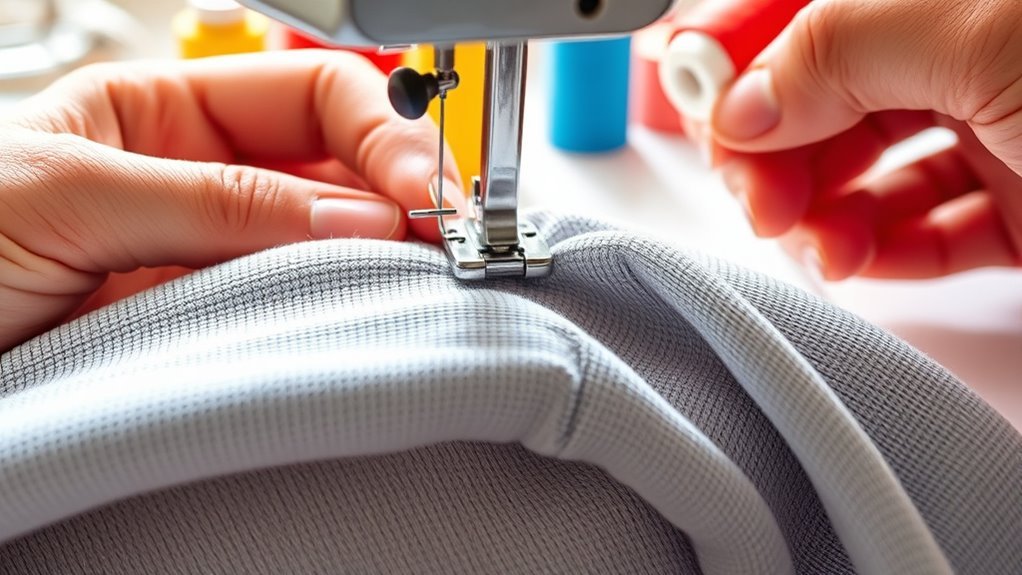
Set your machine with a ballpoint needle and stretch stitch, lowering tension to avoid puckering. Using polyester stretch thread is key because it moves with the fabric without breaking.
Sew seams gently to maintain the fabric’s flexibility. Finish hems with a twin needle for a professional look that stretches too. Keep your fabric stable while sewing and always test your settings on scraps first.
There’s plenty more to master for perfect knits, but these basics will get you started on the right foot!
Key Takeaways
– Pre-wash and gently iron knit fabric to prevent shrinkage and smooth wrinkles before cutting and sewing.
This step helps your garment keep its shape after washing. It’s a simple way to avoid nasty surprises later on.
– Identify and align the fabric’s greatest stretch direction with the pattern for proper fit and comfort.
Make sure the stretch goes where you need it most. This will give your finished piece a better fit and feel.
– Use ballpoint or stretch needles and high-quality polyester stretch thread to avoid skipped stitches and fabric damage.
These tools are designed to work with knit fabrics, so they keep your sewing smooth and snag-free.
– Select a stretch stitch or narrow zigzag stitch with adjusted tension to allow seams to stretch without puckering.
This keeps your seams flexible, so they move with the fabric instead of breaking or bunching up.
– Sew seams with light fabric stretch, finish edges with zigzag or serger, and use twin needles for stretchable hems.
Stretch the fabric just a little as you sew, and finish the edges nicely to prevent fraying. Twin needles make hems look professional and stretchy.
Choosing the Right Knit Fabric for Your Project
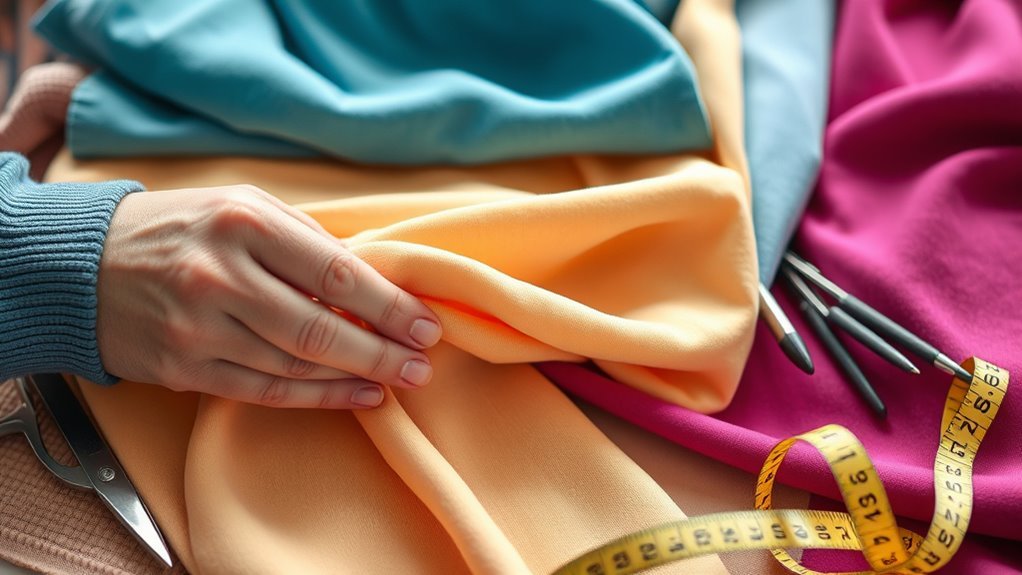
How do you pick the perfect knit fabric for your project? Start your fabric selection by considering the weight and fiber content. Lightweight jerseys offer great drape, while heavier ponte knits provide stability and structure.
Look closely at the stretch percentage; fabrics with high stretch and elasticity (around 75-100%) are best for fitted garments, while lower stretch suits relaxed styles. Single knits tend to curl and stretch more, whereas double knits like interlock offer better stability.
Pay attention to fiber content—natural fibers like cotton ensure softness and breathability, while synthetic blends add durability. Don’t forget to pre-wash your knit fabrics to avoid shrinkage and maintain shape.
This careful approach helps you choose a fabric that matches your design and fits perfectly. It’s all about finding that right balance for your project!
Preparing Knit Fabric Before Sewing
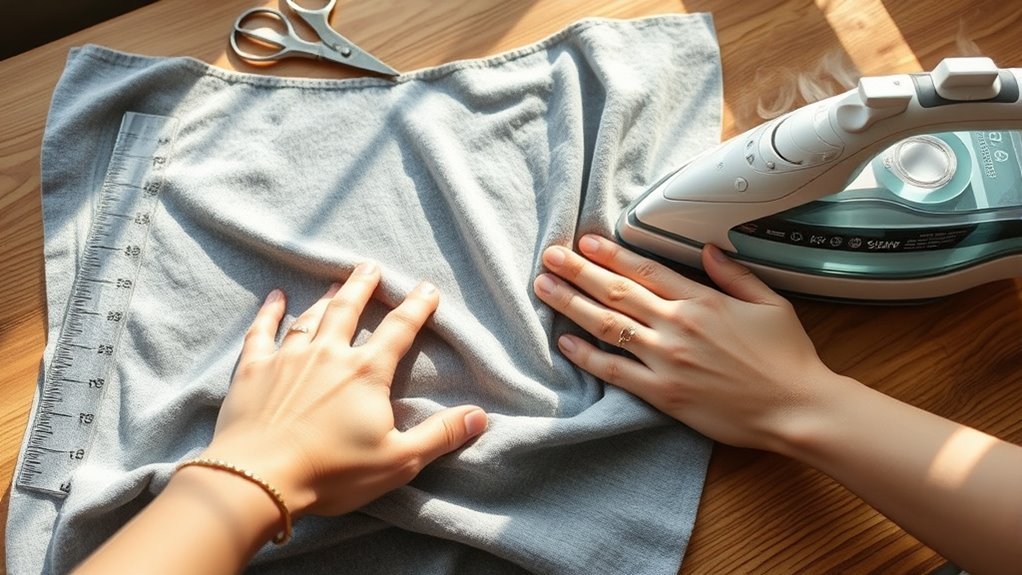
Once you’ve chosen the ideal knit fabric, prepping it properly sets the stage for smooth sewing. Start by washing and drying the fabric to remove chemicals and prevent any unexpected shrinkage later.
Next, gently iron the knit, stretching it lightly to smooth wrinkles and curls, ensuring a flat surface for cutting. To find the fabric’s true grain, fold the selvages together and adjust until it hangs flat with minimal ripples.
This helps you maintain control during cutting and sewing. Using spray starch or a fabric relaxer can reduce curling edges, making handling easier.
Lay the knit fabric on a clean, flat surface and cut along the on-grain line for accurate pattern alignment and ideal stretch. This sets you up for successful sewing.
Identifying and Aligning the Direction of Greatest Stretch
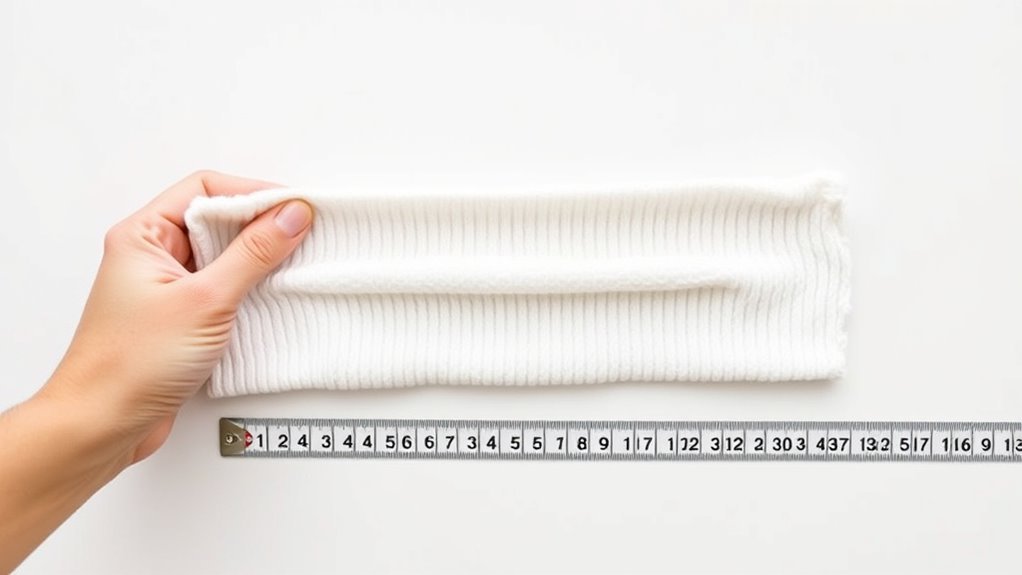
You’ll want to start by finding the direction your knit fabric stretches the most—this is key for a great fit. Aligning your pattern pieces with that stretch guarantees your garment moves comfortably with your body.
Adjust your pattern placement based on the stretch to get the drape and fit just right. It really makes a difference when everything lines up with that stretch direction.
Finding Fabric Stretch Direction
Where does your knit fabric stretch the most? To find the fabric stretch direction, perform a simple stretch test: gently pull the knit fabric along different grainlines—horizontal, vertical, and diagonal.
Most knits stretch the greatest stretch horizontally across the width, but some, especially those with spandex, may stretch more vertically. Mark each direction and observe which offers maximum, consistent stretch during your fabric analysis.
This stretch direction is vital for your pattern layout and cutting layout. Align pattern pieces along the fabric grain that matches the greatest stretch to ensure proper fit and comfort.
Ignoring the stretch direction can cause puckering seams or restrict movement. By identifying and following the fabric’s stretch direction, you’ll achieve a professional finish with your sewn knit garment.
Importance of Stretch Alignment
Identifying the fabric’s direction of greatest stretch (DOGS) guides how you align your pattern pieces for sewing. When working with knit fabric, stretch alignment is vital to ensure proper fit and fabric recovery. Gently pull the fabric in different directions to find the DOGS—most knits stretch horizontally across the grainline.
Matching the pattern’s stretch direction with the DOGS during cutting fabric prevents distortion and fit issues. For sewing knits, aligning the pattern placement with the DOGS allows the garment to stretch where needed and recover its shape. While most fabrics stretch cross-grain, some two-way stretch knits also stretch vertically, so always check.
Proper stretch alignment ensures your garment performs as intended, making your sewing knits project successful and comfortable. It’s a small step that makes a big difference!
Adjusting Pattern Placement
Since the stretch direction affects how your garment fits and moves, you need to carefully align your pattern pieces with the fabric’s Direction of Greatest Stretch (DOGS). Start by identifying the DOGS on your knit fabric: gently pull the stretch fabric in various directions to find where fabric elongation is greatest, often parallel to the selvage or along the grainline.
Mark this direction clearly. When adjusting pattern placement, position your pattern pieces so the DOGS align with the intended body movement—usually the horizontal stretch for fitted garments.
Arrange your cutting layout to ensure proper seam alignment and pattern matching along the fabric stretch. This precise pattern placement helps maintain fit, comfort, and durability, making the most of your knit fabric’s properties for a professional finish.
Cutting Knit Fabric Accurately
How do you guarantee your knit fabric is cut accurately? Start by folding the fabric to align the selvages, ensuring the grainline is true and ripples are minimized.
Identify the Direction of Greatest Stretch (DOGS) and position your pattern so the stretch runs horizontally unless otherwise directed. Secure the pattern with pattern weights or pins to prevent shifting.
Keep these tips in mind: Use sharp scissors or a rotary cutter for clean fabric edges and precise cutting. Cut slightly outside pattern markings to allow seam allowances, avoiding stretching while cutting.
For slippery knits, cut on a single layer to maintain accuracy.
Following these steps ensures your cutting respects the fabric’s stretch and grainline, setting you up for a flawless sew.
Setting Up Your Sewing Machine for Knit Fabrics
Before you start sewing, make sure you choose the right needle, like a stretch or ballpoint, to protect your knit fabric.
Next, pick a stitch type that allows the fabric to stretch, such as a narrow zigzag or a stretch stitch.
Finally, adjust your machine’s tension and stitch width to match the fabric’s weight for smooth, durable seams. Easy, right? Just a few tweaks and you’re good to go!
Needle Selection Guide
What needle should you choose when sewing knit fabrics? Opt for a ballpoint or stretch needle to guarantee smooth penetration without damaging the fibers. Typically, size 75/11 works well for lightweight knits, while thicker or spandex-rich fabrics need larger sizes.
Proper needle selection directly impacts stitch quality and prevents skipped stitches. So, picking the right one really makes a difference!
Keep these tips in mind for needle insertion and maintenance: Insert the needle with the flat side facing the machine’s back, ensuring it’s fully seated and tightened. This helps avoid any sewing mishaps.
Use a stretch needle for fabrics with high elastane to avoid skipped stitches. Also, remember to replace your needle regularly—after about 6-8 hours of sewing or if you notice pulls or snags.
Choosing the right needle type and size is key for flawless sewing with knits. It’s a simple step that really pays off!
Stitch Type Choices
Choosing the right needle sets the foundation, but selecting the proper stitch type guarantees your seams stretch without breaking. For knit fabric, set your sewing machine settings to a narrow zigzag stitch with a width of 1–1.5 mm and stitch length of 2.2–2.5 mm. This allows the seam allowance to flex as the fabric moves.
If your machine offers a stretch stitch or lightning stitch, use it—they’re designed to stretch without puckering. When hemming or topstitching, try a twin needle with a stretch needle for parallel rows that keep the stretch intact.
Always test stitch tension and stitch length on scrap knit fabric first to ensure smooth, durable stretch stitches. These choices safeguard your seams and enhance garment comfort.
Machine Tension Adjustment
How do you guarantee your stitches stretch smoothly without puckering when sewing knit fabrics? The key lies in proper sewing machine tension and tension adjustment. Start by lowering your tension dial to around 2.5–3 to prevent seam puckering and allow fabric stretch.
Choose stretch stitches with a stitch length of 2.2–2.5 mm and a width of 1–1.5 mm, adjusting based on the knit fabric’s weight.
Before sewing your project, test tension settings on a scrap to ensure ideal stitch quality. For lightweight or high-spandex knits, reduce tension further and consider a ballpoint needle.
Remember to fine-tune tension and stitch length as you sew, especially when switching fabrics or using twin needles.
- Adjust tension dial for stretch stitches
- Test on scrap knit fabric
- Modify stitch length to match fabric stretch
Selecting Appropriate Needles and Threads
Although sewing knit fabrics can be tricky, using the right needles and threads makes a big difference in your results. Opt for a ballpoint needle or stretch needle—sizes 60/8 to 75/11 for lightweight knits, and 80/12 to 90/14 for fabrics with more fabric stretch or elastane.
Choosing ballpoint or stretch needles sized for your knit fabric ensures smooth sewing and prevents damage.
Avoid regular sewing machine needles like sharps, as they can damage fibers and cause skipped stitches. Choose high-quality polyester or nylon stretch thread to maintain strength and flexibility.
For hems, use a twin needle to create two parallel rows of stitches that stretch with the fabric. Always test stitch tension and thread compatibility on scrap fabric before sewing your project to guarantee smooth, even stitches and proper stretch recovery.
This careful selection prevents common issues and improves your finished garment’s durability. It really helps your project look professional and last longer.
Sewing Seams and Hems on Knit Fabrics
When sewing seams and hems on knit fabrics, what techniques will help maintain stretch and prevent puckering? Use a stretch stitch like a narrow zigzag or a serger seam to keep your stitch flexible. Lightly stretch the fabric as you sew to ensure a smooth, flat stretch seam.
For hems on knits, a twin needle creates professional, parallel topstitching that stretches with the fabric. Always finish raw edges with a serger or zigzag stitch to stop fraying while preserving stretch.
- Use a ballpoint needle to avoid damaging knit fibers
- Adjust tension and avoid pulling fabric during sewing seams
- Fold and press hems neatly after finishing raw edges
These steps help you achieve durable, stretch-friendly sewing seams and hems on knit fabrics.
Troubleshooting Common Issues When Sewing Knits
If you notice skipped stitches, wavy seams, or puckering while sewing knits, you’re likely dealing with common issues that can be fixed by adjusting your tools and techniques. First, use a stretch needle or ballpoint needle designed for knit fabrics instead of a regular needle to prevent skipped stitches.
Also, check your sewing machine’s tension adjustment. High tension can cause seam puckering, so lower it when working with fabric stretch. Avoid pulling fabric, which leads to wavy seams and fabric shifting.
Use a narrow zigzag stitch or adjust stitch length for flexibility and to prevent seam popping. To stabilize stretchy areas, apply a stabilizer or tissue paper under the fabric.
These tweaks improve your sewing results and keep knits smooth and durable. Give them a try, and you’ll see a big difference!
Frequently Asked Questions
Can You Sew Knit Fabric on a Regular Sewing Machine?
Yes, you can sew knit fabric on a regular machine. Just use a ballpoint needle, choose a stretch or narrow zigzag stitch, lower tension, and avoid pulling the fabric to keep stitches flexible and prevent puckering.
It’s pretty simple once you get the hang of it. Just take your time and don’t rush, and your knit projects will come out great!
What Is the Best Stitch for Knit Fabric?
The best stitch for knit fabric is a narrow zigzag or stretch stitch. This lets your fabric stretch without breaking.
You can also use a twin needle for professional hems. It moves with your knit comfortably, giving a nice finish.
What Is the Best Way to Sew Stretchy Fabric?
You sew stretchy fabric best by using a ballpoint needle and a narrow zigzag or stretch stitch. Don’t pull the fabric—let the machine feed it naturally.
Test your tension first for strong, flexible seams. This way, your stitches will move with the fabric without breaking. It’s all about letting the fabric do its thing!
How to Sew Knit Fabric Without a Serger?
You can sew knit fabric without a serger by using a stretch needle, selecting a zigzag or stretch stitch, sewing gently without stretching the fabric, finishing edges with a zigzag stitch, and pressing seams carefully with low heat.
It’s really important to handle the fabric gently as you sew. Stretching it can cause the stitches to break later, so take your time.
Also, finishing the edges with a zigzag stitch helps prevent fraying and keeps things neat. When you press the seams, use low heat to avoid damaging the knit fabric.
Conclusion
Now that you know how to choose, prepare, and sew your knit fabric, you might find yourself surprised at how easily those tricky stretches become manageable.
Coincidentally, the more you practice aligning and stitching, the more confident you’ll feel—almost like the fabric is cooperating with you.
So, grab your machine, pick the right needle, and plunge right in; you’ll sew knits smoothly before you know it, turning every project into a fun, creative success.
Sewing knit fabric doesn’t have to be intimidating. With the right steps and a bit of patience, you can master how to sew knit fabric step by step. Just remember to choose the appropriate tools and techniques, and soon enough, you’ll be creating stretchy, comfortable garments with ease!